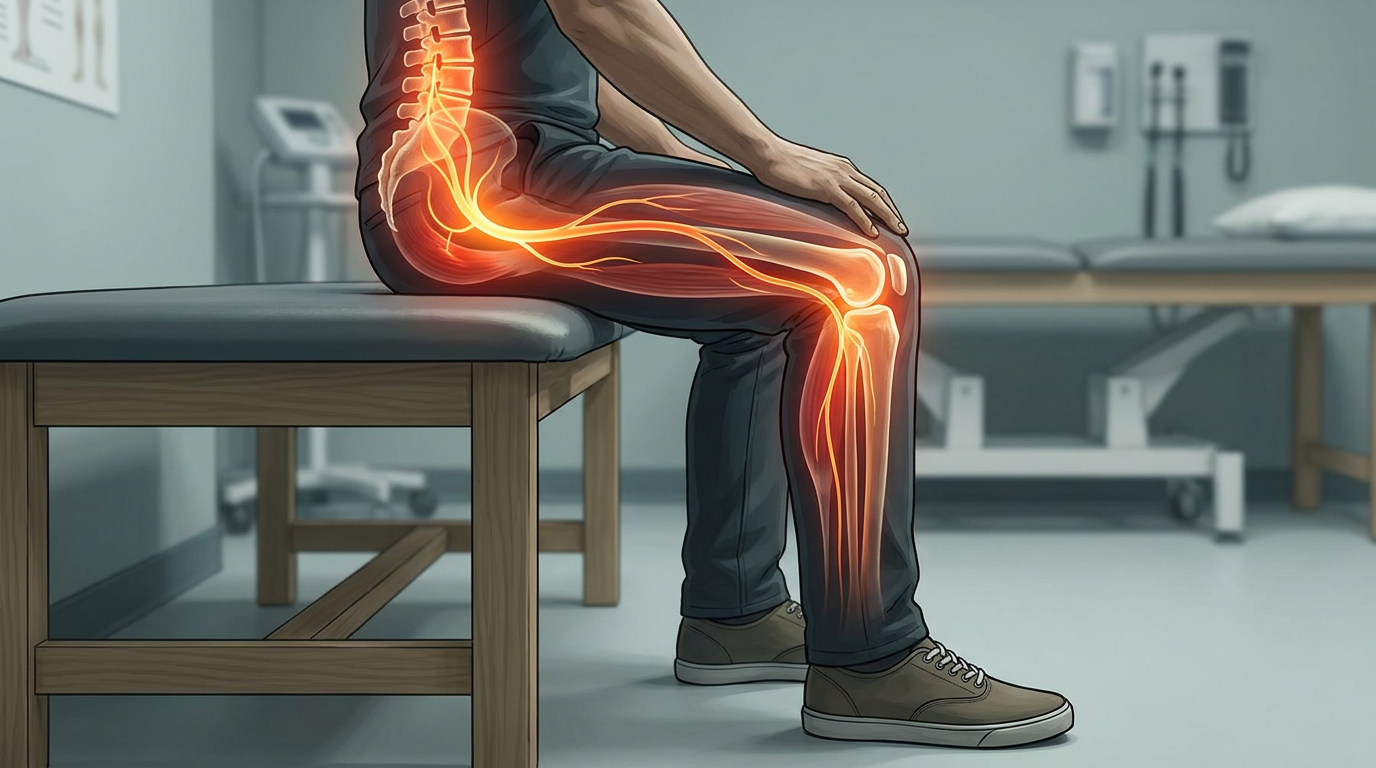
You bend down to grab a bag from the back seat and feel a hot zip of pain run from your lower back down through your leg. Most people’s first question with sciatica is how long it’s going to last. The honest answer is that it usually settles within weeks, but the exact timeline depends on what’s irritating the nerve and how soon you start the right kind of care.
Below, you’ll find a clear breakdown of typical recovery timelines, the factors that shorten or stretch them, the home strategies that actually help and the warning signs that mean it’s time to see a specialist.
Table of Contents
ToggleHow Long Does Sciatica Typically Last?
Most acute sciatica clears up within four to six weeks. About 75 percent of people feel improvement within four weeks, and around 70 percent recover by 12 months.
Different symptoms ease on different timelines. How long your sciatica lasts comes down to the cause, how irritated the nerve is and how soon you start a treatment plan that fits the underlying problem.
Acute, Subacute and Chronic Sciatica: What Each Timeline Looks Like
Sciatica falls into three categories based on how long symptoms last: acute (under six weeks), subacute (six to 12 weeks) and chronic (12 weeks or more). The category guides your doctor on whether to keep watching, push treatment further or order imaging.
Acute Sciatica (Less Than Six Weeks)
Acute sciatica has a strong outlook. You’ll likely feel sharp, burning pain down one leg, sometimes with tingling, numbness or weakness, and 85 to 90 percent of people with disc-related sciatica feel relief within six to 12 weeks without a procedure. Treatment at this stage means staying active, using over-the-counter anti-inflammatories and applying heat or cold to the area. Most people improve during this window, so surgery isn’t the first move.
Subacute Sciatica (Six to 12 Weeks)
Subacute sciatica means symptoms have lasted past the early flare without crossing into chronic territory. The six to 12 week window is a key reassessment point, and physical therapy often becomes a core part of the plan.
Your doctor may also bring up epidural steroid injections, which place anti-inflammatory medicine around the irritated nerve. If your pain hasn’t cleared by six weeks, you’ll likely notice more day-to-day ups and downs.
Chronic Sciatica (12 Weeks or Longer)
Doctors call sciatica chronic once it lasts beyond 12 weeks. Symptoms can continue for months or longer, and what your doctor recommends depends on duration and how your symptoms have responded so far.
When conservative care hasn’t helped enough, surgery becomes a serious option. Your doctor will look at the cause of the nerve compression, the level of weakness or numbness and how much your symptoms limit daily life.
What Causes Sciatica and How the Cause Affects Duration
The cause of your sciatica directly shapes the recovery timeline. A herniated disc often heals on its own, while spinal stenosis tends to keep irritating the nerve until you treat the underlying narrowing.
Herniated or Bulging Disc
A herniated disc is the most common cause of sciatica. Your body can reabsorb the herniated material over time, which is part of why many people improve without surgery.
Spinal Stenosis
With spinal stenosis, the spinal canal that houses the spinal cord and nerve roots narrows as bone spurs grow and ligaments thicken. Structural narrowing tends to stick around without treatment, so your symptoms may last longer and show up more with standing or walking.
Piriformis Syndrome
The piriformis muscle in your buttock can press on the sciatic nerve. With stretching and physical therapy, you may become symptom-free in one to three weeks, but relapse is common without consistent exercise.
Spondylolisthesis and Degenerative Disc Disease
Spondylolisthesis happens when one vertebra slides forward over the one below it. In adults, this kind of slip rarely reverses on its own, though symptoms can still improve with the right rehabilitation. Degenerative disc disease, which is the gradual wear of the discs between your vertebrae, can also improve over several months with conservative care.
Factors That Influence How Long Sciatica Lasts
Four things most affect how long your sciatica lasts: how compressed the nerve is, your overall health, how soon treatment starts and your daily activity habits. Each one can shift the timeline by weeks or months.
Severity of Nerve Compression
How tightly the nerve is squeezed matters less on imaging than people expect. MRI findings of nerve compression don’t always match how someone actually recovers, so your doctor will lean on your symptoms and exam findings as much as the scan.
Age and Overall Health
Age usually doesn’t change how fast short-term pain eases. Over the long run, older adults can have a harder time getting back to work, and people who carry extra weight tend to get less benefit from both surgery and nonsurgical care.
How Soon You Start Treatment
The longer you let pain go, the harder it can be to bounce back. Leg pain that drags on past three months tracks with worse outcomes a year later.
Daily Posture and Activity Habits
Heavy physical work, repeated lifting, bending forward and long stretches of sitting all predict a harder return to normal. Depression and a fear of moving because you’re worried about pain can also slow recovery down.
The Three Phases of Sciatica Recovery
Sciatica recovery moves through three overlapping phases: pain reduction, mobility restoration and strengthening. You may shift back and forth a bit during a flare, but most people trend toward fewer symptoms week over week.
Phase 1: Pain Reduction (First One to Two Weeks)
The first phase focuses on calming the irritation through gentle movement, heat and cold and nerve-gliding exercises that help the sciatic nerve slide more freely. Long stretches of bed rest don’t speed sciatica recovery and can lead to deconditioning of the muscles that support your spine, so short rest periods beat staying inactive all day.
Phase 2: Mobility Restoration (Weeks Two to Six)
Treatment then shifts toward exercise and getting your full range of motion back. A physical therapist will guide you through movements that ease muscle spasm and rebuild lower-body mobility without aggravating the nerve.
Phase 3: Strengthening and Return to Activity (Weeks Six and Beyond)
The final phase centers on core strengthening and rebuilding capacity for daily activities. Most rehab plans add exercise therapy at this point, and your program should shift toward work tasks and the activities you actually need to do.
Been told surgery is the only option left?
Most sciatica improves with conservative care, and a second opinion is a normal step if surgery has come up before you’ve exhausted the alternatives. Premier’s spine team reviews your prior imaging and records before the visit, not during it, so the consult can focus on your specific situation.
Signs Your Sciatica Is Improving
Most people notice gradual shifts rather than one big turnaround. Four signs tell you the nerve is settling down:
- Pain pulls back toward your spine: Leg pain that retreats from your foot or calf back toward the lower back, what clinicians call centralization, is a favorable sign.
- Numbness and tingling fade: A gradual fade in those sensations means the nerve is getting room to function normally again.
- Episodes get shorter and less intense: Symptoms can still flare during recovery, but the flares don’t last as long or hit as hard.
- Strength and range of motion return: You can move further and do more without setting off a wave of pain.
How to Speed Up Sciatica Recovery at Home
A few daily habits can shorten how long sciatica lasts. The basics break down into five home strategies you can start today:
- Stay active with low-impact movement: Walking, swimming and aqua therapy keep your lower back from stiffening up. Stop any activity that clearly ramps up leg pain or numbness.
- Stretch the lower back, hips and hamstrings: Tight hamstrings load up your lumbar spine. Piriformis stretches and nerve-gliding exercises help the sciatic nerve slide more freely.
- Use heat and cold strategically: Apply wrapped ice for 20 minutes at a time in the first 48 to 72 hours. Switch to heat after that to loosen tight muscles around the spine.
- Set up ergonomic posture: Avoid long stretches in one position. A small pillow or rolled-up towel behind your lower back can support the natural curve of your spine when you sit.
- Manage inflammation with OTC medication: Nonsteroidal anti-inflammatory drugs (NSAIDs) like ibuprofen and naproxen can ease pain in the first few weeks, though NSAIDs may not help much with nerve-related sciatica specifically.
Talk to your doctor if you’re relying on NSAIDs past the first couple of weeks or if home care isn’t moving the needle.
When to See a Doctor for Sciatica That Won’t Go Away
Some sciatica needs more than home care. The longer your symptoms drag on without improvement, the more useful a specialist evaluation becomes.
Pain That Lasts Beyond Six Weeks
If your symptoms haven’t improved after four to six weeks of home care, it’s time for a specialist evaluation.An MRI becomes appropriate after two to three months of pain that hasn’t responded to conservative treatment.
Red-Flag Symptoms That Need Urgent Care
Some symptoms can be a sign of cauda equina syndrome, a rare but serious condition where nerves controlling the bladder, bowel and legs are severely compressed. Get to the emergency room right away if you have any of these:
- Bladder or bowel control changes: Loss of control suggests the nerves at the base of the spine are severely pinched.
- Saddle numbness: Numbness in the groin, inner thighs or buttocks is a major red flag.
- Pain in both legs at once: Bilateral sciatica needs urgent evaluation, not a wait-and-see approach.
- Worsening weakness or foot drop: Rapidly progressing leg weakness or a foot you can’t lift can signal nerve damage.
Without prompt treatment, permanent paralysis and loss of bladder and bowel function can happen.
Medical Treatments for Persistent Sciatica
Physical therapy is usually first, and epidural steroid injections are often the next step if symptoms keep going. Injections can give you meaningful pain relief in the short to medium term while you keep working on the underlying problem.
If you’ve tried conservative care without enough relief, surgery may make sense depending on the cause. Common options include microdiscectomy (which removes the disc fragment pressing on the nerve), laminectomy (which removes part of the bony arch at the back of the spinal canal, called the lamina, to give nerves more room) and spinal fusion (which permanently joins two vertebrae to stabilize the spine).
How to Prevent Sciatica From Coming Back
A few daily habits lower your chance of another sciatica flare. Recurrence is real, with rates running from 16 percent at one year up to 41 percent at three years for leg pain after initial resolution. The prevention steps are practical:
- Build core and lower-back strength: Stronger muscles take pressure off your lumbar discs and nerves.
- Break up long stretches of sitting: Stand, walk or stretch every 30 minutes during desk work or long drives.
- Maintain a healthy weight: Extra weight makes treatment outcomes worse, and it’s something you can change.
- Lift with proper form: Bend at the knees, keep loads close to your body and split heavy items into two trips.
- Practice good posture: Set up your desk and car seat so your lower back keeps its natural curve.
Sciatica Care at Premier Orthopaedics & Sports Medicine
Premier Orthopaedics & Sports Medicine starts every sciatica case with the least invasive option that fits your situation. That usually means physical therapy, medication and pain management before any conversation about surgery, and Premier’s founder Dr. Howard Baruch estimates that about half of his consultations end with him telling the patient surgery isn’t necessary.
If conservative care isn’t enough, your evaluation can include the spine surgery team led by Dr. Jay Reidler, a Harvard- and Johns Hopkins-trained spine surgeon who handles minimally invasive and complex cases. Premier treats sciatica and its underlying causes at offices across Northern New Jersey, including Bloomfield, Englewood and Union City, and Spanish-language services are available.
Stop Waiting Out Sciatica Pain
Putting off treatment tracks with worse outcomes and makes a quick recovery less likely. If your sciatica has lasted beyond a few weeks or keeps getting in the way of daily life, call Premier at 201-833-9500 or schedule an appointment online to talk through your options.
Get an Evaluation for Sciatica That Isn’t Improving
If weeks of home care and rest haven’t eased your leg pain, an evaluation can pinpoint what’s irritating the nerve and map out the right next step. Premier’s spine team sees sciatica patients across Northern New Jersey and starts with the least invasive option that fits your situation.
Frequently Asked Questions About Sciatica Duration
Can sciatica go away on its own without treatment?
Yes, many cases of acute sciatica improve on their own within a few weeks. If you aren’t seeing progress after that,Premier’s spine team can rule out a structural cause and start a conservative care plan.
Why does my sciatica keep coming back?
Recurrence usually means the underlying cause is still there or daily habits keep irritating the nerve. A physical therapy evaluation at Premier can pinpoint the patterns driving your flares and what to change.
Is it better to sit, lie down or walk with sciatica?
Walking or staying gently active beats bed rest. Premier’s spine team can show you the safest positions during a flare and put together a pain management plan if you need one.
Can sciatica become permanent?
In rare cases, nerve damage can be permanent. If you have red-flag symptoms like bladder or bowel changes or rapidly worsening weakness, get to an emergency room first, then follow up with Premier’s spine surgery team for next steps.
This article is for general information only and isn’t a substitute for professional medical advice. Talk to your doctor about your specific situation before making treatment decisions.