Buttock pain after lumbar fusion can feel especially frustrating when your fusion has healed, your imaging looks fine and the ache still sits deep on one side. Lumbar fusion is surgery that joins two or more lower-spine bones so they heal into one solid segment.
Often, the cause traces back to how fusion changes the mechanics of your lower back and pelvis. It may involve the sacroiliac joint (SI joint), the joint that connects your lower spine and pelvis, or it may involve nerves, muscles or adjacent spinal levels.
[ez-toc]
Why Lumbar Fusion Can Cause Buttock Pain
Fusing one or more lumbar segments changes how load moves through your lower back and pelvis. The fused segment absorbs motion differently than it used to, so the structures around it pick up extra work.
That shift is why nearby structures that never bothered you before can become a new source of pain. Understanding which structure is involved is the first step, and Premier Orthopaedics & Sports Medicine’s spine surgery team sees this pattern often after fusion.
Sacroiliac Joint Dysfunction
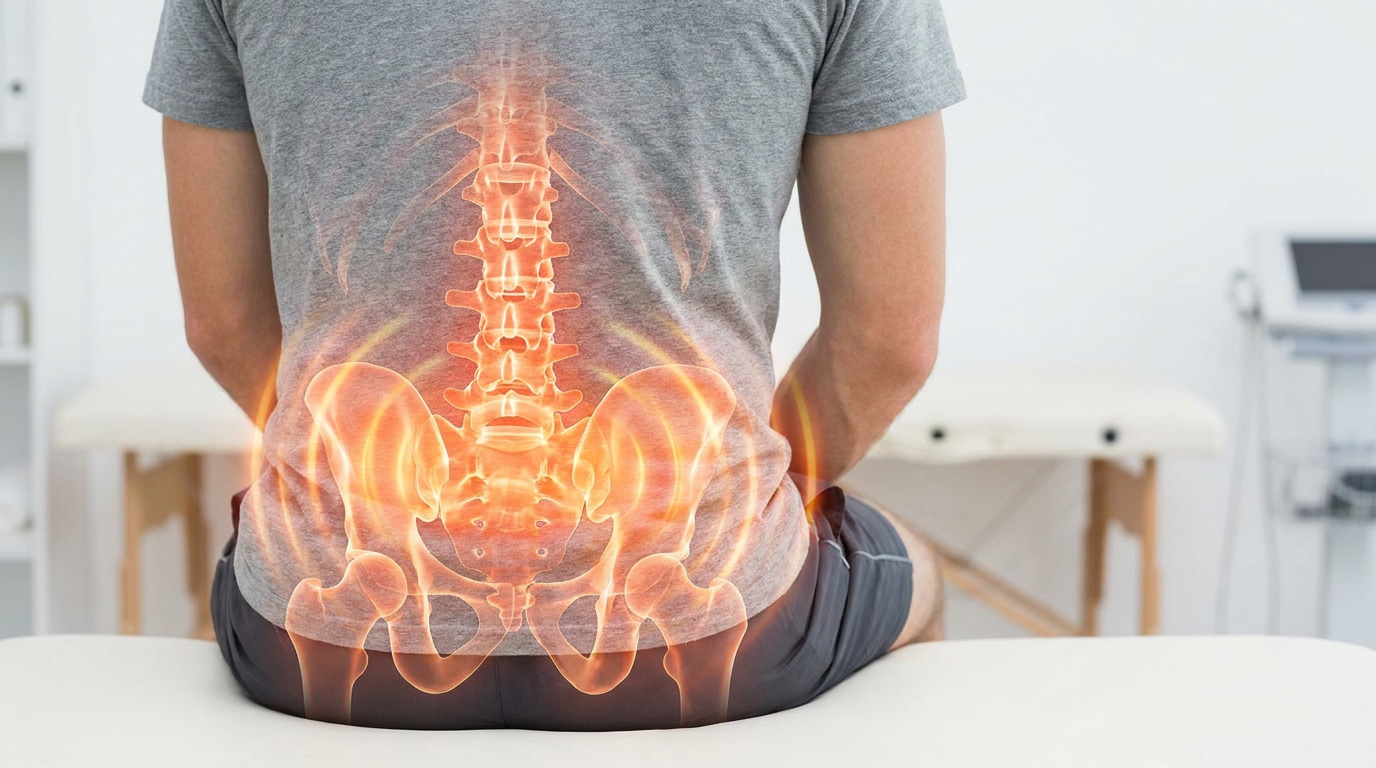
The SI joint commonly causes buttock pain after lumbar fusion. Fusing vertebrae together can create extra SI joint stress, and spine surgery can cause SI joint problems. SI joint pain usually feels deep in the buttock and can refer into the thigh and leg.
The pattern is often one-sided and worse with transitions, like standing up from a chair or climbing stairs. It also tends to flare after you’ve been sitting for a long stretch. When the joint becomes inflamed, doctors call that condition sacroiliitis. Sacroiliitis causes pain in your lower back, buttock or legs.
Residual Nerve Irritation
Sometimes nerve pain continues after surgery, or scar tissue forms around a nerve during healing. That kind of nerve pain can resemble symptoms from a herniated disc, while radiculopathy describes pinched nerve root symptoms, including pain, weakness, numbness and tingling.
Nerve pain feels different from SI joint pain. It often runs down the leg, with numbness or tingling that can reach the foot. SI joint pain usually feels deep in the buttock. A clean scan doesn’t rule out scar-related nerve pain, because scar tissue around a nerve can contribute to chronic nerve pain even when imaging shows no ongoing compression.
Muscle Deconditioning and Soft Tissue Tension
Your doctor may also look for muscle weakness and soft tissue tension after surgery and a stretch of limited activity. If your exam points to the glutes or hip rotators, including the piriformis, your care plan may focus on rebuilding strength and easing tension around the buttock.
When pain seems mainly muscular, your doctor may ask how the ache changes with movement, rest and time. That pattern can help decide whether the care plan should stay focused on soft tissue or shift toward another source.
Hardware Irritation or Adjacent-Segment Concerns
In some cases, your doctor may also check whether nearby hardware is contributing, especially when pain feels localized. Adjacent segment disease can also develop at the adjacent spinal level, where wear and breakdown occur because that level now takes on more motion and stress.
The risk of adjacent segment disease increases over time, especially when surgeons fuse more levels. It can present as chronic back pain or radiculopathy, so buttock or leg symptoms months or years out deserve a closer look.
How Your Doctor Identifies the Source
During the workup, your doctor works to match your pain to a specific structure: the SI joint, a nerve, a muscle or the hardware. The exam and your symptom pattern often narrow the source before your doctor needs any advanced imaging, and our neck and back specialists rely on that combination.
Physical Exam and Imaging
Your doctor starts with a physical exam that includes SI joint provocation maneuvers, which are movements that reproduce joint pain. The exam also checks strength, reflexes and sensation. X-ray can help your doctor review the fusion and hardware, and MRI can help evaluate nerves and soft tissue when needed.
A clean scan can be confusing when you’re still hurting. Imaging doesn’t capture everything, and scar tissue around a nerve can sometimes contribute to pain even when the scan doesn’t show a simple compression point.
Symptom Patterns and Diagnostic Injections
Your symptom pattern gives strong clues about the source. SI joint pain tends to feel like a deep buttock ache that’s worse with position shifts, like standing up or climbing stairs, and flares after prolonged sitting. Nerve pain often runs like an electric line down the leg, with numbness or tingling into the foot.
Muscular pain depends more on your exam findings and how the ache changes with movement and warm-up. These patterns rarely appear in perfectly clean form, which is why the exam matters. When your doctor hasn’t confirmed the source, a diagnostic injection can help test a specific joint or nerve, and we offer pain management treatments for this kind of workup.
Non-Surgical Treatment for Post-Fusion Buttock Pain
Doctors manage most post-fusion buttock pain without more surgery. Treatment matches the cause, and conservative care comes first. Our approach starts with conservative care and moves to procedures only when needed.
Physical Therapy Focused on the Hip and Pelvis
Physical therapy is the first-line approach for most SI joint and muscular causes of buttock pain. A therapist can work on SI joint stabilization, hip mobility, gluteal strengthening and piriformis stretching to take pressure off the structures that are hurting.
The right therapist matters here. You want someone familiar with post-fusion recovery who respects the restrictions at your fused level, and the timing should match the activity stage your surgeon has cleared you for. Structured physical therapy that respects those limits helps most people regain strength and function without pushing the fusion.
SI Joint Injections and Nerve Blocks
A corticosteroid SI joint injection can help your doctor test whether the joint is driving your pain while also calming inflammation. Strong relief after the injection supports the SI joint as the source and buys you a window to make progress in therapy. When your doctor suspects nerve irritation instead, a nerve block targets the specific nerve.
Pain management specialists often use imaging guidance for these injections. Our pain management specialists perform these injections and use the results to guide the rest of your treatment plan.
When Buttock Pain After Fusion May Need Further Intervention
Surgery comes into the conversation only when your doctor confirms a specific source and that source hasn’t responded to therapy and injections. Gradual, position-dependent pain that builds over weeks belongs in a scheduled review.
Recovery Timelines and Red Flags
In spinal fusion recovery, some discomfort can be part of the first several weeks, and full recovery can take several months or longer depending on your procedure and your surgeon’s restrictions. You should seek care right away for sudden severe leg weakness, especially a dragging foot, or any loss of bladder or bowel control.
Recovery from fusion also takes longer than many people expect, so some ongoing discomfort can fit that several-month timeline. You can review general expectations in Premier’s recovery guidance, but pain that rapidly worsens, new leg weakness or any change in bladder or bowel control should prompt a call to your surgeon without delay.
Failed Back Surgery Syndrome
Doctors use the term failed back surgery syndrome to describe pain after spine surgery that persists or appears in the same location. The label means the original operation didn’t resolve the pain and it’s time to figure out why.
SI Joint Fusion
SI joint fusion is an option when testing confirms SI joint dysfunction and injections and therapy haven’t helped enough. Your surgeon may use a minimally invasive approach to stabilize the joint and reduce pain. A surgeon considers SI joint fusion only when testing proves the SI joint is the source.
Revision Spine Surgery
Your doctor may consider revision spine surgery when a structural problem clearly matches your symptoms. A revision review carefully examines what’s happening before any decision about another operation. Dr. Jay Reidler, MD, MPH, spine surgeon at Premier, evaluates these cases to determine whether another operation would help or whether a non-surgical path still makes more sense.
Get an Evaluation for Post-Fusion Buttock Pain
If you’re dealing with buttock pain after a lumbar fusion, our team can help you find the source and the right treatment. Call 201-833-9500 or schedule online at our offices across Northern New Jersey.
Frequently Asked Questions About Buttock Pain After Lumbar Fusion
Is buttock pain common after lumbar fusion?
Early discomfort can fit the recovery timeline. Persistent, one-sided buttock pain is different, and it usually points to a specific source such as the SI joint, a nerve, a muscle or the hardware. New buttock pain can appear even after your original back pain improves, because it comes from a different mechanism than the problem you were fused for. Pain that stays on one side and doesn’t fade is worth getting checked, and you’ll find more answers in Premier’s spine care FAQ.
How long does SI joint pain last after spinal fusion?
There’s no fixed timeline. Your doctor usually treats muscular and mechanical contributors with targeted physical therapy, while confirmed SI joint dysfunction may persist until your doctor treats it with injections or SI joint fusion. Since recovery can take months, some ongoing discomfort fits the normal recovery window. Pain that runs past the expected window, or that returns after a period of improvement, deserves a scheduled review.
Can physical therapy fix buttock pain from lumbar fusion?
Physical therapy helps most when your pain has a muscular or SI-joint-mechanics component and when it matches the activity stage your surgeon has cleared you for. Doctors often combine it with injections or diagnostic steps, especially when they haven’t confirmed the source of the pain yet. For more on how these approaches fit together, Premier’s patient education resources cover conditions, treatments and recovery.
This article is for general information only and isn’t a substitute for professional medical advice. Talk to your doctor about your specific situation before making treatment decisions.