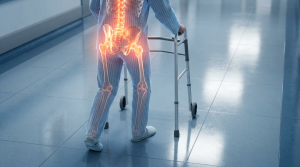
If back or neck symptoms start affecting your strength, balance or bladder control, you may wonder whether degenerative disc disease (DDD), the age-related drying and thinning of spinal discs, can cause paralysis.
It can rarely contribute through two nerve-compression pathways, in which disc material or bone presses on nerves, but in most cases it never reaches that point.
This article explains those pathways, the warning signs that need urgent care, how doctors diagnose and treat the underlying compression and what recovery typically looks like.
Table of Contents
ToggleWhat Degenerative Disc Disease Is and Whether It Can Cause Paralysis
Paralysis from degenerative disc disease is possible, but rare. It can happen when displaced disc material or bone compresses the spinal cord or nerve roots.
Degenerative disc disease sits closer to normal aging than to disease. Imaging shows disc degeneration in 37 percent at age 20 and 96 percent by age 80, and most of those people never feel it.
Compression in the Lower Back
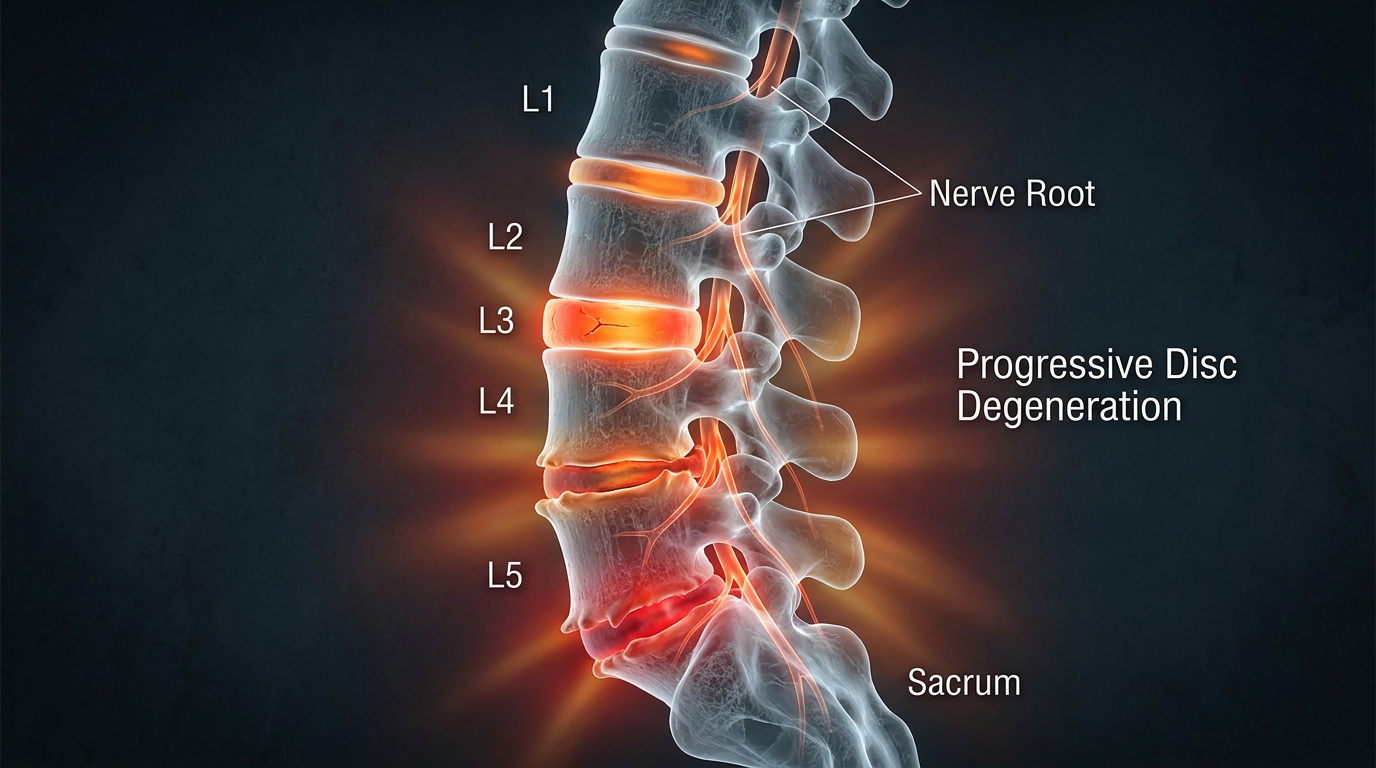
Cauda equina syndrome can develop when a disc herniation compresses the nerve roots at the bottom of your spinal canal. Those nerves control your legs, bladder and bowels, which makes this the main lower-back pathway by which a herniated disc can cause paralysis. That’s why doctors treat a new bladder or bowel change differently from ordinary back pain.
Compression in the Neck
Doctors usually refer to cervical spondylotic myelopathy as cervical myelopathy. It occurs when degeneration compresses the spinal cord in your neck. The same degeneration that thins a disc can narrow the canal the cord passes through.
Cervical cord compression can affect your hands, arms, legs, balance and bladder, and it may develop slowly enough that you mistake the early signs for aging.
What Causes Degenerative Disc Disease and When It Threatens Nerves
Aging and genetics contribute to DDD, as do decades of ordinary wear. The threat to your nerves comes from what a worn disc does to the space around them. A degenerated disc can herniate or collapse, and your spine often responds with bone spur formation that narrows the channel where nerve roots and the spinal cord travel. As disc height drops, your vertebrae sit closer together, and the nerve-root openings get smaller.
You can develop nerve problems when this narrowing presses on a nerve root or the spinal cord. DDD and a herniated disc are distinct conditions, though one often leads to the other. Degeneration weakens the disc’s outer wall, which makes a herniation more likely.
In the neck and cervical spine, MRI shows one-level degeneration in 25 percent under age 40 and abnormalities in 60 percent of adults over 40. Imaging changes alone don’t mean degeneration has compressed your spinal cord, and most of these changes never cause neurologic trouble.
Symptoms: Everyday Discomfort Versus Warning Signs
Most day-to-day DDD symptoms involve aching and stiffness, and activity can trigger flare-ups. Aching and stiffness alone usually don’t indicate an acute neurologic emergency, but new weakness, numbness or bladder changes require prompt evaluation.
Radiating pain, numbness, weakness and changes in bladder or bowel control can point to a nerve under pressure. How quickly a symptom appeared matters as much as the symptom itself, and each of the two emergency pathways below has its own pattern.
Red Flags of Cauda Equina Syndrome
The cauda equina syndrome warning signs cluster around the nerves that serve the lower half of your body. These symptoms need urgent evaluation rather than a wait-and-see approach:
- Numbness in the saddle area (inner thighs, groin and the region that would touch a saddle)
- New bladder or bowel dysfunction, including trouble emptying your bladder
- Both-leg numbness or weakness rather than symptoms in one leg
- Back pain radiating into legs with weakness that keeps progressing
Cauda equina syndrome may arrive suddenly or build gradually, and symptoms that appear quickly may signal a more urgent problem. Numbness with muscle weakness or any new bladder or bowel problem needs same-day emergency evaluation, because delayed care can cause permanent nerve damage.
Surgeons aim to decompress cauda equina syndrome inside a 48-hour window, and faster surgical decompression may give compressed nerves a better chance to recover feeling, strength, bladder and bowel function.
Red Flags of Cervical Myelopathy
Cervical myelopathy from disc degeneration can start quietly, with hand clumsiness and gait changes among the early patterns. Each sign is easy to write off on its own:
- Hand clumsiness, like dropping keys or struggling with buttons
- Changes in balance or the way you walk
- Progressive weakness or sensory loss in the arms
- Bladder or bowel dysfunction as the compression progresses
Pressure on the spinal cord in your neck causes these signs, so they often show up in more than one place at once, such as the hands and gait.
You may chalk them up to normal aging, which may explain why doctors don’t always recognize cervical cord compression until it has progressed.
Told your disc degeneration may need surgery?
Most DDD is managed without surgery, and a recommendation for decompression or fusion is worth a second look before you decide. Premier’s spine team reviews your prior imaging and records before the visit, not during it, so the conversation starts with a clear picture of your spine.
How Doctors Diagnose the Cause of Your Symptoms
Diagnosis pairs a hands-on exam with targeted imaging, since the pattern of findings usually points to whether a nerve root or the spinal cord is under pressure. Your doctor uses the exam to narrow down the location, then chooses imaging to confirm what’s happening around the affected nerves.
What the Physical and Neurological Exam Looks For
Your doctor starts with a physical and neurological exam that checks strength, reflexes and sensation. The pattern of findings points to where the problem lives, and specific clues help separate nerve-root irritation from cord compression:
- Pain running down one arm or leg along a single path, which suggests a pinched nerve root
- Brisk or exaggerated reflexes, which can point to spinal cord involvement
- Clumsy hand movements or trouble with fine motor tasks
- Balance changes or an unsteady gait during walking tests
These findings guide what happens next, including which imaging study will most directly answer the question.
How Imaging Confirms What the Exam Suggests
When the exam raises concern, your doctor chooses an imaging study based on the findings. Each type of scan answers a different question:
- X-rays can show disc height loss, bone spurs and alignment changes
- MRI can show spinal cord compression, disc herniation or pressure on a nerve root
- CT scans add detail about bone anatomy when surgery is being planned
Degeneration on imaging is common without symptoms, so neck and back specialists read your scans alongside your exam rather than treating the pictures as the diagnosis.
Treatment Options: Conservative Care First, Surgery When Nerves Are at Risk
You can usually manage DDD without surgery, and most people with DDD don’t need surgery. At Premier Orthopaedics & Sports Medicine, we usually start with conservative care and move toward surgery when compression threatens nerves or non-surgical care has stopped helping.
Non-Surgical Treatment Comes First
Treatment usually starts with one or more non-surgical options chosen for your symptoms. The typical progression looks like this:
- Physical therapy to strengthen the muscles that support your spine
- Anti-inflammatory medication to calm irritated nerves and joints
- Activity modification that keeps you moving without provoking flare-ups
- Injections through pain management treatments when the first steps aren’t enough
How much relief each step delivers varies from person to person. Your doctor tracks pain, function and neurological findings, changing the plan if you don’t get meaningful relief or weakness progresses. Those findings also help determine whether surgery should be considered.
When Surgery Becomes the Right Call
Two situations bring surgery into the conversation. One is progressive neurologic compression, such as confirmed cauda equina syndrome or cervical myelopathy. The other is pain that persists after conservative care hasn’t provided enough relief.
Either way, the surgical goal is decompression of the affected nerves, which means removing the disc material or bone pressing on the nerve or spinal cord. Our spine surgery team handles decompression, and surgeons schedule it urgently when imaging confirms an emergency such as cauda equina syndrome.
Recovery and Long-Term Outlook
DDD is usually manageable, and you’re unlikely to develop the nerve compression that can threaten mobility. Conservative treatment may stabilize or improve your symptoms and tracking sleep, sitting and walking gives you concrete measures of progress. Stabilizing usually looks practical rather than dramatic, such as sleeping through the night or sitting through a workday.
The outlook changes when pressure affects the spinal cord or nerve roots, and speed matters. Without treatment, cervical myelopathy can cause neurological decline, and delaying surgery may reduce the likelihood of functional recovery. The same urgencyj applies to cauda equina syndrome.
Premier’s patient education resources explain these conditions and treatment options in more depth.
Get Your Back or Neck Symptoms Evaluated at Premier
If you’re unsure whether your symptoms need a closer look, we evaluate back and neck symptoms throughout Northern New Jersey and can provide a second opinion before surgery. Call 201-833-9500 or schedule an appointment online.
Get Evaluated for Nerve Compression from Degenerative Disc Disease
An exam and the right imaging can tell you whether DDD is pressing on a nerve root or the spinal cord, or simply causing the aching and stiffness most patients experience. Premier Orthopaedics & Sports Medicine sees patients throughout Northern New Jersey for this kind of evaluation.
Frequently Asked Questions About Paralysis from Degenerative Disc Disease
How rare is cauda equina syndrome?
Cauda equina syndrome is uncommon, but its frequency varies by cause and care setting, so a single rate doesn’t capture all groups. Ordinary back pain without neurologic changes usually doesn’t point to it.
If you go to the ER with warning signs, note when each symptom began and whether it changed quickly, since the timing and pattern can help doctors assess the compression.
Does degenerative disc disease always get worse with age?
Imaging changes accumulate with age, but a scan that looks worse over time doesn’t automatically mean your symptoms or function will worsen. Track changes in strength, balance, sensation and daily activity so your doctor can compare how you function with what the MRI shows.
Is it safe to exercise with degenerative disc disease?
Movement usually remains part of your treatment, even when you need to modify activities during a flare-up.
Reduce exercises that provoke your symptoms and continue activities you can tolerate, then ask your doctor or physical therapist how to adjust your program. New weakness, numbness or bladder or bowel changes call for prompt medical evaluation rather than an exercise modification.
Can degenerative disc disease in the neck cause paralysis?
It can when degeneration compresses the spinal cord. Before your evaluation, write down when you first noticed dropped objects, slower hand movements, balance changes or weakness and whether those symptoms progressed together.
Bring prior scans if you have them, since your doctor will compare the imaging with your reflexes, strength, coordination and gait.
This article is for general information only and isn’t a substitute for professional medical advice. Talk to your doctor about your specific situation before making treatment decisions.