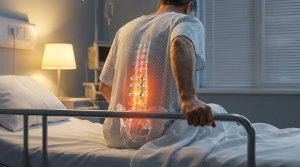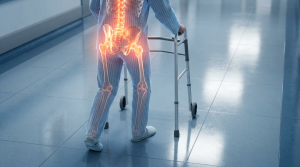

You had spine surgery hoping it would give you your life back, and months later the pain is still around. Post-laminectomy syndrome describes that exact pattern, and you’re not alone in dealing with it.
Most people who land on a page like this haven’t been told there’s an actual name for what they’re going through. We’ll cover what post-laminectomy syndrome is and why it develops, the symptoms doctors look for, how the diagnosis comes together and the treatments worth trying before revision surgery enters the picture.
Table of Contents
ToggleWhat Is Post-Laminectomy Syndrome?
Post-laminectomy syndrome is persistent or returning pain in your back or legs after spine surgery, even when the operation itself went the way it was supposed to. The name is a bit misleading, since you can develop it after almost any spine procedure, not only a laminectomy (the surgery that removes part of a vertebra to take pressure off a pinched nerve).
You may also hear it called failed back surgery syndrome, though pain specialists have pushed back on that label because it suggests the surgery itself failed when something else is often driving the pain. It’s more common than most patients realize, affecting 10 to 40 percent of spine surgery patients.
What Causes Post-Laminectomy Syndrome?
The causes break into a handful of categories that imaging and exam findings can usually point to. Sometimes one issue stands out clearly, and sometimes two or three problems are stacked on top of each other, which is part of why an accurate diagnosis matters so much. Your doctor’s first job is figuring out which of these is driving your specific symptoms:
- Recurrent disc herniation: A disc near your old surgical site bulges or ruptures again and presses on the same nerve root that was bothering you before. It’s the leading cause, accounting for roughly 28 percent of cases.
- Epidural scar tissue (fibrosis): Your body forms scar tissue as part of healing, but that tissue can wrap around a spinal nerve and tug on it. Fibrosis accounts for 20 to 36 percent of cases.
- Incomplete decompression of the original nerve: If the compression was more extensive than imaging showed before surgery, some pressure can remain even after a technically clean operation.
- A new problem at an adjacent spinal level: When one segment of your spine is fused or operated on, the levels above and below it absorb extra stress. Over time that can lead to a new herniation, stenosis (narrowing of the spinal canal) or arthritis right next to your old surgical site.
- Spinal instability after bone removal: If too much bone was taken out during your laminectomy, the spine can lose structural support and shift in ways that keep pain going.
What Symptoms Should You Watch For?
The symptoms depend on which structure is causing your pain, but most people describe a recognizable combination. Some show up immediately after surgery, and others take weeks or months to develop, which is part of what makes the diagnosis tricky. Most people experience some mix of the following:
- Localized back pain: Dull, aching pain at or near the surgical site that doesn’t shift much with position.
- Radiating nerve pain: Sharp, burning or electric pain that shoots down your leg or into your arm.
- Numbness or tingling: “Pins and needles” sensations or skin patches that feel like they’ve fallen asleep along a nerve path.
- Weakness or activity limits: Muscle weakness or new limits on how long you can walk, stand or sit.
Extensive epidural scar tissue can also raise your risk of radiculopathy, the medical term for nerve pain that shoots down into the leg from an irritated nerve root. A few symptoms need urgent attention rather than a routine follow-up call: sudden loss of bladder or bowel control, severe or quickly worsening leg weakness or other progressive neurological changes can point to cauda equina syndrome, pressure on the bundle of nerves at the base of your spine that needs urgent surgery.
How Long Does Post-Laminectomy Syndrome Last?
The honest answer is that once post-laminectomy syndrome settles in, it often behaves like a chronic condition, though the timeline varies based on what’s causing it and how treatable that cause is. Some pain after surgery is part of normal healing, and the harder question is when that pain has crossed from recovery into a condition that needs a different plan.
Most patients improve within the first few months after decompression surgery. If you’ve gone three months without improvement or your pain is getting worse, your doctor will look more closely for a persistent structural cause, since scar tissue forms gradually over the weeks and months after the operation. Improvement often plateaus after that early window, and some patients see their pain return or worsen over longer-term follow-up without treatment.
Been told revision surgery is your only option?
A second opinion is a normal step when pain persists after spine surgery, especially since repeat operations without a clear structural target tend to perform worse than the first one. Premier’s spine team reviews your prior imaging and surgical history before your visit, not during it, to see whether a clearly correctable cause is actually present.
How Doctors Diagnose Post-Laminectomy Syndrome
No single test confirms the diagnosis. Your doctor builds the picture from your history, your physical exam and your imaging, often in combination with diagnostic injections that pinpoint where the pain is coming from. The workup usually includes the following pieces:
- Reviewing your surgical history and pain pattern: Your doctor reads the operative report from your original surgery and asks specific questions about how your pain has changed since then. The timing, location and character of your current pain narrow down where to look.
- Imaging with MRI, CT and X-rays: An MRI with and without gadolinium contrast is the preferred way to distinguish scar tissue from a recurrent disc herniation. Scar tissue lights up rapidly with contrast, while early peripheral enhancement points more toward a recurrent herniation. If you have metal hardware from earlier surgery, a CT myelogram (a CT scan with dye injected into the spinal canal) can help when MRI gets obscured by artifact.
- Diagnostic injections to pinpoint the source: An epidural steroid injection sometimes serves both diagnostic and treatment roles. If your leg pain eases, your back pain eases or neither changes, that response tells your doctor which structures are sending the pain signals.
Non-Surgical Treatment Options
Treatment usually starts with the least invasive options and steps up based on how you respond. Your doctor uses your symptoms, imaging and prior treatment results to decide what comes next, and conservative care covers the options most people try first:
- Physical therapy and targeted exercise: Ongoing pain after surgery weakens your core muscles, changes how you move and reinforces painful movement patterns. Among conservative treatments for chronic low back pain, exercise therapy and multidisciplinary rehabilitation are the most evidence-supported options. A structured physical therapy program rebuilds the muscles supporting your spine.
- Medications for nerve and inflammatory pain: Anti-inflammatory medication can calm irritation around a nerve root. Gabapentin, pregabalin and duloxetine often help when nerve pain feels burning, electric or persistent.
- Epidural steroid injections and nerve blocks: These injections place medication close to the irritated nerve. They tend to deliver temporary relief that can be enough for you to participate more fully in rehab.
- Radiofrequency ablation: If diagnostic blocks show your pain is coming from a facet joint or the sacroiliac joint, this procedure uses heat to interrupt pain signals from that nerve. The relief lasts months at a time, since the nerve eventually regenerates.
Advanced and Surgical Treatments When Conservative Care Isn’t Enough
When conservative treatment runs out of room, the next step depends on what’s actually driving your pain. Pain that’s mostly nerve-related often responds to neuromodulation. A clearly fixable structural problem may call for revision surgery instead, and how much function you’ve lost factors into the decision too.
Spinal Cord Stimulation
Spinal cord stimulation is one of the best-studied options for persistent pain after spine surgery. A small implanted device sends mild electrical pulses to your spinal cord that interfere with pain signals before they reach the brain.
Before any permanent implant, you complete a short trial with external equipment to make sure the technology actually helps your specific pain. Outcomes have been promising in two ways: six-month results favored stimulation over medical management alone, and head-to-head comparisons favored stimulation over repeat surgery for many patients.
Revision Spine Surgery
Revision surgery makes sense when imaging shows a clearly defined, correctable structural problem. Common examples include recurrent disc herniation, hardware failure, a fusion that didn’t fully heal or progressive spinal instability.
A second surgery isn’t the automatic next step, since stimulation often outperforms reoperation for patients without a clear-cut surgical target. Success rates also decline with each repeat operation, which is why careful patient selection matters more than the technical decision about which procedure to do.
Custom 3D-Printed Implants and Minimally Invasive Techniques
Some revision cases call for hardware designed to your specific anatomy. Prior surgery can leave bone loss or altered structures that standard off-the-shelf implants don’t fit, and that’s where custom 3D-printed titanium implants like aPrevo come in, since each one is designed from your imaging.
Minimally invasive techniques matter here too. When surgery is the right call, smaller incisions and tubular retractors mean less muscle damage, less blood loss and a faster early recovery than traditional open approaches, which counts for more when you’ve already been through one operation.
What Recovery and Long-Term Outlook Look Like
The realistic outcome for most people is meaningful improvement in pain and daily function rather than complete pain relief. The medical literature describes managing post-laminectomy syndrome more often than curing it, and programs combining physical therapy, behavioral therapy and medical care tend to work better than any single treatment on its own.
Depression and anxiety often turn up alongside chronic spinal pain, which doesn’t mean your pain is in your head. Mood does shape how pain feels and which treatments work best, so most spine teams build in mental health support once pain has been around for a while.
How Premier Approaches Post-Laminectomy Syndrome
Premier Orthopaedics & Sports Medicine treats post-laminectomy syndrome with a conservative-first approach. We start with physical therapy, medication and interventional pain management before any conversation about revision surgery, and we coordinate care across our spine and pain teams so you don’t have to manage that handoff yourself.
Our team includes spine surgery and pain management under one roof across Northern New Jersey. Dr. Jay S. Reidler is Premier’s adult and pediatric spine surgeon and uses aPrevo custom implants, minimally invasive decompression and traditional revision techniques for complex cases. Dr. Aditya Patel handles epidural steroid injections, nerve blocks, radiofrequency ablation and spinal cord stimulator trials and implants.
Finding Lasting Relief After a Failed Back Surgery
Post-laminectomy syndrome doesn’t mean you’re out of options. It means you need a careful diagnosis and a treatment plan matched to the actual cause of your pain rather than a repeat of what’s already been tried. If you’re living with persistent pain after spine surgery, call Premier at 201-833-9500 or schedule an appointment online to talk through your situation with a spine specialist. We can review your history, imaging and prior treatment so your next step is built around what’s actually driving your symptoms.
Frequently Asked Questions About Post-Laminectomy Syndrome
Is post-laminectomy syndrome considered a disability?
It can be. The Americans with Disabilities Act doesn’t list specific qualifying conditions and looks at whether your impairment substantially limits major life activities like walking, standing or working. Social Security disability uses a different framework focused on whether functional limits prevent full-time work.
Can a second spine surgery fix failed back surgery syndrome?
It depends on the cause. When imaging shows a clearly correctable problem like recurrent disc herniation or hardware failure, revision through Premier’s spine surgery team can help. Without a specific target to fix, repeat operations tend to perform worse than the original procedure.
Will the pain ever fully go away?
For most patients, complete pain resolution isn’t the usual long-term outcome. The more realistic goal is meaningful improvement in pain and function, which Premier’s pain management team supports through a combined plan of therapy, medication and interventional care.
Does scar tissue from spine surgery get worse over time?
Scar tissue itself stops forming after the first several months of healing, so it isn’t a continuously worsening process. The downstream effects of existing scar tissue, like nerve entrapment and pain, can still persist long after the tissue has finished forming.
This article is for general information only and isn’t a substitute for professional medical advice. Talk to your doctor about your specific situation before making treatment decisions.