The pain starts deep in your buttock and shoots down the back of your leg, and somewhere along the way, everyone has called it sciatica. Stretches and adjustments haven’t helped, so you start wondering whether the label is missing something.
A small, deep hip muscle called the piriformis can squeeze the same nerve and produce nearly the same symptoms. Spine-driven sciatica and piriformis syndrome overlap in symptoms, but they differ in source, diagnosis and treatment.
The Problem: Same Pain, Two Different Causes
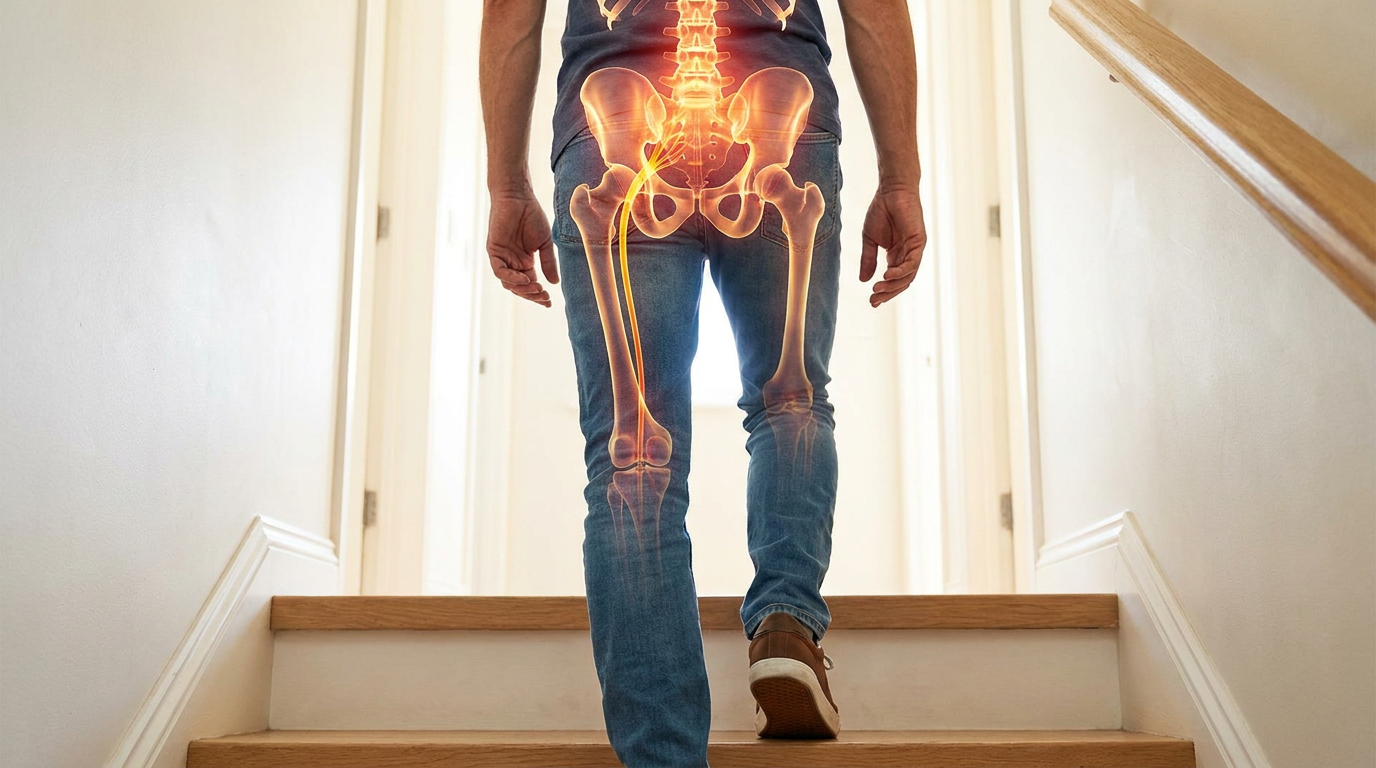
Sciatica describes nerve pain, and the diagnosis has to identify where something is compressing the nerve. The sciatic nerve, the longest in the body, travels from your lower spine, behind the hip, down the buttock and back of the knee before branching toward your foot. Pressure anywhere along that path can produce the same shooting, burning leg pain. The question that matters is where the pressure comes from.
When the Spine Is the Source (True Sciatica)
Sciatica usually starts when something irritates or compresses a nerve root in the lower back. The clinical term is lumbar radiculopathy, which means a nerve in your lumbar spine sends pain, numbness or weakness down the leg. It most often happens when a herniated disc or an overgrowth of bone presses on those nerve roots.
A herniated disc happens when the soft center of a spinal disc pushes through a crack in its tougher outer layer. The bulging material presses on a nearby nerve and releases chemical irritants that inflame it. Spinal stenosis means the canal around your spinal cord and nerves narrows, usually from arthritis, disc degeneration or bone spurs.
Spine-driven sciatica often runs from the low back through the buttock and down the back of the leg, reaching below the knee to the calf and foot. It tends to affect one side, and sitting, coughing, sneezing, bending or twisting can make it worse. Numbness or weakness in the leg or foot can appear when nerve compression moves beyond irritation and starts affecting how the nerve works.
When a Hip Muscle Is the Source (Piriformis Syndrome)
Piriformis syndrome compresses the same nerve, but in the buttock instead of the spine. The piriformis is a flat, narrow muscle that runs from your sacrum, the base of the spine, through the buttock to the top of the thigh bone. The sciatic nerve normally passes below the piriformis, though in some people it runs through the muscle.
The symptoms center in the buttock. You feel deep gluteal pain that may ache or shoot down the back of the thigh, with occasional extension below the knee. The muscle is tender to direct pressure, and pain often worsens with prolonged sitting, climbing stairs and movements that rotate the hip inward.
Piriformis syndrome has no single definitive test, and experts still debate how common it is. It remains a diagnosis of exclusion, so your doctor usually rules out spinal causes first. Estimates of how often it occurs vary widely based on how thoroughly doctors exclude other conditions.
Patterns That Help Separate Them
A few features tend to point in one direction or the other. These clues work best as part of a doctor’s exam, where several findings are weighed together.
| Feature | Spine-Driven Sciatica | Piriformis Syndrome |
| Back pain | Often present | Usually absent |
| Pain below the knee | Common, reaching calf and foot | Unusual, stays in buttock and thigh |
| Local buttock tenderness | Not a defining feature | Tender directly over the muscle |
| Sitting | One of several aggravators | The primary aggravator |
| Stair climbing | Not specific | Characteristically worse |
| Neurological signs | Reduced reflexes, weakness or numbness can appear | Reflexes and strength typically normal |
A careful exam matters because piriformis diagnosis depends on combining symptom patterns, physical findings and exclusion of spine causes. The symptom overlap is real enough that guessing often sends people toward the wrong treatment.
How Doctors Tell Them Apart
Doctors separate these conditions with physical exam maneuvers, imaging and a process of elimination. The straight leg raise test checks for spinal sciatica by having you lie flat while the examiner slowly lifts your straight leg.
Pain shooting down the leg below the knee at a hip angle between 30 and 70 degrees points toward nerve root irritation. The straight leg raise has low sensitivity for buttock-level entrapment, so your doctor may also use hip-focused tests that move your hip into positions meant to reproduce the pain, along with palpation and other findings.
Imaging fills in the rest, since MRI shows soft tissue clearly and makes pinched nerves and herniated discs visible to help confirm a spinal cause. For piriformis syndrome, imaging mostly helps exclude other conditions rather than confirm the diagnosis, and a normal scan doesn’t rule it out.
An in-office X-ray is often the first step, since it shows bone changes that narrow the space where nerves exit the spine. At Premier Orthopaedics & Sports Medicine, our neck and back specialists evaluate both spinal and non-spinal causes of sciatic-type pain across Northern New Jersey.
Conservative Treatment for Sciatica and Piriformis Syndrome
Both spine-driven sciatica and piriformis syndrome usually respond to non-surgical care, but the treatments aren’t interchangeable. A plan built around piriformis stretching differs from one aimed at nerve-root compression.
Calming Sciatica Without Surgery
For spine-driven sciatica, conservative care comes first and works for most people. About 90 percent of people improve without surgery. Physical therapy uses targeted exercises to reduce pressure on the nerve and build core stability, and your therapist changes the routine depending on whether the cause is stenosis or a herniated disc.
Your doctor may recommend anti-inflammatory medication when pain keeps you from participating in therapy. Staying active matters more than bed rest, and improvement often happens gradually.
When several weeks of first-line care isn’t enough, your doctor may bring up an epidural steroid injection for radiating nerve pain. Doctors typically hold this option until physical therapy and medication haven’t helped, and the injection delivers anti-inflammatory medication around the irritated nerve.
An epidural injection may improve function and reduce leg pain at six weeks compared with placebo, though durable long-term benefit is limited for some people. Premier’s pain management treatments include epidural steroid injections and nerve blocks, which can relieve pain by targeting inflamed or affected nerves.
Releasing the Piriformis
Piriformis syndrome treatment targets the piriformis and the muscles around the hip. Stretching and physical therapy form the foundation, and treatment usually combines several approaches. A therapist may also apply deep-tissue massage and soft tissue mobilization to loosen those muscles.
Prolonged sitting aggravates symptoms, so changing your sitting habits becomes a central part of the plan. Your doctor may also discuss medication when pain or spasm keeps you from doing therapy.
For stubborn cases, local anesthetic and corticosteroid injections may go directly into the muscle to reduce pain and spasm, and relief may help confirm the muscle as the source. Botulinum toxin may come up when persistent spasm keeps symptoms going despite therapy.
When Surgery Becomes Part of the Conversation
Surgery is a late step for either condition, and the procedure looks different depending on the cause. For spine-driven sciatica, your doctor typically discusses surgery only after conservative treatment hasn’t eased your symptoms over at least six to eight weeks, or sooner if you develop progressive weakness.
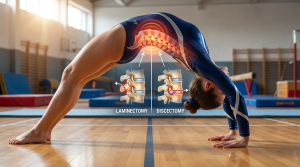
When a herniated disc causes the problem, a microdiscectomy is a disc removal procedure that takes out the portion of disc pressing on the nerve, while a decompression or laminectomy removes bone spurs or a small amount of bone to open space for the nerves.
Piriformis syndrome rarely requires surgery, and doctors reserve it as a last consideration for people who don’t improve with therapy. A few symptoms are emergencies that can’t wait for the usual step-by-step approach.
You should call emergency services or go to the emergency room right away if you notice any of these signs, which can signal cauda equina syndrome, a rare but serious problem where delayed treatment can cause permanent loss of bladder, bowel and leg function:
- Numbness in the saddle area, meaning the groin, buttocks, inner thighs or around the back passage
- New trouble starting or stopping urination, or new urine leaking
- Loss of bowel control or sensation
- Sudden, worsening weakness in one or both legs, or trouble walking
- Numbness or pain spreading into both legs at once
Recovery: What to Expect from Either Path
Recovery for both conditions usually takes weeks, though the timeline depends on the source of irritation and how your body responds. With sciatica, most people improve over time without surgery, often within several weeks. Healing usually starts with gentle movement, then physical therapy and core work, then rebuilding strength and endurance as symptoms allow.
Piriformis syndrome often improves gradually with consistent treatment, and many people need to keep stretching after the pain calms down. How quickly you return to activity depends on how your symptoms respond. Walking and gradual activity often fit into that approach, and you should stay active when you can.
If your work keeps you seated, take regular breaks to stand and move, and protect your back by lifting with your legs instead of lifting and twisting at the same time.
Stop Guessing at the Source
The real cost of guessing is months of the wrong treatment, and persistent buttock and leg pain is worth a real diagnosis rather than a vague label. The conditions feel similar, yet they come from different places, and the treatments that help one won’t reliably help the other.
Across Northern New Jersey, Premier takes a conservative-first approach, with spine and pain management specialists who look past the obvious label to find what’s actually driving your pain, then build a treatment plan around it. If you’ve been carrying a sciatica diagnosis that isn’t responding, Premier’s spine team can help you sort out the real source. Call 201-833-9500 or schedule a consultation online.
Frequently Asked Questions About Sciatica and Piriformis Syndrome
Can you have sciatica and piriformis syndrome at the same time?
Yes. Sciatica describes a broad category of nerve pain, and pinning down the source still matters. A spinal source and a buttock-muscle source can both be present, which is why an exam that checks both the spine and the hip is worthwhile.
Does piriformis syndrome show up on an MRI?
MRI can’t definitively diagnose piriformis syndrome. It may show muscle enlargement or an anatomical variant where the nerve runs through the muscle, but a normal scan doesn’t rule the condition out. The bigger value of imaging is confirming or excluding a spinal source like a herniated disc or stenosis.
How long does piriformis syndrome take to go away?
Piriformis syndrome often improves gradually when you treat it consistently. Your recovery may take longer if sitting habits, hip weakness or repeated irritation keep putting pressure on the nerve. Left untreated, deep buttock pain may worsen over time and persist for an extended period.
Why does my leg pain get worse when I sit?
It depends on the source, but sitting strains both. For piriformis syndrome, prolonged sitting can place the muscle in a position that increases pressure on the nerve. With spinal sciatica, sitting can also hurt, and driving can feel especially bad. The distinguishing clue is that sitting is the main aggravator for piriformis syndrome, while coughing, sneezing and bending forward also tend to worsen spinal sciatica.
This article is for general information only and isn’t a substitute for professional medical advice. Talk to your doctor about your specific situation before making treatment decisions.