Your surgeon has told you that you may need cervical, or neck, or lumbar, or lower back, spine surgery, and the conversation ended with two options: an artificial disc or a fusion. Disc replacement vs. spinal fusion is usually a decision you reach after you and your doctor explore non-surgical care, unless urgent nerve symptoms or instability require earlier action.
Instability means a spinal segment moves more than it should or slips out of position. Both procedures treat many of the same disc problems, but the right choice depends on your anatomy, diagnosis and goals for motion.
Table of Contents
ToggleWhat These Two Procedures Have in Common
Both disc replacement and spinal fusion treat disc-driven problems, so the decision often comes down to anatomy because the diagnosis can fit either procedure. Surgeons consider both for a herniated disc, where disc material pushes against a nerve, degenerative disc disease, which means painful wear in the disc, and single-level stenosis and radiculopathy. Stenosis means narrowing around the nerve spaces, and radiculopathy is nerve pain that can travel into your arm or leg with numbness or tingling.
Both procedures also start the same way. The surgeon removes the damaged disc material and takes pressure off the compressed nerve, which often relieves symptoms. After the disc comes out, the surgeon either locks the level in place or keeps it moving.
When Conservative Treatment Should Come First
For many people, these procedures enter the discussion after non-surgical treatment has not provided enough relief. Your surgeon will tell you if weakness, bowel or bladder changes, worsening numbness or instability make timing more urgent. Many disc herniations and degenerative disc cases start with conservative care before surgery becomes part of the plan.
Non-surgical options include physical therapy, medication, activity modification and targeted injections. At Premier Orthopaedics & Sports Medicine, our spine and pain management specialists manage cervical and lumbar disc conditions non-surgically before surgery enters the plan. If your symptoms don’t respond, the pain management treatments available can bridge the gap while you and your surgeon weigh surgery.
How Spinal Fusion Works
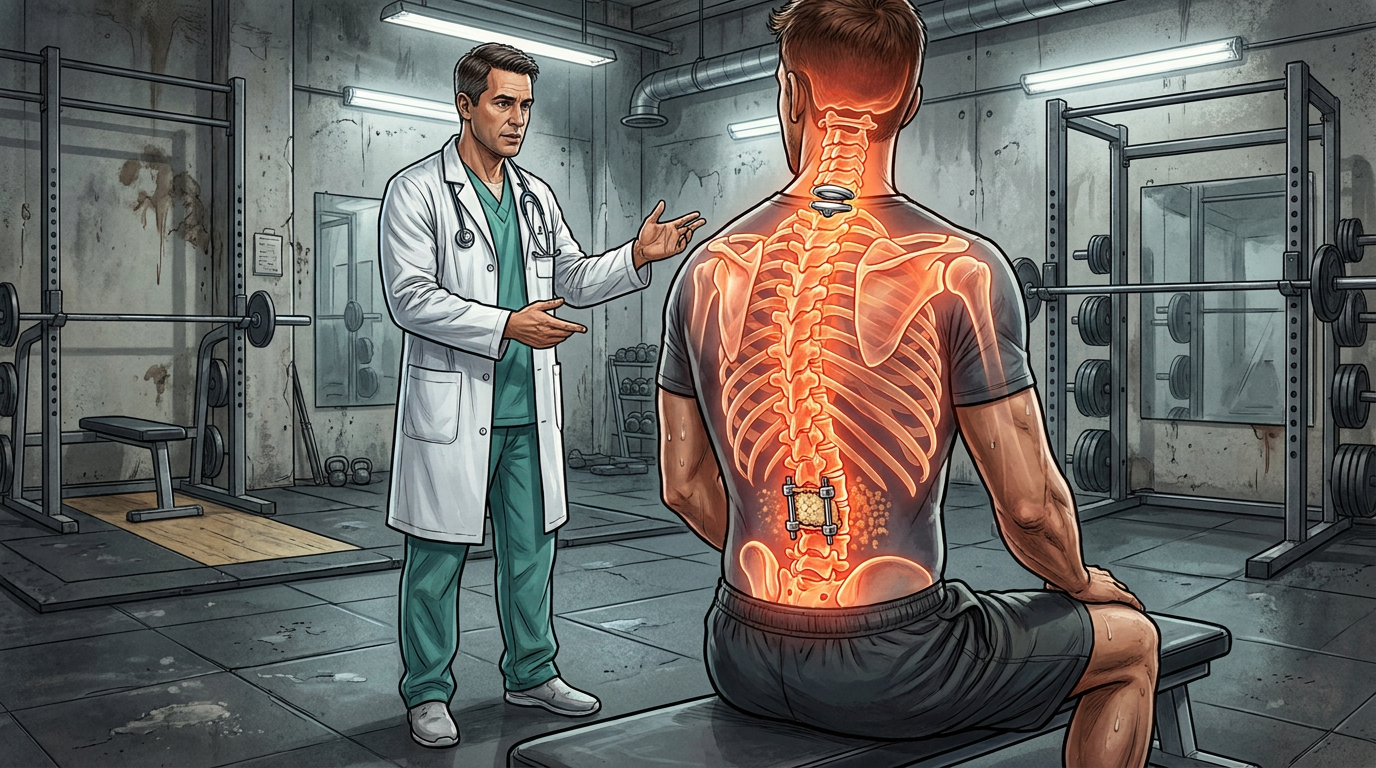
Spinal fusion joins two neighboring vertebrae into one solid segment so the painful level no longer moves. It prioritizes stability over motion at that level. After removing the damaged disc, the surgeon places a bone graft and a cage, which is a small spacer, into the empty disc space, then secures the segment with hardware such as screws or a plate.
What Happens During Spinal Fusion
Over time, new bone grows through and around the cage until the two vertebrae knit into a single unit. That bone growth makes the fusion permanent, and yourspine surgery team will monitor healing at follow-up visits.
What Fusion Means for Your Spine
Once the level fuses, it stops moving, and nearby levels absorb the motion that segment used to handle. Adjacent segment change is worth discussing for that reason.
Your surgeon may prefer fusion when the spine needs more structural stability. Spondylolisthesis means one vertebra has slipped forward over another, and it is one stability problem your surgeon may discuss. For lumbar degenerative disc disease, fusion success ranges from 50 to 90 percent, which is why it stays a dependable choice when stability is the goal.
How Disc Replacement Works
Disc replacement removes the damaged disc and puts an artificial disc in its place. Surgeons also call it artificial disc replacement (ADR) or arthroplasty, which means replacing a joint or motion segment with an artificial device. The device aims to keep the treated level moving instead of fusing it solid.
What Happens During Disc Replacement
After clearing out the damaged disc and relieving pressure on the nerve, the surgeon seats an implant that mimics the way a healthy disc moves. Keeping that segment mobile may reduce the extra stress passed to neighboring levels.
What Disc Replacement Means for Your Spine
Cervical disc replacement treats the neck. For appropriately selected patients, disc replacement can be a viable alternative to fusion, but the right region and level matter.
Lumbar disc replacement exists too, but candidacy for the lower back depends closely on your anatomy. It is still major surgery that requires general anesthesia and hospitalization. Even in the neck, the procedure carries risks worth knowing, including early throat irritation and adjacent changes over time. Keeping the level moving benefits the right patient; the wrong anatomy can make fusion safer.
Been told you need disc replacement or fusion?
Choosing between an artificial disc and a fusion is a decision worth a second set of eyes, especially when candidacy depends on details like facet health and spinal stability. Premier’s spine team reviews your prior imaging and records before the visit, not during it, so the conversation can focus on which procedure actually fits your anatomy.
Who Is a Candidate for Disc Replacement
The best candidates for disc replacement usually have a problem tied to a single disc level, good spinal motion, little or no arthritis and no marked spinal instability at that level. Facet joints are the small paired joints at the back of each spinal segment that guide and limit motion. Your surgeon determines candidacy by reviewing your imaging and anatomy.
Ideal Candidates
Certain findings make motion preservation a safer, more reliable choice. Good candidates tend to share these features in combination:
- Disease at a single disc level
- Preserved motion at that level
- Little or no arthritis at that level
- Greater disc height at the treated level
- A stable spine without slippage or instability
If your imaging shows most or all of these, your surgeon may raise disc replacement as a real option. The final call still rests on the full picture your exam and scans provide.
Who Is Not a Candidate
Several conditions can rule out motion preservation because the implant needs a stable, healthy foundation to work. Osteoporosis means weakened bone density, and severe osteoporosis can make implant support unsafe. Contraindications are findings that make a procedure unsafe or inappropriate. Vertebral bodies are the block-like front portions of the spine bones, and common disc replacement contraindications include:
- Multi-level disease outside device labeling
- Advanced facet joint arthritis
- Marked spinal instability
- Severe osteoporosis
- Compromised vertebral bodies
- Active infection
For many surgical candidates, one of these findings makes disc replacement unsafe, and fusion becomes the more reliable way to relieve pain. Your surgeon will explain which finding matters most in your case.
Who Is a Candidate for Spinal Fusion
Fusion may fit situations where the spine needs structural stability. Your neck and back specialists may recommend it when the goal is to stabilize the spine by locking down a painful or structurally weak segment.
Your surgeon may discuss fusion when imaging shows one of the patterns below. These findings can make motion preservation too risky.
- Single-level or multi-level disease
- Spondylolisthesis or instability
- Spinal deformity
- Revision cases
- Trauma-related spine injury
Comparing Outcomes, Recovery and Long-Term Results
For appropriately selected single-level cervical cases, disc replacement can be a viable alternative to fusion. The main differences often show up in restrictions and long-term behavior at the neighboring levels.
Recovery Timeline
Fusion recovery centers on bone healing, and your surgeon tracks that healing through follow-up visits. Disc replacement uses an implant rather than a bone graft that has to knit together, but individual timelines vary. Your surgeon will set a timeline based on your procedure and your job, and Premier’s recovery guidance explains what to expect at each stage.
Pain Relief and Function
Both procedures can reduce nerve-driven arm or leg pain when the target matches the diagnosis. Pain relief is uncertain and depends far more on whether surgery addresses the actual source of your symptoms than on which technique you choose. Candidacy matters because the procedure must match the diagnosis and target level.
| Dimension | Disc Replacement | Spinal Fusion |
| What happens to motion | Treated level keeps moving | Treated level is locked solid |
| Recovery emphasis | No bone-graft consolidation; timelines vary | Bone needs months to consolidate |
| Adjacent-level consideration | May reduce added stress on nearby levels | Nearby levels absorb the lost motion |
| Best-established region | Cervical (neck) | Cervical and lumbar |
| Primary goal | Preserve motion | Restore stability |
Motion preservation and structural stability are the main tradeoff. The right one depends on your anatomy and diagnosis.
Adjacent Segment Disease
Adjacent segment disease is added wear on the levels next to a treated segment. Fusion can place more adjacent-level stress than disc replacement in selected cases. In longer-term cervical follow-up, disc replacement patients reported fewer surgeries and higher satisfaction, but those differences are one factor among several.
How to Decide Between the Two
You and your surgeon decide on the right procedure based on your exam and imaging, with your goals part of the discussion. A surgeon who performs both can weigh the tradeoffs honestly instead of steering you toward the one technique they happen to offer.
Questions to Ask Your Surgeon
A focused conversation helps you leave the office confident in the plan. Questions worth asking include:
- Am I a candidate for disc replacement, and if not, why?
- Which spinal level are we treating, and how many levels are involved?
- Do you perform both fusion and disc replacement?
- What are the specific risks for my anatomy?
- How long will recovery take given my job?
The answers should line up with what your imaging shows, and a good surgeon will walk you through the reasoning behind the recommendation.
Why This Decision Should Be Individualized
Two people with neck pain can need opposite procedures if their facet health or spinal stability differs. The number of involved levels also matters. Dr. Jay Reidler, a Harvard, Johns Hopkins and Columbia-trained spine surgeon, performs both spinal fusion and artificial disc replacement for cervical spine conditions and recommends the approach based on each patient’s anatomy and clinical goals.
If you want more background before your visit, Premier’s spine care FAQ covers common questions. That can help you frame the conversation around your own imaging rather than a general preference for one procedure.
Schedule a Spine Consultation
If you’re weighing disc replacement against fusion, a consultation can review your imaging and symptoms so you know which procedure fits your spine. You can call 201-833-9500 or schedule online with our spine team across Northern New Jersey.
Get a Second Opinion on Disc Replacement vs. Spinal Fusion
If your surgeon has recommended an artificial disc or a fusion, a visit with Premier’s Northern New Jersey spine team can walk through your imaging and anatomy to see how it fits your specific diagnosis. You’ll leave with a clearer picture of which approach matches your goals for motion and stability.
Frequently Asked Questions About Disc Replacement and Spinal Fusion
Is disc replacement better than spinal fusion?
Disc replacement and fusion fit different anatomy. The right choice is set by candidacy: whether you have single-level or multi-level disease, how healthy your facet joints are, whether your spine is stable and what your goals are. Candidacy depends on whether motion preservation is safe for your spine.
Can you get disc replacement for the lower back?
Yes, lumbar disc replacement exists, but candidacy depends closely on anatomy. It is major surgery that involves general anesthesia and a hospital stay. You can ask your surgeon whether the evidence and their experience apply to your exact lumbar level.
How long does a disc replacement last?
Durability depends on the device and your anatomy, and long-term data is still accumulating. You can ask your surgeon what is known about the specific disc they recommend for you and how follow-up works after surgery. That conversation gives you a clearer sense of what to expect than any single number would.
Does insurance cover disc replacement surgery?
Insurance plans cover artificial disc replacement differently based on plan rules and medical-necessity criteria. Diagnosis also affects approval, so you should verify coverage with your insurer before scheduling. Our team can help confirm your coverage and explain what documentation your plan is likely to need.
This article is for general information only and isn’t a substitute for professional medical advice. Talk to your doctor about your specific situation before making treatment decisions.