
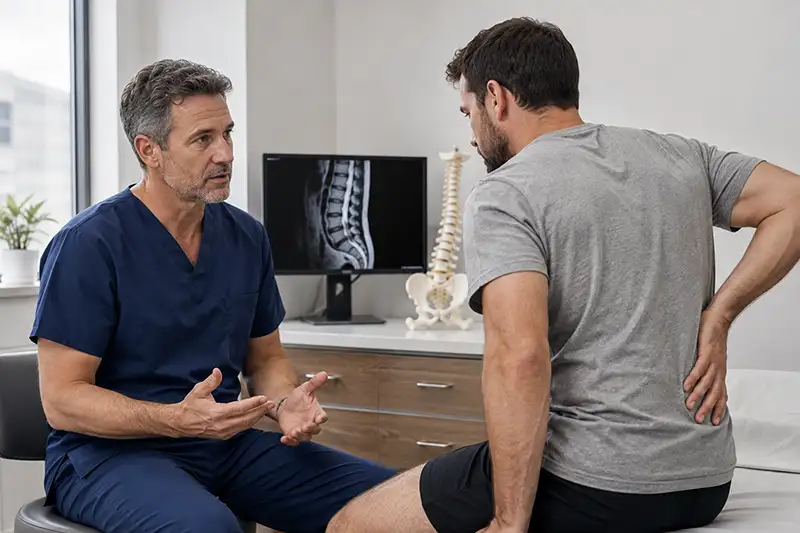
Sciatica Treatment in New Jersey
Sciatica is nerve pain that starts in your lower back or buttock and runs down one leg. It can feel like burning, shooting, or an electric jolt. The good news is that most people get better without surgery. At Premier Orthopaedics & Sports Medicine in Bloomfield, Englewood, and Union City, NJ, our pain and spine specialists can help you discover relief from sciatica so you can live your life free from pain.
What is sciatica?
Sciatica is a set of symptoms caused by pressure on the sciatic nerve, the largest nerve in your body. The sciatic nerve begins at nerve roots in your lower spine. It runs through each buttock and down the back of each leg. When something presses on a nerve root, the pain travels along that path and into your leg. Sciatica usually affects just one side of your body at a time. Because sciatica is a symptom and not a condition on its own, two people can have the same leg pain for very different reasons.
At Premier Orthopaedics & Sports Medicine, we understand how much sciatica can wear on you, from a rough commute to a night of broken sleep. Our spine and pain specialists take the time to find what is pressing on the nerve, then build a plan around your symptoms and your goals. You can visit us at our Bloomfield, Englewood, and Union City, offices.
What causes sciatica?
Sciatica has several common causes. A herniated disc, also called a slipped disc, is the most common one. Other causes include a narrowed spinal canal, known as spinal stenosis. A vertebra that slips forward, known as spondylolisthesis, can also press on the nerve.
Bone spurs and normal disc wear with age play a part too. Tight buttock muscles or the added weight of pregnancy can bring on similar leg pain. Knowing the exact cause matters, because it points to the treatment that will actually help you.
Sciatica has a handful of common causes, and most start in your lower spine. Here are the usual culprits:
- Herniated (slipped) disc: the soft cushion between two vertebrae bulges out and presses on a nearby nerve root. It is the most common cause.
- Spinal stenosis: the spinal canal narrows and crowds the nerves, which becomes more common after age 50.
- Spondylolisthesis: one vertebra slips forward over the one below it and pinches the nerve.
- Bone spurs and disc wear: arthritis and years of everyday use narrow the space around the nerve.
- Piriformis muscle: a deep buttock muscle tightens and presses on the nerve as it passes through.
- Pregnancy: added weight and a shift in posture put extra pressure on the nerve.
A hands-on exam and an MRI can pinpoint the cause. Your spine specialist at Premier Orthopaedics then matches it to the right care.
What are the symptoms of sciatica?

Sciatica symptoms usually show up on one side and follow the path of the sciatic nerve. They can be mild or sharp enough to disrupt your day. Common signs of sciatica include:
- Pain that spreads from your lower back or buttock into the thigh, calf, or foot
- A burning, shooting, or electric feeling instead of a dull ache
- Numbness or a pins-and-needles feeling in the leg or foot
- Weakness in the leg or foot, such as trouble lifting your toes
- Pain that flares when you sit, cough, sneeze, or bend, and eases when you move
Pain that keeps growing, or comes with leg weakness, is a sign to get checked. You do not have to push through pain that keeps interfering with your day.
Who gets sciatica, and when should you see a spine specialist?
Sciatica is common, and knowing your risk and the warning signs helps you act early.
Who is most at risk for sciatica?
Sciatica can affect many kinds of people, and it gets more likely with age. Orthopaedic surgeons note that sciatica is most common between the ages of 30 and 75. Your risk goes up if your job involves heavy lifting, twisting, or long hours of sitting. Pregnancy, extra weight, and a past back injury can raise it too. Even active, healthy people get sciatica, often after one bad lift or an awkward turn.
When should you see a spine specialist for sciatica?
See a spine specialist when home care is not helping. The same goes if leg pain lasts more than a week or keeps getting worse. Weakness or numbness that makes it hard to walk or handle daily tasks is another reason to be seen. An early exam finds the cause and protects the nerve from lasting harm.
Some symptoms need emergency care, not a routine visit. Go to an emergency room right away if you lose control of your bladder or bowels. Get emergency help too if you feel numbness around the groin or sudden weakness in both legs. Those warning signs can point to a serious problem called cauda equina syndrome, which needs urgent care.
Sciatica Treatment Options in Bloomfield, Englewood, and Union City

Sciatica care almost always starts without surgery, and most people never need an operation. You will usually begin with gentle, non-surgical care. If pain hangs on, your care team can add targeted injections. Surgery is an option only when clear signs call for it.
Non-surgical care comes first: Most sciatica eases with activity changes, physical therapy, targeted exercise, and heat or ice. Anti-inflammatory or other medicine can help, as your provider advises. Staying gently active usually helps you more than long bed rest.
Injections can calm the nerves: When leg pain lingers, pain-management treatments such as epidural steroid injections or nerve blocks can lower the swelling around the nerve root. Less pain makes it easier for you to move and get more from therapy.
Surgery helps in the right cases: Some people have nerve pressure that stays severe, or leg weakness that keeps growing. Spine surgery can take that pressure off, and most patients recover well. When surgery makes sense, you can ask your surgeon about minimally invasive and robotic spine surgery options.
| Treatment path | What it involves | When you might use it |
|---|---|---|
| Non-surgical care | Physical therapy, activity changes, targeted exercise, medicine, heat or ice | The first step for most people with new or mild-to-moderate sciatica |
| Injections | Epidural steroid injections or nerve blocks to calm the irritated nerve | When pain hangs on after a few weeks of non-surgical care |
| Surgery | A procedure to take pressure off the nerve, such as microdiscectomy | Severe or lasting symptoms, growing weakness, or red-flag signs |
Get Expert Sciatica Treatment in New Jersey
You can see Premier’s spine team for sciatica at three Northern New Jersey offices: Bloomfield, Englewood, and Union City. Your spine care is led by Dr. Jay S. Reidler, a fellowship-trained spine surgeon. He trained at Johns Hopkins and completed an adult and pediatric spine fellowship at Columbia University. Premier keeps surgical and non-surgical care under one roof. You can start with gentle care and weigh a procedure only if you truly need one. In-office imaging and one phone line keep your visits in one place.
Want your sciatica checked? Already have an MRI? You can ask for a free MRI review before you decide anything.
Frequently asked questions about sciatica in New Jersey
How long does sciatica last?
What makes sciatica worse?
Can sciatica go away on its own?
Can sciatica be cured permanently?
Is surgery necessary for sciatica?
Surgery is rarely the first step for sciatica, and most people improve without it. You and your doctor might consider it when severe pain lasts despite weeks of care, when leg weakness keeps growing, or when red-flag signs appear. If surgery does come up, our guide to sciatica surgery options explains what each procedure does and who it fits.
Have a question we did not cover here? Our spine care FAQ answers more of what patients ask before a visit in Bloomfield, Englewood, or Union City.