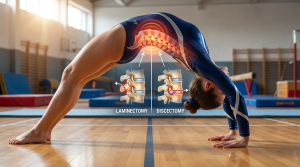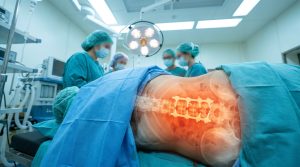
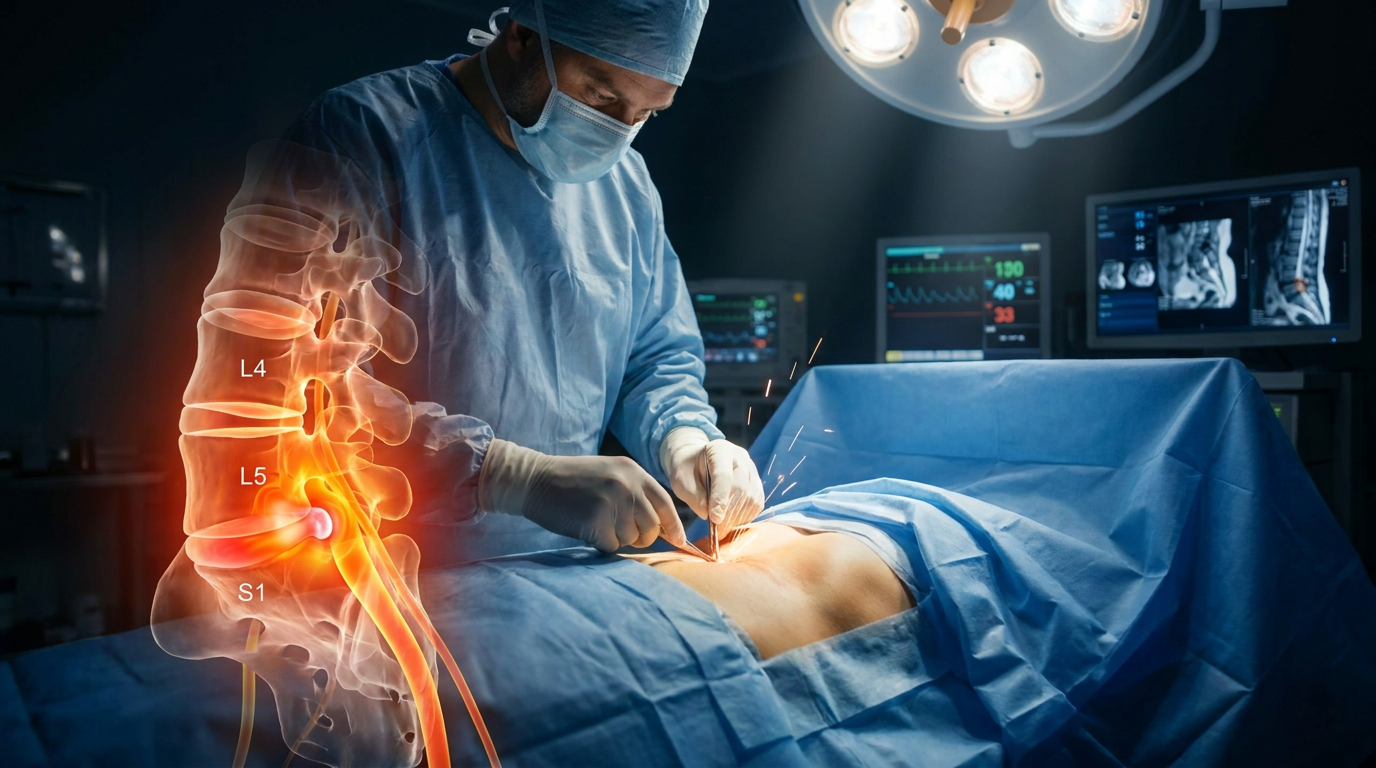
After months of physical therapy and an injection or two, persistent leg pain may lead your surgeon to discuss procedures such as microdiscectomy or laminectomy. Sciatica is pain, numbness or weakness that travels from your lower back into your leg when something irritates or compresses a nerve.
Now a surgeon has mentioned microdiscectomy, a procedure that removes herniated disc material, and laminectomy, which opens the narrowed space around the nerves, and you can’t tell which sciatica medical procedure applies to your case.
We’ll explain how microdiscectomy, laminectomy and foraminotomy, which widen the nerve exit, match different causes of nerve compression.
When Surgery Enters the Conversation for Sciatica
Most people with sciatica get better without an operation. About 80 to 90 percent improve without surgery (if the underlying cause is a herniated disk), which is why your doctor starts with conservative care. Conservative care usually starts with physical therapy to strengthen the muscles that support your spine.
If you’re asking when doctors recommend surgery for sciatica, the usual threshold is six weeks of conservative treatment that hasn’t relieved your leg pain, including anti-inflammatory medication and epidural injections and nerve blocks that pain management specialists perform.
A herniated disc pressing on a nerve root in your lower back is the most common reason your surgeon discusses surgery. Your surgeon may discuss injections separately because doctors often use them after therapy hasn’t provided enough relief and before surgery.
An epidural steroid injection calms the inflammation around the nerve enough for you to move, sleep and make progress in physical therapy, but it rarely fixes the compression itself.
If relief fades while the underlying compression remains, your surgeon may start weighing whether removing the pressure directly makes more sense than repeating treatments that haven’t held.
Microdiscectomy: The Most Common Sciatica Surgery
When your surgeon confirms a herniated disc as the cause, microdiscectomy for sciatica is the procedure your surgeon will most likely recommend. Surgeons often rely on microdiscectomy when imaging and symptoms point to a herniated disc.
What Is Microdiscectomy?
Microdiscectomy is a common operation for lumbar disc herniation. Aminimally invasive spine surgery technique works through a smaller opening and may reduce muscle disruption. Your surgeon removes the herniated fragment pressing on the nerve through a small incision.
Your procedure and overall health guide the hospital plan, with your surgeon explaining whether that approach fits the location of your herniation and your overall health.
Who It’s For
You’re a candidate when your MRI shows a disc herniation that matches your leg-pain pattern and nonsurgical care hasn’t helped. Your surgeon checks that match by comparing the level of the herniation with the path of the pain down your leg; when the two line up, the herniation is the likely culprit.
Microdiscectomy won’t help sciatica that comes from a narrowed spinal canal or from the piriformis muscle deep in your buttock, because neither involves a disc fragment to remove. That distinction keeps the procedure focused on the source of pressure rather than the severity of the pain alone.
What to Expect and How Well It Works
The sciatica surgery success rate you’ll see quoted most often comes from discectomy studies. Microdiscectomy produced 84.3 percent good or excellent results after surgery.
Many people go home the same day, while others need a one-night stay, depending on the surgical plan and their health. You’ll avoid heavy lifting and twisting at first, then add activity back in stages.
At Premier Orthopaedics & Sports Medicine, Premier’s recovery guidance covers the restrictions and milestones in detail.
Laminectomy and Foraminotomy: Decompression for Narrowed Nerve Space
Surgeons treat sciatica from a narrowed nerve space with decompression rather than disc-fragment removal. Laminectomy and foraminotomy are decompression options your surgeon may discuss when narrowing develops over time.
What They Are and Who They’re For
A laminectomy for sciatica removes part of the lamina, the bony roof of the spinal canal, to relieve pressure when spinal stenosis is the cause. Spinal stenosis is a narrowing of the canal that surrounds your spinal cord and nerves, and it usually develops gradually with age.
Foraminotomy is another decompression option your surgeon may discuss when the nerve exit on the side of the spine contributes to the pinch. Both procedures fit cases where narrowed nerve space causes sciatica.
A disc herniation that matches your symptoms points your surgeon toward microdiscectomy instead. That distinction explains why two people with nearly identical leg pain can leave their consultations with different recommendations: the underlying cause differs even when the symptom doesn’t.
What to Expect
Your surgeon can tell you whether your laminectomy is likely to take longer than a microdiscectomy and how recovery may change if your procedure includes one spinal level or several.
Your overall health, the number of levels involved and whether the surgeon needs to address instability can affect the hospital plan and early restrictions. Your surgeon should match the size of the operation to the exact source of pressure.
Fusion comes up in some consultations. Your surgeon may consider adding it when instability is part of the diagnosis, such as spondylolisthesis, a forward slip of one vertebra over the one below it.
On its own, fusion is usually a separate discussion rather than the default sciatica operation. Your surgeon should explain why stabilization adds value if they recommend it with decompression.
How to Decide Which Sciatica Medical Procedure Fits Your Diagnosis
The structure compressing the nerve determines the procedure more than the intensity of your pain. Severe pain from a small herniation and moderate pain from long-standing stenosis lead to different operations, because each procedure removes a different source of pressure.
Match the Cause to the Procedure
A herniated disc points to microdiscectomy. Stenosis in the central canal calls for laminectomy, while a narrowed nerve exit may lead your surgeon to discuss foraminotomy. Instability is one reason a surgeon may add fusion to whichever decompression you need.
Each option targets a different source of pressure. The table helps you match the diagnosis in the second column to the procedure your surgeon named before you ask about recovery or technique.
| Procedure | Underlying Cause It Treats | What the Surgeon Does | Typical Setting |
| Microdiscectomy | Herniated disc pressing on a nerve root | Removes the disc fragment through a small incision | Same-day or one-night stay |
| Laminectomy | Spinal stenosis narrowing the central canal | Removes part of the lamina to open the canal | Varies by number of levels and overall health |
| Foraminotomy | Narrowed opening where the nerve root exits | Widens the foramen around the nerve | Varies by surgical plan |
| Fusion (added when needed) | Instability your surgeon needs to address | Stabilizes the involved bones after decompression | Depends on why fusion is added |
The main takeaway is that the procedure should match the structure compressing the nerve. Your MRI, exam and symptom pattern help your surgeon confirm that match.
Use Your MRI to Confirm the Plan
Your surgeon uses your MRI findings to choose the procedure. Surgery tends to bring relief faster than continued nonsurgical care.
At four years, surgery patients showed greater improvement than non-operative patients across primary and secondary outcomes except return to status. Plenty of people who defer surgery still do well, so waiting is a reasonable path when your strength is intact and your symptoms are stable.
Your surgeon confirms the cause first. An imaging review with our neck and back specialists identifies which problem is causing your symptoms, and the consultation covers the procedure that matches it.
What to Discuss With Your Doctor Before Sciatica Surgery
Pain relief is usually the main goal of decompression surgery because numbness may persist even when the pain improves.
You can ask which of your specific symptoms your surgeon expects the procedure to fix before asking about technique or robotic spine surgery. These questions can guide the consultation:
- Why does this procedure fit my MRI findings better than the alternatives?
- How many of these procedures do you perform each year?
- Which of my symptoms should improve, and which may linger?
- What happens if this surgery doesn’t relieve the pain?
- What will recovery look like for my job, including workers’ compensation return-to-work requirements if an injury at work caused my symptoms?
- What would you need to see to recommend waiting instead?
Cauda equina syndrome, a compression of the nerve bundle at the base of the spinal cord that can cause loss of bladder or bowel control, is a surgical emergency.
Progressive leg weakness, meaning your foot or leg gets measurably weaker from week to week, also justifies earlier surgery because weakness signals loss of nerve function. Ask your surgeon which symptoms should prompt urgent evaluation instead of waiting for the next scheduled visit.
A surgeon who answers these directly shows you the reasoning behind the recommendation. Getting a second opinion before spine surgery is normal, and a fellowship-trained spine surgeon like Dr. Jay Reidler can review your imaging and give you an independent read. Our spine care FAQ covers the broader questions that come up before a consultation.
Talk Through Your Options With Premier’s Spine Team
If you’re weighing surgery for sciatica and want help matching the procedure to your diagnosis, our team can review your imaging and talk through your options at our offices across Northern New Jersey. You can call us at 201-833-9500 or schedule an appointment online.
Frequently Asked Questions About Sciatica Medical Procedures
What happens if sciatica surgery doesn’t relieve my pain?
Your surgeon starts by re-evaluating the diagnosis, since persistent pain sometimes has causes such as recurrent disc herniation.
From there, your surgeon may discuss other treatment paths, such as structured pain management, continued physical therapy or, in selected cases, revision surgery.
A full evaluation of lasting symptoms after surgery can help you understand your options rather than assuming stronger medication is the only next step.
Will the numbness in my leg go away after surgery?
Pain is often the main target of decompression, while numbness may persist even when pain improves. Because nerve symptoms are less predictable than pain, it’s worth asking your surgeon what trajectory to expect for each of your symptoms.
Should I get a second opinion before scheduling sciatica surgery?
Yes, and it’s routine for elective spine surgery; no reasonable surgeon will take it personally. A second review either confirms the plan or surfaces an alternative worth discussing. Either result leaves you deciding with more information.
How soon can I go back to work after a sciatica procedure?
Your job duties usually shape the timeline as much as the procedure. For a desk job, ask when sitting and commuting are reasonable; for physical labor, ask when lifting, bending, and twisting restrictions may change.
Before scheduling, ask your surgeon for a timeline that’s specific to both the procedure and your actual job duties, and request written light-duty restrictions if your employer needs them.
This article is for general information only and isn’t a substitute for professional medical advice. Talk to your doctor about your specific situation before making treatment decisions.