
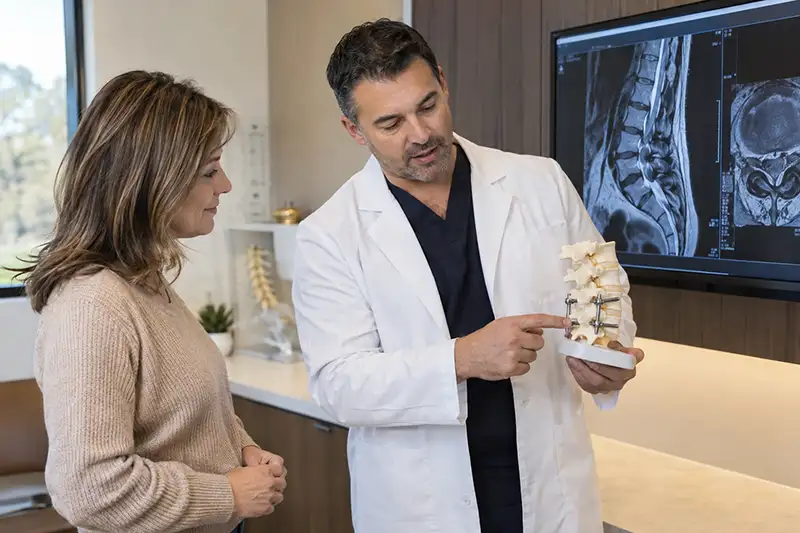
Spinal Fusion Surgery in New Jersey
Spinal fusion is surgery that permanently joins two or more vertebrae into one stable segment, limiting painful or abnormal movement. It may be recommended when spinal instability, deformity or another structural condition causes persistent pain, nerve compression or reduced function despite non-surgical treatment.
At Premier Orthopaedics & Sports Medicine, Dr. Jay S. Reidler, a board-certified, fellowship-trained orthopaedic spine surgeon, evaluates whether fusion is necessary and selects an approach based on the affected spinal level, symptoms and stability needs.
Why Is A Spinal Fusion Performed?
A spinal fusion is performed to stabilize an unstable or deformed segment of the spine and, when appropriate, stop painful movement at that level. Fusing the segment holds it in a fixed, stable position to help prevent abnormal movement and maintain spinal alignment.
The conditions that most often lead to a fusion recommendation include:
- Spondylolisthesis, where one vertebra slips forward relative to the vertebra below it
- Spinal stenosis, when relieving the pinched nerves requires removing enough bone that the segment is left loose
- Scoliosis or another spinal curve that keeps worsening despite other treatment
- A recurrent herniated disc when instability or another structural problem makes fusion appropriate
- A fracture, tumor or infection that has weakened the spine
How Is A Spinal Fusion Performed?
During spinal fusion, the spine specialist may first decompress nerves, then places bone graft between vertebrae to help them heal into one stable segment. Screws, rods or other implants may hold the spine in position while fusion develops.
The procedure may be performed through the back, side or front, using minimally invasive or open techniques based on the spinal level, diagnosis and stability required. Dr. Reidler may use live X-ray imaging, navigation or robotic guidance when these tools support precise implant placement and the surgical plan.
What Does Recovery From A Spinal Fusion Look Like?
Recovery after spinal fusion occurs in stages as the bone graft heals. Many patients begin walking with assistance on the day of surgery or the following day. Hospital stay, pain levels, activity restrictions, and return to work depend on the procedure, number of spinal levels treated, and overall health.
Following lifting restrictions, walking as directed, and avoiding nicotine support bone healing. Return to work also depends on the physical demands of your job. Desk based work often resumes sooner than jobs involving lifting, climbing, or repetitive bending.
Spinal Fusion Recovery Timeline
Spinal fusion recovery timelines are general estimates. Your recovery depends on the type of procedure, number of vertebrae treated, overall health, and your surgeon’s instructions.
How Soon Can You Go Home After Spinal Fusion?
Many patients go home within one to four days after spinal fusion surgery. The timing depends on pain control, mobility, the procedure performed, and how your early recovery progresses.
When Can You Return To Desk Work After Spinal Fusion?
Some patients return to desk based work within 4 to 6 weeks. Recovery may take longer if you still have significant pain or limited mobility, have a physically demanding commute, or need to lift, bend, or stand for extended periods at work.
When Does Physical Therapy Start After Spinal Fusion?
Physical therapy often begins around 6 to 12 weeks after surgery, depending on the procedure and how the spine is healing. Rehabilitation focuses on safe movement, walking, posture, strength, and a gradual return to everyday activities.
When Can You Return To Physical Work After Spinal Fusion?
Jobs involving lifting, repetitive bending, twisting, prolonged standing, or other physical demands may require three months or longer away from work. Your surgeon will determine when you are ready to resume specific duties based on your recovery.
How Long Does Spinal Fusion Take To Heal?
Bone fusion often takes 6 to 12 months. You may resume some everyday activities well before the fusion is fully healed, but clearance for strenuous activity depends on your follow up evaluations and imaging.
Frequently Asked Questions About Spinal Fusion Surgery In New Jersey
A single-level fusion removes motion at the one spinal segment that is fused. Many people do not notice a major difference in everyday movement because the segments above and below continue to move.
Multi-level fusion affects more of the spine and may limit flexibility to a greater extent. That is why the treatment plan focuses on stabilizing the levels causing the problem while preserving unaffected levels where possible.
Many people who are considering fusion have non-surgical options to explore first. Physical therapy, medication, activity changes and injections may help manage back or leg symptoms, depending on the condition.
Fusion becomes a reasonable next step when symptoms continue to limit sleep, work, walking or daily function despite an appropriate trial of non-surgical treatment and there is a structural reason to stabilize the spine. If another provider has recommended surgery, a second opinion or a free MRI review can confirm whether it is truly needed.
Decompression and fusion are separate procedures that are sometimes performed together. Decompression removes bone, disc material or thickened tissue that is pressing on the nerves. Many people with spinal stenosis need decompression only.
Fusion is added when the spinal segment is already unstable or when decompression would make it unstable. The decision depends on the condition, spinal alignment and amount of tissue that needs to be removed to free the nerve.