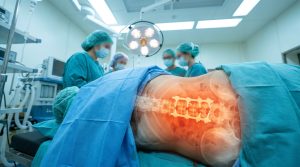
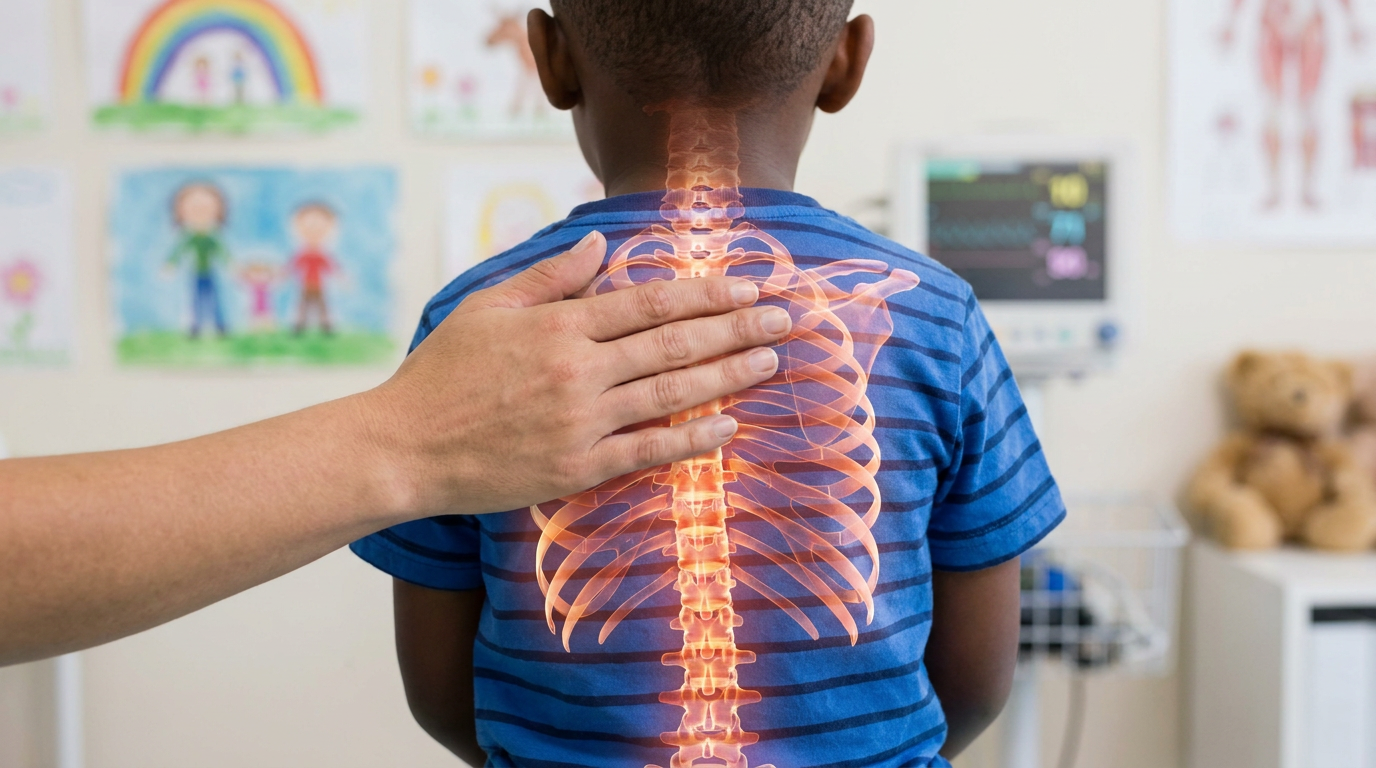
Your child’s curve kept progressing despite months in a brace, and now the surgeon has recommended surgery. Many parents have questions about whether an operation is truly necessary and what the next year will look like.
Pediatric scoliosis surgery recovery usually includes a short hospital stay, several restricted weeks at home, a planned return to school, sports clearance and long-term spine changes.
How Long Recovery From Pediatric Scoliosis Surgery Takes
Most children who receive a scoliosis diagnosis never need an operation. If your child has already spent months in conservative care with neck and back specialists, your surgeon may be following that conservative-first treatment sequence.
When Surgery Enters the Conversation
Idiopathic scoliosis means scoliosis without a known cause, which is the most common type in adolescents. Surgeons typically prescribe bracing for curves in the 20 to 50 degree range, and brace wear lowered progression risk when children followed the daily wear schedule. Surgeons often discuss surgery when a curve keeps progressing despite that effort.
Typical Recovery Timeline
Once your surgeon sets a date, families usually plan around four recovery phases. The exact pace depends on the operation, your child’s health and how the spine heals.
| Phase | Typical timeframe | Key milestone |
| Hospital stay | Varies by procedure | First assisted steps and discharge home when your child can manage safely |
| First weeks at home | Early home recovery | Medication taper and a surgeon-directed school return |
| School and everyday activity | After the first weeks | Everyday activity gradually returns as the surgeon allows |
| Full recovery and sports | Later months | Sports clearance varies by sport and surgeon |
Every child’s timeline is slightly different, and your surgeon will adjust these ranges based on the procedure and how the spinal fusion, the section of spine your surgeon permanently joins, heals.
The follow-up plan matters as much as the calendar because imaging and symptoms guide each step.
Your Child’s Recovery Phase by Phase
At home, parents often plan daily routines around the restrictions while their child moves through each recovery phase. A clear plan for sleep, bathing, schoolwork and transportation makes the first few weeks easier to manage.
The Hospital Stay
Your child will likely begin moving with help during the hospital stay, and nurses will teach the log-rolling technique, in which the whole body turns as one unit so the healing spine never twists. The team usually bases discharge on safe home management, enough food and fluids and oral pain control.
The First Weeks at Home
Pain control at home works best on a schedule. Waiting for pain to spike can make it harder to control. Your surgeon will give you a tapering plan, and you should follow it rather than changing doses on your own.
During this period, your child will also need to avoid bending, lifting or twisting until the surgeon clears those movements. If the bedroom is upstairs, a temporary bed on the main floor may make the first days easier.
Your family should follow the surgeon’s incision instructions for bathing and move daily items to waist height. Your family may need more adult coverage during these weeks, so line up practical help in advance and arrange coverage for siblings. You can tell younger kids ahead of time why routines are about to change.
Specific asks, such as a school pickup or a Tuesday dinner, work better than open offers. If pain control feels harder than expected, raise it at the next follow-up appointment with your surgeon. Premier’s recovery guidance covers what to arrange before surgery day so the house is ready.
School and Everyday Activity
Plan the return to school as carefully as discharge. Parents who’ve been through pediatric spinal fusion, surgery that permanently joins selected vertebrae, named school advocacy as the place their families most needed support, so lock in these arrangements before the first day back:
- A copy of the surgeon’s written restrictions on file with the school nurse and teachers
- Elevator access and extra time between classes
- A lightened backpack plan or a second set of books
- Modified physical education (PE) until the surgeon lifts activity limits
- Standing breaks during long class periods
Schools respond faster to written documentation than to a parent’s explanation, so get each item confirmed in advance. Physical activity rebuilds gradually through these months. Your surgeon may recommend physical therapy as part of that reconditioning plan.
Full Recovery and Sports
Sports clearance depends on the procedure, the sport and how your child’s follow-up imaging looks. Your surgeon may clear some competitive athletics during the middle months of recovery, while some clearances wait six to nine months. The fusion keeps maturing over time, which is why your surgeon may still fine-tune clearances even after your child feels fully recovered.
What’s Normal During Recovery and What Isn’t
Recovery after pediatric scoliosis surgery rarely follows a perfect week-by-week pattern. The overall trend matters more than one hard day, especially during the first month at home.
Expected Ups and Downs
Your child may not improve in a straight week-by-week pattern, and much of what you’ll see in the first month looks worse than it is.
Incision soreness, a smaller appetite, mood changes and needing naps at home are common after spinal fusion in children and teens.
Fatigue surprises families most. A child who walked laps in the hospital may still need naps at home for several weeks. Look for the overall pattern, not a single hard day.
Your child’s mood needs the same patience. Your child may feel relieved one day and frustrated by restrictions the next. Impatience to get back to their life does not signal a problem with the recovery.
Parent Worry
Your own experience counts too. Many parents continue to feel worried after surgery, even when recovery is on track. It helps to write questions down between follow-up visits. Small worries are easier to raise on paper, and surgeons expect lists.
When something worries you without feeling urgent, bring it to the care team rather than a message board. They know your child’s specific curve and how the hardware is healing.
When to Call Your Child’s Surgeon
Serious complications after pediatric scoliosis surgery are uncommon, but infection and nerve injury can occur, and both respond best when caught early. You’ve been watching the day-to-day pattern more closely than anyone, so you’ll usually notice a change first.
Your discharge instructions may ask you to call the surgeon’s office promptly if you notice a concerning change such as:
- A fever or illness that worries you
- Incision redness, swelling or drainage
- New numbness or weakness in the legs
- Pain that gets worse instead of gradually easing
- A bladder or bowel control change
Each of these signs warrants a call rather than waiting until the next appointment. For non-urgent questions between visits, Premier’s spine care FAQ covers the ones parents ask most often.
Your Child’s Long-Term Outlook After Scoliosis Surgery
The picture past the first year is better than most parents expect. What it looks like for your child depends on which operation they had, and for a narrow group of younger patients there’s a motion-preserving alternative worth asking about.
Life After Spinal Fusion
Fusion joins the vertebrae your surgeon selects so that the section no longer bends. For most children, daily activities come back fully, and so do many sports. A smaller group needs another surgery later, which your surgeon will discuss if your child’s follow-up imaging raises a concern.
Your surgeon may continue follow-up imaging over time because the spine can change above or below the fused section, which your surgeon watches for at scheduled visits.
Our spine team uses advanced intraoperative navigation, technology that helps guide hardware placement during surgery, including robotic spine surgery, across its procedures. Your surgeon will explain whether navigation or robotic assistance applies to your child’s specific operation.
Motion-Preserving Alternatives for the Right Candidate
Vertebral Body Tethering (VBT) for pediatric scoliosis corrects the curve without fusing it. Screws anchor a flexible cord along the outside of the curve, which gradually straightens the spine as your child grows.
The Tether system has Food and Drug Administration (FDA) approval through a Humanitarian Device Exemption, a specific FDA approval pathway for defined patient groups. That approval applies to skeletally immature patients, meaning children who still have growth remaining, with progressive idiopathic scoliosis and a curve of 30 to 65 degrees.
That indication makes candidacy narrow: your child needs meaningful growth remaining and a curve inside that range. Dr. Jay Reidler, who completed a pediatric spine fellowship at Shriners Hospital for Children, evaluates candidacy and performs VBT with our pediatric spine program at Premier.
For very young children with rapidly worsening curves, growing rods that surgeons lengthen periodically are usually the option instead.
Talk With a Pediatric Spine Surgeon Before You Decide
If another surgeon has recommended surgery and you want the plan explained in plain terms, or a second set of eyes on the recommendation, our pediatric spine team sees families across Northern New Jersey. You can call 201-833-9500 or schedule an appointment online, and we’ll help you understand the next step.
Frequently Asked Questions About Pediatric Scoliosis Surgery
How should I prepare my child’s school before they go back?
The school nurse and counselor should hear from you before the return date, each with a copy of the surgeon’s written restrictions.
A short check-in plan for the first two weeks back, even a quick daily note from the nurse, catches problems like backpack weight or blocked elevator access early. Our patient education resources can help you prepare for those conversations.
Will my child be shorter or less flexible after spinal fusion?
The fused segments won’t bend, but most children get back to their daily activities and many sports without noticing the difference day to day. Your surgeon can set honest expectations based on how many levels are fused.
Is vertebral body tethering an option instead of fusion for my child?
Only for a specific group: children who are still growing, with progressive curves in the FDA-approved 30 to 65 degree range. The surgeon confirms whether your child fits that indication before recommending it.
Dr. Reidler evaluates candidacy with our team and will tell you plainly if fusion is the better operation for your child.
What if I’m still anxious even though the surgery went well?
Many parents stay anxious for months after a successful operation. Bringing specific worries to follow-up visits lets the surgeon answer them with your child’s actual imaging and progress instead of your imagination’s worst case.
Other parents who’ve been through pediatric scoliosis surgery can help too, since they remember the parts of recovery no chart covers.
This article is for general information only and isn’t a substitute for professional medical advice. Talk to your doctor about your specific situation before making treatment decisions.