Leg pain can come back weeks after a laminectomy, the operation that removes part of a vertebra to take pressure off a pinched nerve, even when surgery worked at first. Nerve pain after laminectomy is more common than most patients expect, and it can happen without any surgical error. We’ll cover what drives returning nerve pain, the non-surgical treatments that help, when another operation enters the picture and what recovery looks like.
Table of Contents
ToggleWhat’s Causing Nerve Pain After Your Laminectomy
Returning nerve pain after a laminectomy usually traces to one of three causes, and telling them apart is the whole point of getting evaluated. Healing irritation, scar tissue and a new or missed structural problem each behaves differently and points to a different treatment. Your doctor sorts them out with the timing of your symptoms, an exam and imaging.
Nerve Irritation During Normal Healing
A nerve that was compressed for months or years can stay irritated for weeks after the pressure comes off. Doctors call the mildest form neurapraxia, a temporary nerve bruise. The protective coating around the nerve gets irritated while the nerve fiber itself stays intact, which is why most people recover fully.
The surgery itself adds to this irritation. Post-decompressive neuropathy is a pattern of new neuropathic leg pain after decompression, and it can appear within the first 30 days or develop later as the nerve settles. This kind of pain often improves over two to three months, though older adults sometimes take longer.
Scar Tissue Formation (Epidural Fibrosis)
Scar tissue is the most common structural cause of pain that lingers after a laminectomy, and symptomatic scar tissue affects up to 30 percent of people after lumbar laminectomy.
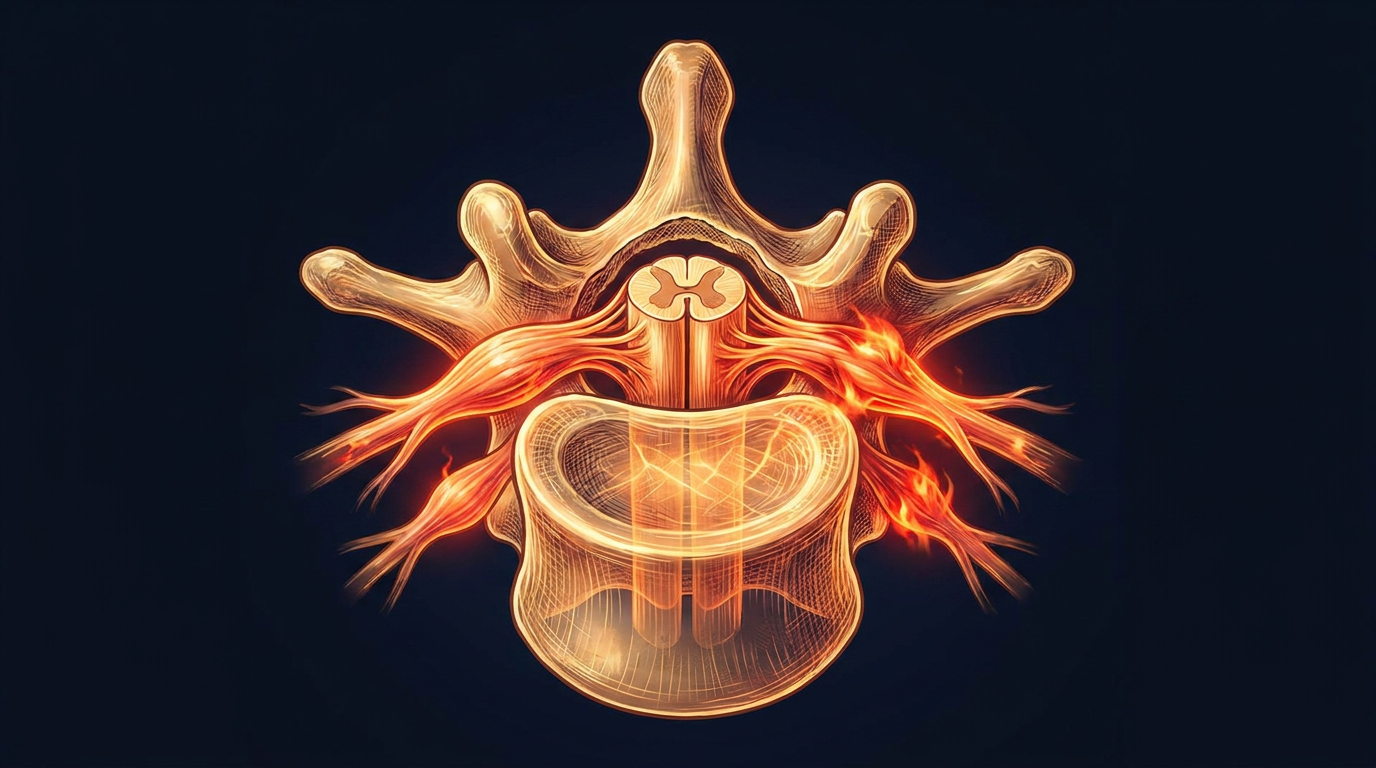
The medical term is epidural fibrosis, which means the body’s normal wound-healing response has produced fibrous tissue around the treated nerve root. Pain starts when that scar tissue binds the nerve root with adhesions and limits how freely the nerve can move.
Scar tissue follows a fairly predictable timeline. It can become a problem in the six-week to six-month window after surgery, often right after that early stretch of relief.
Incomplete Decompression or a New Problem
Sometimes the first surgery didn’t fully relieve the original compression, or a new structural problem develops. Incomplete decompression means bone or disc material still presses on the nerve. Narrowing of the opening where the nerve exits the spine, called foraminal stenosis, is the most common structural abnormality doctors find in people with lasting post-surgical pain.
Doctors also look for a recurrent or adjacent-level herniated disc, which can cause similar symptoms and is one of the problems they check for on post-surgical imaging. When your symptoms or X-rays suggest abnormal movement between vertebrae, spinal instability becomes part of the picture, because a laminectomy can remove enough bone to let one vertebra slip forward over another.
Conservative Treatment: What Helps Nerve Pain After Laminectomy
Your care team can treat many cases of nerve pain after a laminectomy without another operation. Premier Orthopaedics & Sports Medicine approaches post-surgical nerve pain the same way we approach pain before surgery, starting with conservative care and escalating only when the evidence supports it.
Giving the Nerve Time
Time is part of the treatment for healing-related nerve pain, and many post-laminectomy symptoms settle over weeks to months as different symptoms improve at different speeds. Staying gently active within the limits your surgeon set tends to help more than strict rest, and you should raise pain that stays the same or worsens over several weeks with your surgeon.
Physical Therapy
Physical therapy keeps the nerve moving and rebuilds the support around your spine. Nerve-glide exercises, also called neural mobilization, move the nerve root gently through the surrounding tissue so it doesn’t get tethered by scar tissue. These techniques can produce better pain outcomes than no treatment.
Core strengthening is the other half of the work. Your therapist targets the deep muscles that brace your spine, including the transversus abdominis in your abdomen and the multifidus along each segment.
Most protocols run in three phases over about 12 weeks, moving from gentle walking into muscle control and progressive strengthening. New numbness, tingling or weakness during these exercises is a reason to call your doctor.
Neuropathic Pain Medication
Nerve pain often responds to different medicines than a sprained ankle does. Standard anti-inflammatories like ibuprofen work by reducing inflammation, while nerve pain comes from the nervous system itself amplifying pain signals. There isn’t sufficient evidence to support anti-inflammatories for this kind of pain, which is why they often don’t touch it.
Two other drug classes target nerve pain directly. Gabapentin and pregabalin calm overactive nerve signals by blocking a calcium doorway on nerve endings, which lowers the release of pain-amplifying chemicals, and duloxetine reinforces your brain’s own pain-suppression system.
These medicines help some people, though only 10 to 25 percent more patients than placebo get worthwhile relief from gabapentin or pregabalin. If a medication doesn’t help after a fair trial, your doctor should stop it and try something else.
Interventional Pain Management
When symptoms persist despite time and therapy, pain management treatments can target the pain directly. Epidural steroid injections deliver anti-inflammatory medication into the space around the nerve root to calm residual inflammation.
For post-surgical back pain, 53 to 59 percent of patients reached meaningful pain relief with reduced disability. Nerve blocks can also pinpoint whether your pain is coming from the surgical level or somewhere else.
Facet-joint pain may respond to radiofrequency ablation, which uses heat to interrupt pain signals for months. Image guidance matters near a prior surgical site, because prior surgery changes the normal anatomy and can leave the protective fat layer missing and scar tissue out of place.
Relief from these procedures is often partial or temporary, which can still be enough to make progress in your therapy. Premier’s pain management specialists place these injections with imaging guidance.
Spinal Cord Stimulation for Persistent Cases
For pain that outlasts every other option, spinal cord stimulation is worth understanding. It uses small electrodes near the spinal cord to change how pain signals travel, and it carries Level A evidence, the strongest grade available, for persistent pain after spine surgery. Your pain specialist runs a temporary trial first, threading the leads through a needle and connecting them to an external device for several days.
The realistic goal is pain reduction rather than a pain-free result. A trial counts as successful when it reduces your pain by at least half, and across many studies the average relief lands near 58 percent.
Weighing a second surgery after laminectomy?
Revision surgery only makes sense when imaging finds a clear, correctable cause, and that’s worth confirming before deciding. Premier’s spine team reviews your prior imaging and records, including contrast-enhanced MRI and flexion-extension X-rays, before recommending a path forward.
When Revision Surgery Becomes Part of the Conversation
Another operation makes sense only when imaging finds a correctable structural cause. A new or residual disc herniation, measurable instability or a clear hardware problem can each justify revision. Among revision patients with failed back surgery, about 40 percent see full relief, 30 percent get partial relief and 30 percent get little or none, with the best results when a clearly correctable target like residual compression is the reason for surgery.
Scar tissue alone is rarely a good surgical target. Reoperation aimed only at scar tissue tends to bring inferior outcomes and higher complication risk, and surgery can generate fresh scarring of its own.
Continued rehabilitation is usually the better path when scar tissue is the main finding. For patients weighing revision, Premier’s spine surgery team uses contrast-enhanced MRI and flexion-extension X-rays to separate structural problems from scar tissue, and an independent evaluation by Dr. Jay Reidler is worth having when a second operation is on the table.
Recovery: What Improvement Actually Looks Like
Recovery depends entirely on what’s driving your pain. Healing-phase irritation, scar-tissue pain and revision recovery follow their own patterns.
Healing-Phase Nerve Irritation
For healing-phase nerve irritation, expect a gradual reduction in symptoms over weeks, with good days and bad days mixed in. Recovery often takes three to six months for normal activities, and full recovery sometimes stretches to a year. A meaningful number of people keep improving past the early stretch, so slow progress is not the same as no progress.
Scar-Tissue-Related Pain
For scar-tissue pain, measure progress in function rather than waiting for a pain score of zero. Walking farther without a flare and sleeping through the night are the real wins, and many people reach a level of pain they can manage without it ever dropping to zero.
Revision Recovery and Warning Signs
Revision recovery mirrors your original surgery, with more focused expectations because the goal is fixing a specific problem. Most revision patients still go through the same staged return to activity, aimed at a clearer target. Premier’s recovery guidance covers what to expect through each phase.
Some symptoms mean you stop waiting and act. You should call your surgeon promptly for pain that’s clearly worsening rather than fluctuating, or for new weakness. Loss of bladder or bowel control needs emergency care right away, and the same goes for numbness in the groin or saddle area or new weakness in both legs. These can signal a neurosurgical emergency where time matters.
Nerve Pain After Laminectomy Is Common, Treatable and Worth Investigating
Nerve pain after a laminectomy has more than one possible cause, and the cause decides the treatment. Healing-phase irritation usually needs time, while scar tissue and correctable structural problems may need targeted treatment, from injections to revision surgery in select cases. The right imaging and an unhurried evaluation can tell you which one you’re dealing with.
Premier applies the same conservative-first approach after surgery that we apply before it, and our neck and back specialists across Northern New Jersey work together to tell healing pain apart from a structural problem.
If your nerve pain isn’t improving the way you expected, we can help you figure out why and build a plan around your situation.
Get an Evaluation for Nerve Pain After Laminectomy
An exam and imaging can sort out whether returning leg pain is healing-related, scar tissue, or a correctable structural problem, and point you toward the right next step. Premier Orthopaedics & Sports Medicine sees patients from across Northern New Jersey for this kind of post-surgical evaluation.
Frequently Asked Questions About Nerve Pain After Laminectomy
How long does nerve pain last after a laminectomy?
It depends on the symptom. Pain often eases over the first few months, while numbness and tingling can take longer to fade. Many people keep improving for several months after surgery, and some see gains for up to a year.
Is it normal for leg pain to come back after a laminectomy?
Returning leg pain is common and has several explanations. Scar tissue in the six-week to six-month window and a recurrent disc herniation are two of the usual reasons. It’s worth evaluating, because some causes are correctable and others respond better to non-surgical care.
Can scar tissue from a laminectomy be removed?
Surgeons can remove scar tissue, but the evidence discourages it when scar tissue is the only target. Scar tissue around a nerve root is often more refractory to treatment than the original disc problem, and operating on scar can produce more scarring. Continued rehabilitation, especially nerve-glide exercises that keep the nerve from getting tethered, is the recommended path when scar tissue is the main problem.
When should I worry about pain after a laminectomy?
Some signs call for same-day or emergency attention rather than waiting. Trouble controlling your bladder or bowels, or numbness in the groin or saddle area, needs emergency care right away. A red, draining or increasingly painful incision is worth a prompt call to your surgeon. Pain that holds steady or climbs over several weeks, rather than easing, deserves an evaluation for a correctable cause.
This article is for general information only and isn’t a substitute for professional medical advice. Talk to your doctor about your specific situation before making treatment decisions.