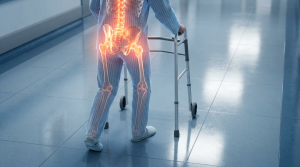

You’re two weeks out from your spinal fusion, your surgeon told you to take it easy, and you’re lying on the couch wondering whether the stiffness you feel means you should already be doing something about it. That uncertainty wears on you, especially when online advice swings from walking immediately to barely moving for months.
The timeline for starting physical therapy after fusion is more structured than most patients realize, and starting at the right moment affects how well your fusion heals and how your body moves around it. A post-fusion physical therapy (PT) plan moves through protection and walking, then supervised activation, strengthening and conditioning.
Table of Contents
ToggleWhy Bone Healing Sets the Recovery Timeline
Knowing when to start physical therapy after spinal fusion matters because your body has to grow new bone between two vertebrae. The fusion process takes time, and your comfort can improve weeks or months before that bone becomes solid.
That new bone heals first through inflammation and repair, then through remodeling that continues for months. Your screws, rods and cages give the spine immediate stability while that bone grows in.
Too much stress too soon can contribute to hardware loosening or a failed fusion called pseudarthrosis. Waiting too long carries its own cost, since inactivity adds stiffness and weakness and reinforces the guarded movement habits that therapy later has to undo.
Before PT Starts: The Early Recovery Weeks
In the first weeks, the work is protecting the fusion while you keep moving in safe, controlled ways. Formal outpatient therapy usually waits until your surgeon sees enough healing to load the spine, so this early stretch belongs to walking, gentle daily movement and careful pain control.
The First Two Weeks: Protecting the Fusion
Your job in the first two weeks is to protect the fusion while walking often. Most people are up and taking short walks within a day of surgery, and your team wants several short walks spread through the day. Walking supports circulation and gives you a controlled way to keep moving without loading the fusion too aggressively.
The movements you avoid follow the No-BLT rule, which means no bending, lifting or twisting at the spine. You bend at your knees and hips instead of your waist, turn your whole body by stepping your feet around rather than twisting and keep anything you lift under five to 10 pounds unless your surgeon says otherwise. Your surgeon decides how long these limits stay in place based on your fusion, your hardware and your follow-up exams.
Managing Pain, Incisions and Safe Movement
Log-rolling keeps you from twisting your spine each time you move between lying down and sitting up. You lie flat with your knees bent, roll your whole body as one unit onto your side, then let your feet drop toward the floor as you push up with your arms so you avoid twisting the spine. The same all-as-one-unit habit applies when getting in and out of bed, a chair or the car.
You manage pain with the prescription medication and ice instructions your team gave you. Your surgeon should weigh in before you take nonsteroidal anti-inflammatory drugs such as ibuprofen or naproxen, since post-fusion instructions often advise avoiding them for the first 12 weeks over concerns about bone healing. The incision needs watching too, and you call your surgeon if it drains, the redness around it spreads, you develop a fever above 101.5°F or you notice pus.
Weeks Two Through Six: Building a Walking Base
Weeks two through six focus on building a walking base. Your provider gradually increases your activity, and many people build to about a half mile daily by the six-week mark. Some return to lighter, seated work during this window, depending on the job and the surgeon’s restrictions.
This window can include a supervised home exercise program. Gentle moves such as ankle pumps, seated leg straightening and diaphragmatic breathing (slow, deep belly breathing) keep your circulation and base fitness going without stressing the fusion.
Your surgeon monitors progress at follow-up visits, often using X-ray imaging to confirm the hardware sits where it should and to check the early bone response. You can read more in Premier Orthopaedics & Sports Medicine’s recovery guidance for these phases.
Recovery Not Going the Way You Expected?
If your pain, stiffness or progress after fusion doesn’t match what you were told to expect, a second opinion is a normal next step, not a complaint against your surgeon. Premier’s spine team reviews your prior imaging and records before your visit, not during it, so the conversation starts with a clear picture of your fusion.
The Physical Therapy Timeline: Phase by Phase
Your physical therapy plan usually moves through phases, starting with protection, then activation, then strengthening and long-term conditioning. The calendar gives a rough guide, but your surgeon’s follow-up findings decide when you actually advance from one phase to the next.
Phase One (Roughly Six to 12 Weeks Post-Op): Getting Started
Formal physical therapy usually begins between six and 12 weeks, once you meet the milestones your team watches for. Many protocols start outpatient therapy around the 12-week mark after a surgeon checks your healing and sees signs of readiness, such as pain and swelling within tolerance, independence with your home program and handling about 15 minutes of exercise.
Premier’s spine and pain management teams tie therapy referrals to that progress, so if you’ve had a fusion through Premier’s neck and back specialists, meeting those milestones is what starts your therapy.
In Phase One, your therapist works on gentle range of motion for your hips and mid-back, the segments above and below the fusion, alongside posture retraining. Core work starts low with isometric activation, meaning you gently tighten your lower belly muscles without holding your breath.
Crunches and sit-ups stay out until your team clears them, and sessions usually run two to three times a week. Mild soreness as you reawaken quiet muscles is normal, but pain that reproduces your surgical-site pain or shoots down a leg or arm is your cue to stop that movement and tell your therapist.
Phase Two (Roughly Three to Six Months): Building Strength
Between roughly three and six months, progressive strengthening increases as your fusion consolidates, meaning the new bone grows stronger, and physical therapy becomes active. Your core work moves from isometric holds to dynamic stabilization, which means controlled core exercise that teaches your trunk to support your spine as you move.
You hold a neutral spine, keeping your back aligned without bending, twisting or arching past your restrictions, and exercises like bridges, bird dogs and stability-ball work build the endurance your spine relies on.
Hip and gluteal strengthening takes center stage in this phase, with squats, lunges, step-ups and resisted hip work building the lower-body support that keeps your fused levels protected. Your therapist also retrains daily movements, including how you lift and how long you can sit for your usual work tasks. As your trunk strength improves and imaging confirms healing, your surgeon eases your lifting limits.
Phase Three (Six Months and Beyond): Return to Full Activity
In the later phases, your surgeon may clear you for more everyday activities and ease the bending, twisting and lifting restrictions. Fusion healing often continues for months after that, and your surgeon may confirm progress with imaging around the six-month mark. Feeling well at three months can happen before your bone is solid, which is the core reason restrictions linger until your team confirms the fusion is ready.
After six months, conditioning usually tracks your goals, whether that’s a particular sport or the physical demands of your job. Your home exercise program turns into a long-term habit, and your formal sessions taper into maintenance.
Red Flags and When the Timeline Adjusts
Certain signs tell you physical therapy should slow down. Increased surgical-site pain after sessions, new pain radiating into a leg or arm and fresh tenderness over the hardware all warrant a call to your surgeon, as does grinding, clicking or popping at the fusion site.
Some symptoms need attention right away, including new weakness or numbness in your arms or legs, loss of bladder or bowel control and numbness in your inner thighs and groin. If several weeks of consistent work bring no functional progress, your team should reassess the plan.
Imaging comes back into play when progress stalls or symptoms suggest a problem, and your surgeon may order repeat X-rays or a CT scan to confirm the fusion is consolidating before advancing your plan. Sometimes lingering inflammation, not the fusion itself, stalls therapy, and Premier’s pain management treatments can support a plan that’s stuck.
A targeted epidural steroid injection may reduce inflammation around an irritated nerve, and your team may consider facet injections when a specific joint is the pain source. Injections can help restore function enough to let therapy move forward when recommended.
Long-Term: What Life and Exercise Look Like After Fusion
Most fusion patients return to walking, swimming, cycling and daily activities without restriction once the fusion is solid and the surgeon lifts the activity limits. Aerobic exercise keeps you fit and supports recovery, but your long-term plan still depends on the details of your surgery and your overall health.
Some activities carry more nuance. Running, golf, contact sports and heavy lifting all need sport-specific guidance from your surgeon and therapist before you go back. Single-level fusions often come with fewer long-term limits than multi-level fusions, which may need more caution with high-impact activity, repetitive twisting and heavy lifting.
Keeping up your maintenance exercises two to three days a week helps protect the segments above and below your fusion, and patients can schedule Premier visits at offices across Northern New Jersey to keep that plan on track.
If you’ve had a spinal fusion or have one scheduled and want clear answers about your physical therapy timeline, Premier’sspine surgery team in Bergen County can help you map it out.
Get Guidance on Your Post-Fusion Physical Therapy Timeline
An evaluation can confirm where you are in the healing process and what your spine is ready for next, so your therapy starts at the right moment instead of a guess. Premier Orthopaedics’ Northern New Jersey spine team can help you plan the steps from here.
Frequently Asked Questions About Physical Therapy After Spinal Fusion
What happens if you start physical therapy too early after fusion?
Starting too early can work healing tissue too hard and stretch out recovery. Pushing before the bone consolidates can also stress the hardware. Beginning around six weeks hasn’t shown better results than waiting until closer to 12 weeks, which counters the instinct that sooner is always better.
How long does physical therapy last after spinal fusion?
Formal outpatient physical therapy after a fusion tends to follow phased protocols rather than one fixed schedule. Your timeline depends on how your surgery heals, along with your age, health and activity level. Recovery can continue for many months, and formal sessions usually fold into a self-directed maintenance program you keep up on your own.
Can you do physical therapy at home after a spinal fusion?
Yes, and a home exercise program is a standard part of fusion recovery. Therapy begins at home in the first weeks with walking and gentle movement, and being independent with that home program often comes before your first formal outpatient session. Staying consistent at home matters as much as your supervised visits, since the strength and range of motion your spine needs come from the habit, not a handful of appointments.
What exercises should you avoid after spinal fusion?
In the first six weeks, you steer clear of bending, lifting and twisting at the spine, anything heavier than five to 10 pounds and any move that reproduces or worsens your pain. Through weeks seven to 12, you keep avoiding heavier and overhead lifting along with arching your lower back past neutral, unless your surgeon clears those movements.
Over the long term, repetitive back-bending like sit-ups concentrates stress on the segments next to your fusion, so it’s worth swapping in core work that keeps your spine neutral. You can find more detail in Premier’s patient education resources.
This article is for general information only and isn’t a substitute for professional medical advice. Talk to your doctor about your specific situation before making treatment decisions.