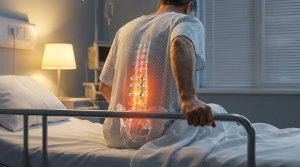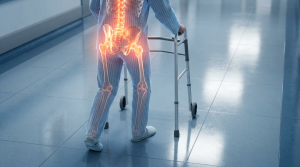
Your surgeon looked at your MRI, pointed at a pinched nerve and said the words “spinal decompression surgery.” After months of pain running down your leg, weeks of physical therapy and maybe an injection or two, you’re now sorting through unfamiliar names like laminectomy, microdiscectomy and foraminotomy.
Understanding what each procedure does can make the recommendation easier to evaluate. This guide covers candidacy, procedure options, fusion comparisons, recovery and questions to ask your surgeon.
Table of Contents
ToggleWhat Spinal Decompression Surgery Is
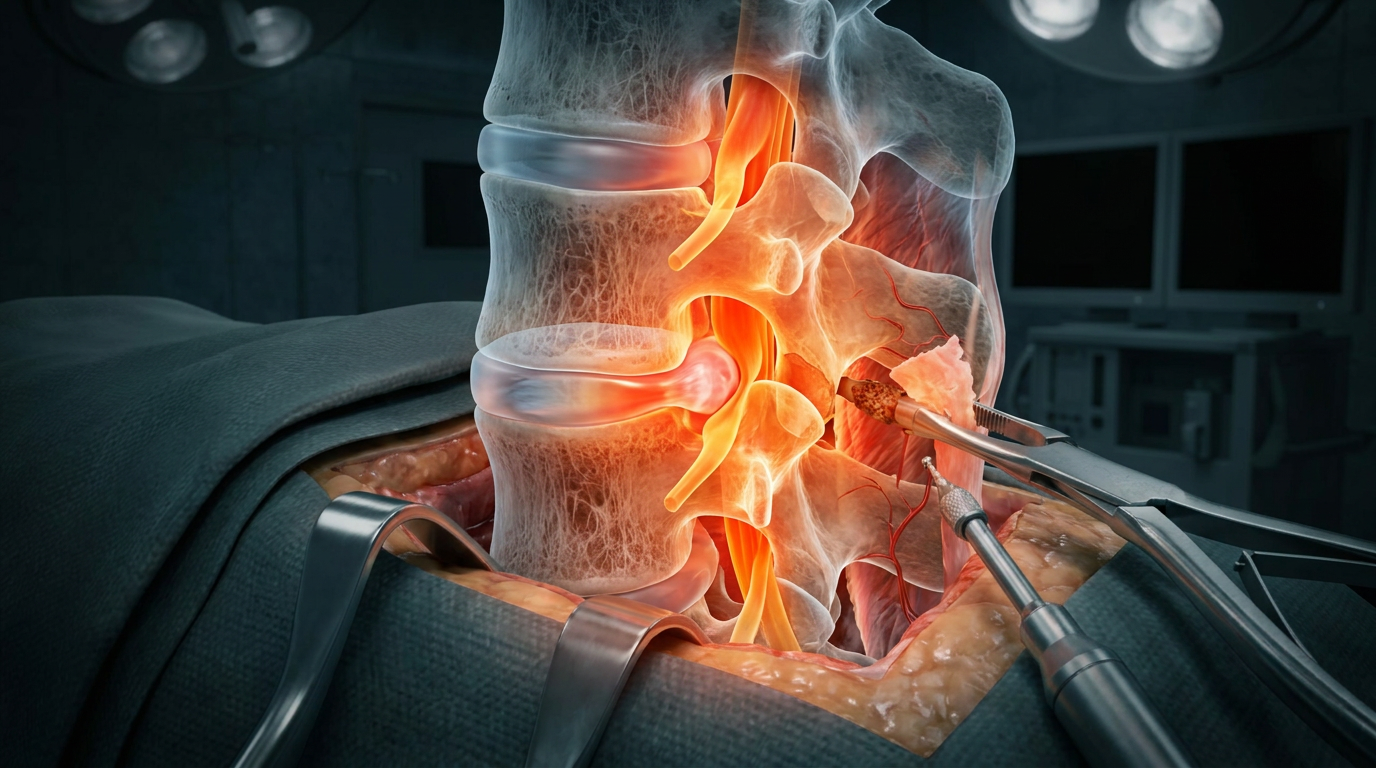
Spinal decompression surgery removes bone or disc material pressing on your spinal cord or nerves, and surgeons may remove other tissue depending on the procedure.
Surgeons perform it to relieve pressure that causes pain or numbness radiating into an arm or leg, and some people also develop weakness. That’s different from nonsurgical services that may use the same “spinal decompression” name.
The conditions that most often lead to decompression surgery share a common problem: something is pressing on a nerve or the spinal cord.
- A herniated disc develops when the soft center pushes through its outer wall and presses on a nearby nerve.
- Spinal stenosis narrows the canal your nerves travel through.
- Spondylolisthesis, a forward slip of one vertebra over the one below it, can put pressure on nerves as the bones shift out of line.
When these conditions cause nerve compression that conservative care can’t relieve, decompression surgery may become an option. The spine surgery team at Premier Orthopaedics & Sports Medicine treats these conditions.
The Main Types of Decompression Procedures
The types of decompression procedures differ mainly in which structure your surgeon removes and how much of it they remove. Your surgeon uses the imaging findings and the region involved to narrow the options.
The stability of the spinal segment, meaning the vertebrae, disc and nearby joints at one level, also affects the choice.
Here are the types of decompression procedures:
- Laminectomy: Removes the lamina, either partly or completely, from the bony roof over the spinal canal to enlarge the space around the nerves.
- Laminotomy: Removes a smaller portion of the lamina while leaving more of the bone in place.
- Discectomy or microdiscectomy: Removes the disc material pressing on the nerve, which your surgeon can also do during a laminectomy.
- Foraminotomy: Widens the nerve-root opening where a nerve exits the spine.
- Laminoplasty: Hinges the lamina open with small hardware to enlarge the canal rather than removing the bone. Surgeons typically perform laminoplasty in the cervical (neck) spine.
The procedure depends on the location and cause of the compression, your anatomy and whether the segment is stable. The region, cervical or lumbar, narrows the list further.
At Premier, Dr. Jay Reidler performs minimally invasive decompression procedures and uses robotic spine surgery technology for appropriate spine operations. Robotics isn’t appropriate for every decompression procedure, so your surgical team will explain which approach is best for your case.
Who Is a Candidate for Spinal Decompression Surgery
Decompression comes at the end of the treatment sequence, and surgeons usually consider it only after conservative treatments haven’t relieved symptoms or when symptoms are severe and clearly getting worse.
Medicines and physical therapy usually come first, while injections offer another option. Premier offers conservative care and pain management treatments such as epidural steroid injections, which deliver anti-inflammatory medicine into the space around the spinal nerves.
For lumbar, or lower-back, disc herniations specifically, fewer than 10 percent of patients become candidates for surgery. Surgeons may consider decompression when symptoms follow a nerve into your arm or leg, imaging shows compression at the matching level, or weakness continues despite treatment.
An evaluation by neck and back specialists can clarify whether surgery is appropriate.
When Surgery Becomes Urgent
Certain changes can signal that a compressed nerve needs prompt medical assessment rather than another routine appointment. Worsening weakness or changes in bladder and bowel control deserve immediate attention.
- Weakness that keeps getting worse in one or both legs. Pain may also keep worsening even though medicines haven’t helped and you’ve tried therapy or injections.
- New trouble controlling your bladder or bowels along with numbness in the groin or inner thighs, a combination that signals cauda equina syndrome, which occurs when pressure compresses the bundle of nerves at the bottom of the spinal canal.
Surgery within 48 hours of onset improves your odds of recovering sensory, motor, urinary and rectal function. If this describes what’s happening to you, you should call your doctor or go to the emergency room now.
Already been told you need decompression surgery?
A second opinion is a normal part of a decision this size, especially when the recommendation involves fusion or a specific technique you haven’t had explained in detail. Premier’s spine team reviews your prior imaging and records before the visit, not during it, so the conversation can focus on which procedure actually matches your findings.
How Decompression Compares to Spinal Fusion
The spinal decompression versus fusion decision turns on whether your spine stays stable once your surgeon opens space around the nerve. Decompression alone removes compressive tissue without intentionally joining the vertebrae, whereas fusion joins two or more vertebrae and eliminates motion between them.
Your surgeon chooses between the two options based on the stability of the segment and your anatomy, so two people with the same diagnosis can leave with different recommendations.
The explanation should connect the procedure your surgeon recommends to a specific finding on your imaging.
| Comparison Point | Decompression Alone | Decompression With Fusion |
|---|---|---|
| What it does | Removes the bone or disc material pressing on the nerve | Removes the compression, then joins the vertebrae so they heal as one bone |
| Who it fits | A stable spinal segment with nerve compression | An unstable segment that won’t hold its alignment on its own |
| Motion preserved | Typically, because the vertebrae aren’t joined | No, motion stops at the fused level |
| Typical healing time | Often shorter after minimally invasive procedures | Often longer because the fused bone must heal |
A stable segment may let your surgeon preserve motion with decompression alone. If removing the compressing tissue would leave the segment unstable, fusion may provide the support it needs.
What to Expect Before and After Surgery
No two timelines match exactly, because your spinal decompression surgery recovery time shifts with the procedure your surgeon performs, the number of spinal levels your surgeon treats and the physical demands of your job.
The process starts with the pre-op visit and continues through the operation. Recovery then continues through your first weeks at home.
Before Surgery
The surgical team will explain which imaging and preparation your operation requires. Your instructions may address medical clearance, eating before surgery, medication changes and arranging a ride home, while Premier’s recovery guidance walks through the full pre-op checklist.
After Surgery
Recovery often takes less time after lumbar decompression without a fusion, and full recovery takes three to six months.
Without a fusion, your surgeon may clear you to drive and return to light work earlier. Recovery after a fusion often takes longer because the bone needs time to heal. These timelines describe common patterns rather than promises, and your surgeon will adjust them to your operation and job.
Spine operations can carry possible risks, including infection and spinal nerve injury, and a dural tear can cause headaches when spinal fluid escapes. Surgery may bring partial or no relief, and pain may return later. Your consultation should cover how each risk applies to your case.
Questions to Ask Your Surgeon
You’ll get more from your consultation if you arrive with specific questions written down, because the conversation turns technical fast. These six cover the decisions that matter most:
- Which exact procedure are you recommending, and why is it the right one for my diagnosis?
- Do I need a fusion, or will decompression alone take care of the problem?
- Will you use an open or minimally invasive approach, and how often do you perform this one?
- What happens if we wait a few months?
- What restrictions will I have after surgery, and for how long?
- What results can I realistically expect for my leg pain, and separately for my back pain?
You’ll want to write down the exact name of the procedure your surgeon recommends and the imaging finding that supports it. Those two details are what a second surgeon needs to give you a useful read.
A second opinion is a normal step before a surgery this size, especially when two surgeons recommend different procedures. You can request a second opinion from Dr. Reidler, who trained at Harvard, Johns Hopkins and Columbia’s Och Spine Hospital at New York-Presbyterian.
Our spine care FAQ covers many of the questions patients bring to that visit.
Get a Clear Answer About Your Decompression Options
If a doctor has told you decompression surgery is on the table, you don’t have to sort out the options alone. You can call 201-833-9500 or schedule an appointment at one of our Northern New Jersey offices, and browse our patient education resources in the meantime.
Get a Second Opinion on Your Spinal Decompression Recommendation
If you’ve been told you need laminectomy, discectomy, foraminotomy or another decompression procedure, an evaluation with Premier’s spine team can walk through your imaging and how it matches the recommended approach. Patients across Northern New Jersey can meet with Dr. Reidler to review their options before deciding on surgery.
Frequently Asked Questions About Spinal Decompression Surgery
Is spinal decompression surgery the same as nonsurgical decompression therapy?
No, and the shared name is why an advertised “decompression” program can mean either. If a clinic offers nonsurgical decompression, you should ask who supervises it, which imaging finding they’re treating and what happens if your leg symptoms don’t change.
Can my pain come back after decompression surgery?
It can. If symptoms return, note whether they match your original pain pattern and whether numbness or weakness has changed. Your surgeon can examine you and discuss whether updated imaging or other testing would help identify the cause.
How do I know if I need decompression alone or decompression with fusion?
The decision usually turns on whether the affected segment is stable on imaging and dynamic X-rays. A stable segment often allows decompression alone, while instability or a significant slip typically prompts fusion.
For a second review, you can bring your MRI images and report, the exact procedure name and a list of the medication, therapy or injections you’ve already tried. A side-by-side record makes it easier to compare the recommendations after the appointments.
What happens if I decide to wait on decompression surgery?
A weekly note can track changes in walking, strength, numbness and bladder or bowel control rather than pain alone. You should contact your doctor before the planned reassessment if your walking or strength worsens or numbness spreads.
Any new bladder or bowel changes require prompt medical attention rather than waiting until the next appointment.
This article is for general information only and isn’t a substitute for professional medical advice. Talk to your doctor about your specific situation before making treatment decisions.