Your child’s doctor diagnosed scoliosis, a sideways curve of the spine, and a scoliosis brace for kids may be the current treatment option between watchful waiting and surgery. You want to understand how a brace keeps the curve from getting worse. Daily wear time, school and sports matter too.
Why Bracing Works for Childhood Scoliosis
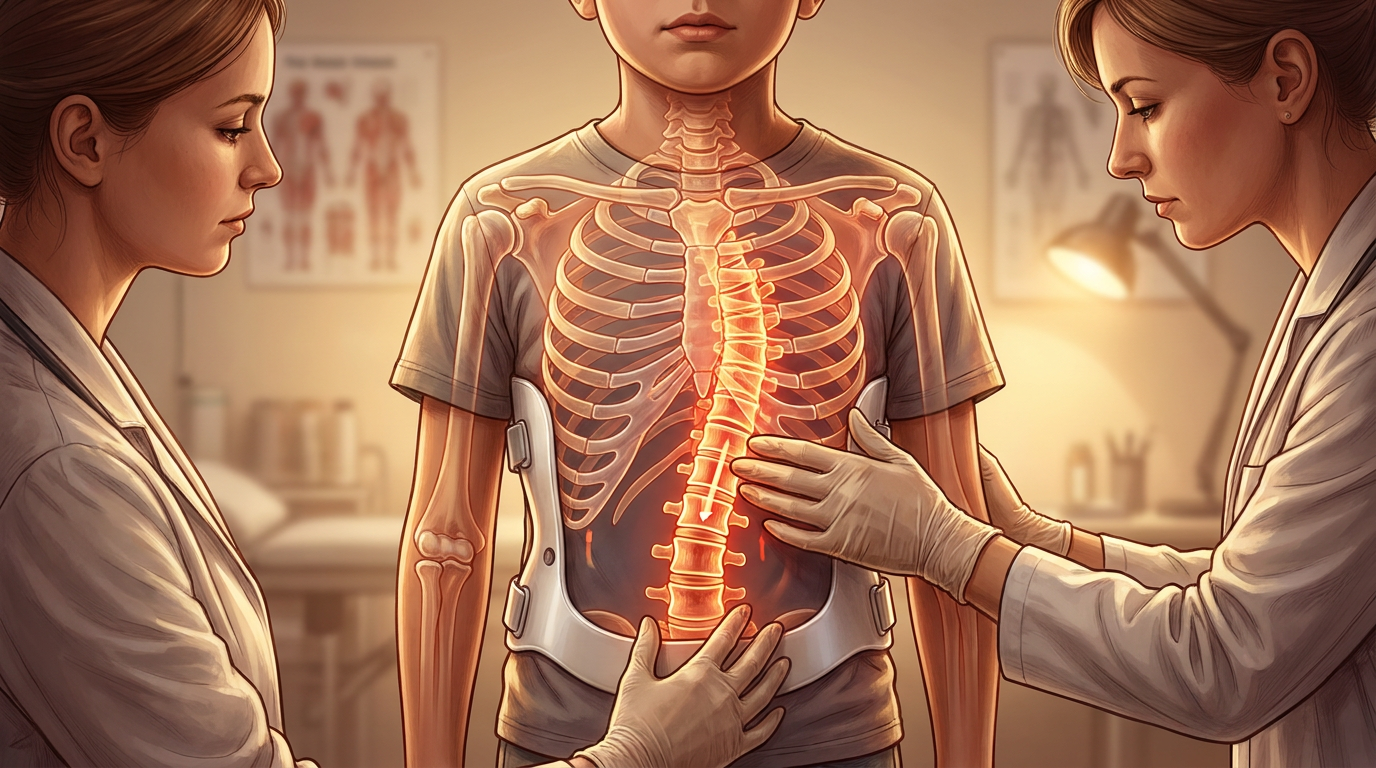
A brace applies corrective pressure to your child’s torso while the spine is still growing to help stop curve progression. Treatment success usually means the curve stays controlled as your child grows. The brace works during the years when progression risk is highest.
How Growth Affects Bracing
A brace helps most when a child still has a lot of growth remaining; a child who is nearly done growing has less chance to benefit. Once bones have mostly finished growing, bracing has less growth to guide.
Premier Orthopaedics & Sports Medicine explores conservative care before surgery. When a brace can guide growth, that comes first.
Why Wear Time Matters
Full-time rigid bracing works better when your child wears the brace for more hours of wear. That dose-response relationship is the reason your child’s doctor cares so much about consistent daily use.
Who Needs a Scoliosis Brace
Not every child with scoliosis needs a brace. Doctors weigh curve size, growth remaining and recent curve changes. Two children with the same curve size can end up with different plans depending on growth stage.
Curve Size and Growth Stage
Doctors commonly consider bracing for curves in the 25 to 40 degree range in children who still have growth remaining. Your doctor uses an X-ray measurement to describe curve size in degrees. They usually monitor smaller stable curves with periodic imaging.
To estimate how much growing is left, doctors use the Risser sign, which grades how the hip bones have developed on an X-ray. A lower Risser grade means more growth remaining. Younger age, female sex, a family history of scoliosis and skeletal immaturity all increase progression risk, which is why these factors shape the decision to brace.
When Bracing Isn’t Recommended
Doctors usually don’t recommend bracing after skeletal maturity, when the spine has mostly finished growing and a brace has little to work with. Doctors also tend to monitor a small, stable curve with periodic imaging. Once a curve is already large enough, your child’s doctor may begin discussing surgery.
When doctors decide bracing isn’t appropriate, your child usually needs closer evaluation with neck and back specialists who can track the curve and discuss the right next step. That step depends on your child’s specific numbers and growth stage.
Types of Scoliosis Braces for Kids
Different braces suit different curve patterns and wear schedules. The right brace has to fit your child’s anatomy and growth stage. Your child’s prescription sets whether your child needs the brace full-time or only at night. A thoracolumbosacral orthosis (TLSO) is the common full-time rigid option.
TLSO Braces
A TLSO wraps around the torso under clothing. Boston-style and Rigo-Cheneau-style braces are examples families often hear about. A Boston-style brace opens in the back and applies pressure at specific points along the curve, while Rigo-Cheneau designs also address the spine’s rotation. An orthotist custom-molds these braces for your child, and the brace comes with a break-in period as your child gets used to the fit.
Nighttime Braces
Your child wears nighttime braces only during sleep. Charleston and Providence braces are common examples. These braces aren’t right for every curve type or every child. If daytime wear isn’t possible and the curve progresses, your doctor may recommend a full-time TLSO.
Custom Fitting and Follow-Up
Brace fitting usually starts with a scan, cast or measurements of your child’s torso, and an orthotist, or brace specialist, builds the brace to fit that shape. The brace uses specific pressure points so it can work while protecting skin and comfort. As your child grows, follow-up visits keep the fit correct.
Recommended daily wear across brace types commonly ranges from about 12 to 23 hours until growth is nearly finished.
| Dimension | Full-Time TLSO | Nighttime Brace |
| When worn | Throughout the day and night | During sleep only |
| Typical daily hours | Most waking and sleeping hours, toward the upper end of the prescribed range | Overnight during sleep only |
| Example designs | Boston-style, Rigo-Cheneau | Charleston, Providence |
| Best suited for | Curves needing more correction across the growth window | Select curve patterns a doctor judges appropriate |
Your child’s prescription determines the brace type. The brace team will explain why that schedule fits your child’s curve.
Daily Life With a Scoliosis Brace
A brace changes your child’s routine, and the first few weeks are the hardest, but most children keep going to school and staying active with planning. Build the brace into daily life so it becomes part of the day.
Wear Schedule and Compliance
Your child’s doctor sets wear hours based on the curve, growth stage, brace type and prescription. Consistent wear makes the brace effective. Most children start with a gradual break-in schedule set by the brace team and build up as directed.
Many kids resist the brace at first, and that’s normal. The brace feels uncomfortable and unfamiliar, especially for adolescents. Early resistance is a common part of the process, and many children still settle into the prescribed schedule.
School, Sports and Social Life
Your child typically wears the brace under clothing, so most classmates never notice it. Loose-fitting clothes help it stay hidden, and a quick conversation with school staff can make brace-off breaks and gym class easier to manage. Your doctor may allow some activity during brace-off hours, and staying strong through physical therapy can support your child’s overall function during treatment.
Take your child’s questions about how they look in the brace seriously and answer them honestly. Feeling in control of the conversation helps them stay comfortable wearing it where it counts.
Skin Care and Comfort
Your child can wear a snug undershirt or liner under the brace to protect the skin and make the brace more comfortable. A daily skin check can make comfort problems easier to catch before they interrupt wear time. A daily routine includes:
- Wear a thin cotton liner or undershirt under the brace every time
- Check the skin over pressure points daily for redness that doesn’t fade
- Report blistering, pressure sores or persistent skin irritation to the brace team
- Call the brace team after a growth spurt or if the fit changes before changing wear time on your own
Small fit problems can turn into missed wear time if they linger. Calling early helps the brace team adjust the brace before your child falls behind.
How Long Bracing Lasts
Bracing usually continues until most of your child’s spinal growth is finished. That can mean several years, especially for younger children. The exact length depends on your child’s age, growth remaining, how the curve behaves and what follow-up imaging shows.
Doctors use X-rays and growth markers to decide when to stop. Your child’s doctor may stop brace wear at once or reduce wear in steps. Follow-up during that change helps confirm the curve stays stable as wear time drops.
What Results to Expect From Bracing
Bracing aims to prevent the curve from getting worse. A successful result may be a curve that stayed controlled through your child’s growing years and never reached the point of needing surgery.
Realistic Outcomes
Most children who wear the brace as prescribed avoid reaching the surgical threshold. Brace treatment succeeded in about 72 percent of braced patients compared with 42 percent of those who were only observed. The practical success metric is a stable curve and avoiding surgery. Consistent wear moves the odds in your child’s favor, since the benefit tracks closely with hours worn.
What Happens if Bracing Doesn’t Work
If the curve keeps progressing despite appropriate wear, your doctor may discuss surgery. The curve may need more correction than a brace can provide. Progression can happen even when your family follows the plan. Doctors commonly discuss surgery once a curve reaches about 50 degrees, because curves over 50 degrees at maturity tend to keep progressing into adulthood.
If that conversation ever becomes necessary, Premier’s spine team can walk you through the options. Dr. Jay Reidler completed pediatric spine fellowship training and performs both spinal fusion, surgery that joins two or more vertebrae so they heal into one solid bone, and Vertebral Body Tethering (VBT), a motion-preserving alternative to fusion. Dr. Reidler offers VBT only for select pediatric scoliosis candidates, so he decides candidacy case by case.
Questions to Ask Your Child’s Doctor
Bringing a written list to the appointment helps you leave with a clear picture of the plan. These questions cover the details that matter most during brace treatment:
- What type of brace is recommended for my child, and why that one?
- How many hours a day should my child wear it?
- Is this a full-time brace or a nighttime brace?
- Can my child remove it for sports or gym class?
- How often will you take follow-up X-rays?
- How will we know if the brace is working?
- What skin or comfort signs mean we should call you?
- When would weaning off the brace begin?
- At what point would we talk about other options?
Ongoing monitoring is part of the process, with follow-up imaging and plan adjustments as your child grows. For more background between visits, our spine care FAQ and patient education resources can help you prepare your questions.
Schedule a Pediatric Scoliosis Consultation
If your child recently received a scoliosis diagnosis and you want to understand whether bracing is the right step, we can help. Premier offers pediatric spine care across Northern New Jersey. Call 201-833-9500 or schedule an appointment online.
Frequently Asked Questions About Scoliosis Brace for Kids
How many hours a day does a child need to wear a scoliosis brace?
Wear time depends on the curve, growth stage, brace type and prescription. Full-time braces often require most of the day, while nighttime braces are worn during sleep only. More consistent wear is tied to better outcomes, which is exactly why the doctor prescribes a specific number of hours.
Does a scoliosis brace hurt?
A brace may feel tight or awkward during the break-in period. Severe or lasting pain warrants a call to the brace team. Watch for blistering, pressure sores or persistent skin irritation over the pressure points. Those signs mean the orthotist needs to adjust the fit, and your child should keep following the prescribed schedule until the brace team advises otherwise.
Can a scoliosis brace straighten my child’s spine?
Bracing mainly keeps the curve from getting worse during growth. A curve may look better while the brace is on, but that in-brace correction isn’t the measure of success. Long-term success is a curve that stayed controlled through growth without surgery.
This article is for general information only and isn’t a substitute for professional medical advice. Talk to your doctor about your specific situation before making treatment decisions.