Maybe your doctor recently mentioned a spinal curve during a checkup, a family member noticed your posture looks different, or ongoing back discomfort led you to search for answers. Along the way, you came across the terms scoliosis, kyphosis and lordosis. All three describe abnormal curves in the spine that can affect posture, cause discomfort and sometimes signal an underlying condition that needs monitoring or treatment.
Any one of these conditions may explain what you’re seeing, but each behaves differently. This guide from Premier Orthopedics & Sports Medicine compares their curve direction, causes, symptoms, diagnosis and treatment options.
What Scoliosis, Kyphosis and Lordosis Are
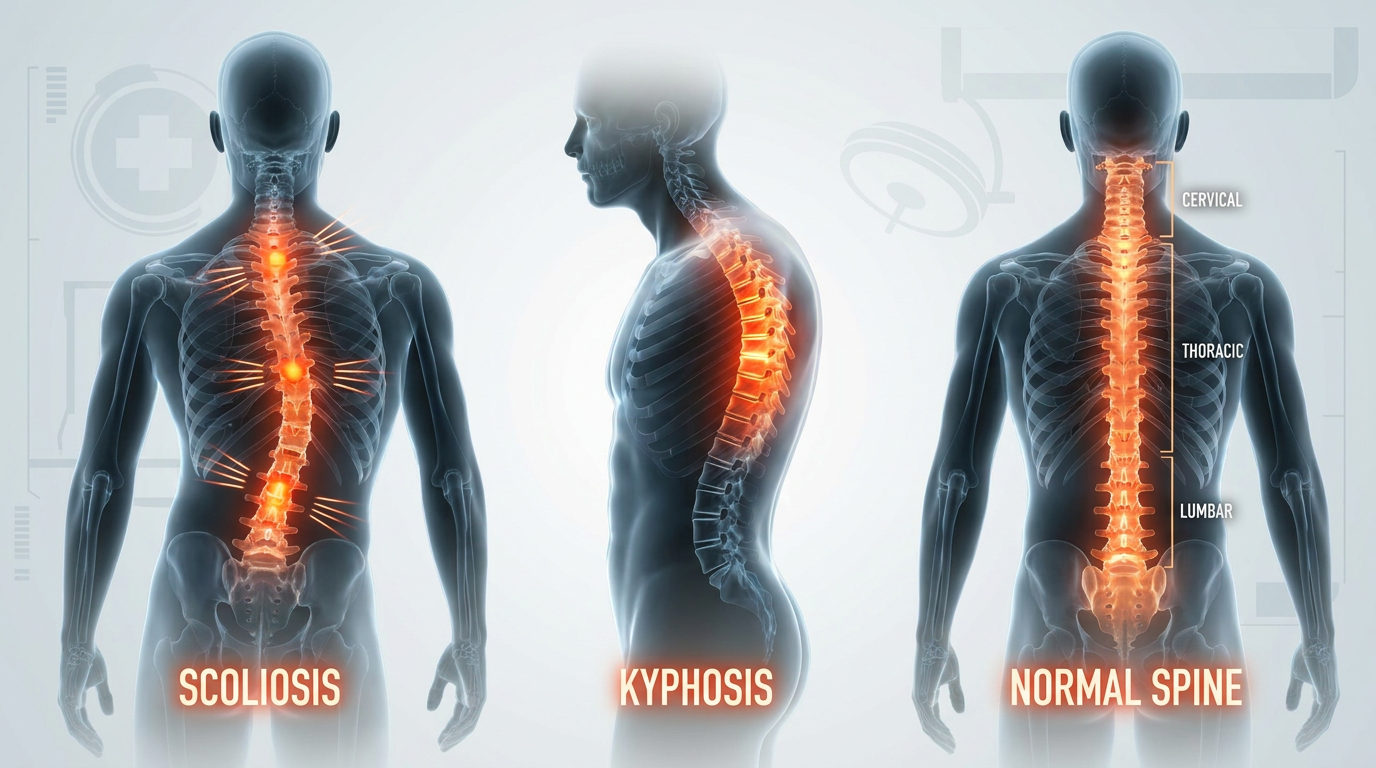
Scoliosis, kyphosis and lordosis all describe a curve in your spine, but each one is different. Scoliosis bends sideways to the left or right, kyphosis rounds forward, and lordosis curves inward toward the front of the body.
Each region of the spine, from the neck down to the lower back, has its own expected shape, so a curve that looks normal in one section can be a warning sign in another. Doctors consider both the direction and location of a curve before deciding whether it falls within a healthy range or needs closer attention.
Normal Range vs When It Becomes a Condition
Doctors consider scoliosis abnormal, but they don’t classify sideways curves under 10 degrees as scoliosis. A sideways curve measuring 10 degrees or more meets the diagnostic threshold, measured using the Cobb angle, which is the number of degrees between the most tilted vertebrae on an X-ray.
Kyphosis and lordosis are natural spinal curves that differ by direction and location. Doctors assess whether either curve falls outside the expected range for its spinal region. For kyphosis, 50 degrees or more is abnormal, while doctors judge lordosis against the expected curve for the spinal region and the measurement method.
| Condition | Direction of Curve | Where It Occurs | Normal Range | When It Becomes a Condition |
|---|---|---|---|---|
| Scoliosis | Sideways, left or right | Any region of the spine | A curve below 10 degrees doesn’t meet the scoliosis threshold | A curve of 10 degrees or more |
| Kyphosis | Forward rounding | Upper back (thoracic spine) | A natural forward curve | 50 degrees or greater |
| Lordosis | Inward curve | Neck (cervical spine) and lower back (lumbar spine) | A natural inward curve that varies by region | A curve outside the expected range for that region |
What Causes Each Spinal Curve
The reasons a spinal curve develops aren’t the same for everyone, and they often depend on when the curve first shows up. Some adolescent curves involve inherited risk and appear during growth spurts, while some adult curves develop gradually alongside age-related disc and joint changes.
Other cases trace back to specific conditions, injuries or posture habits that put uneven pressure on the spine over time. Knowing what’s driving the curve helps your doctor decide whether to monitor it, treat the underlying cause or focus on managing symptoms.
Causes of Scoliosis
Most adolescent scoliosis is idiopathic, meaning doctors can’t identify a single cause, and it often runs in families. Nearly 30 percent of adolescents with idiopathic scoliosis have a family member with the condition. If your child has a curve, a guide to scoliosis in children covers what parents should know.
Adult scoliosis works differently, since it’s usually tied to wear and tear on the spine rather than genetics or growth. Degenerative curves develop as discs and joints wear down, and they show up in up to 68 percent of adults over 60 with no symptoms.
Causes of Kyphosis
Kyphosis often develops when the bones or discs in the upper back lose their normal shape or strength. Possible structural causes include Scheuermann’s disease, an adolescent condition in which several vertebrae develop a wedge shape, osteoporosis, which weakens bones and raises the risk of fractures, and disc degeneration in older adults. The kyphotic angle may also increase with age.
Causes of Lordosis
Lordosis can be linked to lifestyle factors as well as underlying spinal issues. An exaggerated inward curve can come from poor posture or excessive bending. Spondylolisthesis, or vertebral slippage, can also cause lordosis when one vertebra slips forward over the bone below it. In some children, a marked inward curve may change as they grow.
How Each Curve Looks and Feels
Scoliosis, kyphosis and lordosis each change the shape of your back differently. Visible signs include changes in posture, uneven shoulders or a rounded back, while common symptoms include pain, stiffness or fatigue. What you see and what you feel don’t always match, which is why doctors check both.
Signs You Can See
Visible signs differ by curve type. Your doctor will compare your posture from the front, back and side rather than relying on one feature alone.
- Scoliosis: asymmetry that may become more noticeable during a forward bend test
- Kyphosis: a rounded upper back that you can see most clearly from the side
- Lordosis: a swayback posture with the buttocks protruding and the hips and pelvis pushed forward
Not every sign shows up in every person, and a mild curve can still register on an X-ray. A physical exam helps your doctor decide whether the visible change needs imaging.
What Each Curve Feels Like
Scoliosis symptoms vary, while curves of 40 degrees or more can cause pain, visible deformity and, rarely, breathing problems. Adults with scoliosis may find that upright posture gets harder as the day goes on.
Kyphosis can feel like tightness or fatigue in the upper back, and more advanced curves may lead to persistent pain, stiffness or difficulty standing up straight for long periods. In older adults, severe kyphosis can also make breathing or digestion less comfortable.
Lordosis is often painless in mild cases, but a more pronounced curve can lead to lower back pain, muscle tightness or discomfort after standing or walking for a while. Rarely, severe lordosis symptoms can affect both cervical and lumbar lordosis.
How Doctors Diagnose Scoliosis, Kyphosis or Lordosis
Diagnosing a spinal curve is a step-by-step process that combines what your doctor sees in person with what shows up on imaging. Diagnosis begins with a visit to neck and back specialists, which may include a review of your symptoms, a posture check and standing X-rays if the exam suggests a spinal curve. Your doctor will then perform a physical exam and use imaging tools, like the Cobb angle, to measure and track each type of curve.
The Physical Exam
The physical exam is usually the first hands-on step in identifying a spinal curve, and it helps your doctor decide whether imaging is needed. Your doctor examines your posture from behind and from the side, looking for uneven shoulders, hips or waist, as well as any noticeable rounding or swayback.
The exam may include a forward bend test, where you bend at the waist so your doctor can spot any asymmetry along your back, and a check for a rib hump. Your doctor may also assess your range of motion, balance and how your posture changes when you stand, sit or walk.
Imaging to Diagnose Spinal Curvature
Your doctor may use X-rays to evaluate scoliosis, kyphosis and measure spinal curves. The same angle can mean different things depending on the curve’s direction. Your doctor may record the curve’s size and location to compare with future imaging. Doctors assess lordosis against the expected range for the region and measurement method rather than a single cutoff.
Once your doctor knows which curve you have and how large it is, they can discuss a treatment plan.
Treatment Options for Scoliosis, Kyphosis or Lordosis
Treatment depends on the curve, your symptoms and whether the curve is changing. At Premier, we discuss surgery only when conservative care hasn’t relieved your symptoms. Your age and whether the curve is still changing also shape the treatment plan.
Conservative Treatment Comes First
Your doctor will match conservative treatment to your curve type and symptoms. The options may include:
- Observation: follow-up exams and imaging when your doctor recommends them
- Physical therapy: exercise-based care to support your spine and improve posture
- Medication: pain medicine your doctor selects for flare-ups
- Injections: targeted treatment that doctors sometimes use when pain persists
- Pain management treatments: additional therapies to help control ongoing discomfort when other options aren’t enough
- Bracing: a brace worn during growth to slow curve progression.
When these conservative treatments don’t provide enough relief or fail to stop the curve from progressing, the next step your doctor may consider is surgery.
When Doctors Discuss Surgery
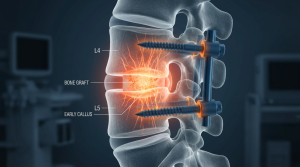
Surgery is usually a last resort, considered only when a curve becomes severe enough to affect your health, comfort or quality of life. Doctors may recommend it based on several factors, including:
- Curve size: scoliosis curves greater than 50 degrees
- Curve progression: the curve continues to worsen despite conservative care
- Severe or worsening deformity: the curve is causing a significant change in posture or appearance
- Persistent pain: ongoing pain that limits daily activity and hasn’t responded to non-surgical treatment
- Nerve-related symptoms: numbness, weakness or changes in bladder or bowel control caused by pressure on the spinal nerves
- Breathing or organ issues: severe curves that begin to affect lung capacity or crowd internal organs
- Failed conservative treatment: bracing, physical therapy, medication or injections haven’t provided enough relief
An overview of spinal deformity surgery explains how surgeons correct each curve, and if you’re holding a surgical recommendation, a second opinion can help you weigh it.
When to See a Doctor About Scoliosis, Kyphosis or Lordosis
Certain signs mean it’s time to schedule a visit instead of waiting and watching. They include:
- A new visible curve, rib hump or uneven shoulders in you or your child
- Concerns that a known curve is changing between check-ins
- An upper back that keeps rounding over time
- Pain that limits your daily activity despite rest and over-the-counter medication
- New nerve-related symptoms, called neurologic symptoms, such as numbness, weakness or balance changes, or changes in bladder or bowel control
These signs don’t necessarily indicate a need for surgery, but they’re important to understand in context. A spine care FAQ answers more of the questions you may bring to that first visit.
Get Your Spinal Curve Evaluated at Premier
If a curve showed up on your imaging report or your posture has changed, our spine team at Premier can evaluate it for you in Northern New Jersey. Most curves don’t require surgery, and you can call 201-833-9500 or request an appointment online to learn more about your condition and treatment plan.
Frequently Asked Questions About Scoliosis, Kyphosis or Lordosis
How does a specialist compare scoliosis, kyphosis and lordosis?
A specialist compares them by looking at the direction and location of the curve, measuring it on X-rays and checking it against the expected range for that part of the spine. You can bring the report and image files from any earlier X-rays so the specialist can compare the measurements directly. It also helps to write down when you first noticed a posture change and whether pain, balance or daily activity changed at the same time.
Does a spinal curve get worse as you age?
Not always. Age alone doesn’t determine whether a curve will progress, though some curves, especially degenerative ones in adults, can slowly worsen over time. Your doctor can explain how often you need follow-up and which changes in posture, pain or activity should prompt an earlier visit.
Does scoliosis run in families?
Yes, idiopathic scoliosis often runs in families, so it’s worth sharing your family history during the evaluation. A family pattern doesn’t confirm the diagnosis, though, because idiopathic scoliosis is a diagnosis of exclusion, which means your doctor first rules out congenital causes present from birth and neuromuscular causes related to nerve and muscle conditions.
Is a curve on my X-ray report always a problem?
No, not every curve on an X-ray report is a problem. Some fall within the normal range for that part of the spine. You can ask whether the X-ray shows the cervical, thoracic or lumbar spine and whether you were standing for the X-ray. It’s also helpful to ask for the measured angle and whether earlier images show any change before discussing monitoring or treatment.