
Microdiscectomy in New Jersey
Why is a Microdiscectomy Performed?
A microdiscectomy is most commonly performed to take pressure off a compressed spinal nerve, which is what relieves the leg pain, numbness, and weakness a herniated disc causes. At Premier Orthopaedics in New Jersey, surgery is considered only after conservative care has been exhausted. Signs that indicate your herniated disc or sciatic nerve pain may need a minimally invasive microdiscectomy include:
- Radiating Leg Pain: Leg pain that travels down the lower back or hip down into the buttock, thigh, calf, or foot.
- Neurological Symptoms: Numbness, tingling, or weakness in the leg or foot that matches the compressed disc level on your MRI.
- Conservative Care With No Meaningful Progress: Symptoms that have not eased after about 6 weeks of physical therapy, medication, or activity changes.
- Progressive Muscle Weakness: Weakness that is getting worse, such as a foot that starts to drag when you walk
Before any microdiscectomy in Bloomfield, Englewood, and Union City, NJ is performed, a spine specialist will evaluate your condition, including past back pain treatments and imaging, to determine if a microdiscectomy is the right path forward for you.
How is a Microdiscectomy Performed?
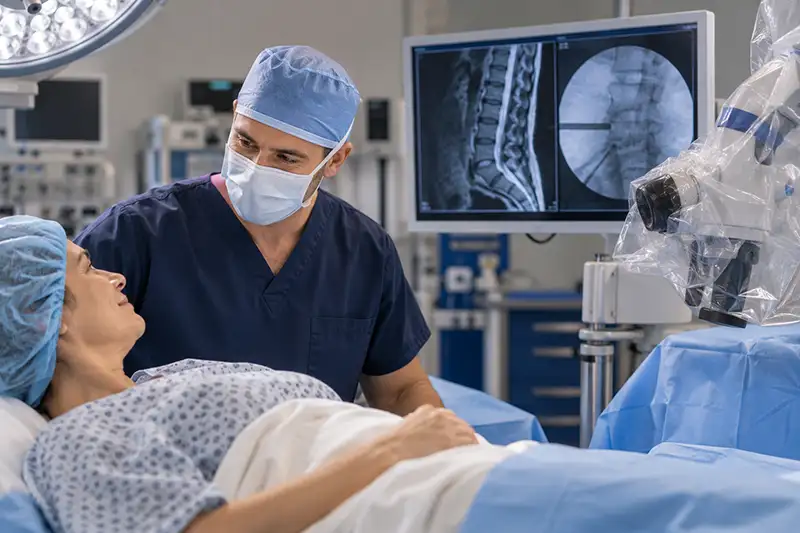
A microdiscectomy is typically performed as an outpatient procedure and usually takes about an hour. Your spine surgeon begins by making a very small incision, about 1 inch, over the affected disc area. Using specialized instruments are used to carefully and gently move aside the back muscle to allow a clear view of the disc itself, with as little disruption to the body as possible.
Using an advanced microscope, your board certified spine surgeon will have a detailed view on the compressed nerve and remove the offending material that is causing your back pain.
Because a microdiscectomy is a minimally invasive spine surgery, it offers benefits a traditional open back spine surgery does not, such as:
- Smaller incision
- Faster recovery
- Minimal impact to spine muscles and other soft tissues
- Less pain
Most patients are able to go home the same day.
What Does Recovery from a Microdiscectomy Look Like?
Recovery after a microdiscectomy usually moves faster than after a traditional or more complex spine surgery, because only a small amount of tissue is disturbed. Many patients feel their leg pain ease within the first day or two, once the nerve is no longer compressed.
Day of surgery: Most microdiscectomies are outpatient. You are up and walking within a few hours, and many patients head home the same day.
Weeks 1-2: Leg pain often fades quickly once the nerve is decompressed. Short, frequent walks help the most, and people with desk jobs frequently go back to light duties.
Weeks 2 to 6: Heavy lifting, bending, and twisting are still off-limits while the disc and incision heal. Physical therapy usually begins during this time, with a focus on core stability.
6 Weeks and Beyond: As your core and back strength return, physical restrictions begin to lift. Resuming heavy labor or more vigorous physical activity may begin if approved by your surgeon.
Sticking to the lifting and bending limits in the early weeks protects your incision and promotes proper healing. Your spine surgeon can adjust these recovery guidelines to suit your job, your health, and how your incision heals.
Frequently asked questions about microdiscectomy in New Jersey
A disc can herniate again at the same level in a small share of patients, most often within the first year. Rebuilding core strength, lifting with good form, and finishing physical therapy all lower that risk. If symptoms return, a spine specialist can look at fresh imaging and walk you through your options.