You’ve read an X-ray or MRI report that lists “levoscoliosis,” and nobody explained whether it’s serious. In plain terms, it means your spine curves to the left, and what happens next depends on the size and cause of that curve.
This guide covers causes, symptoms, diagnosis, treatment and when to see a spine specialist.
What Levoscoliosis Means for Your Spine
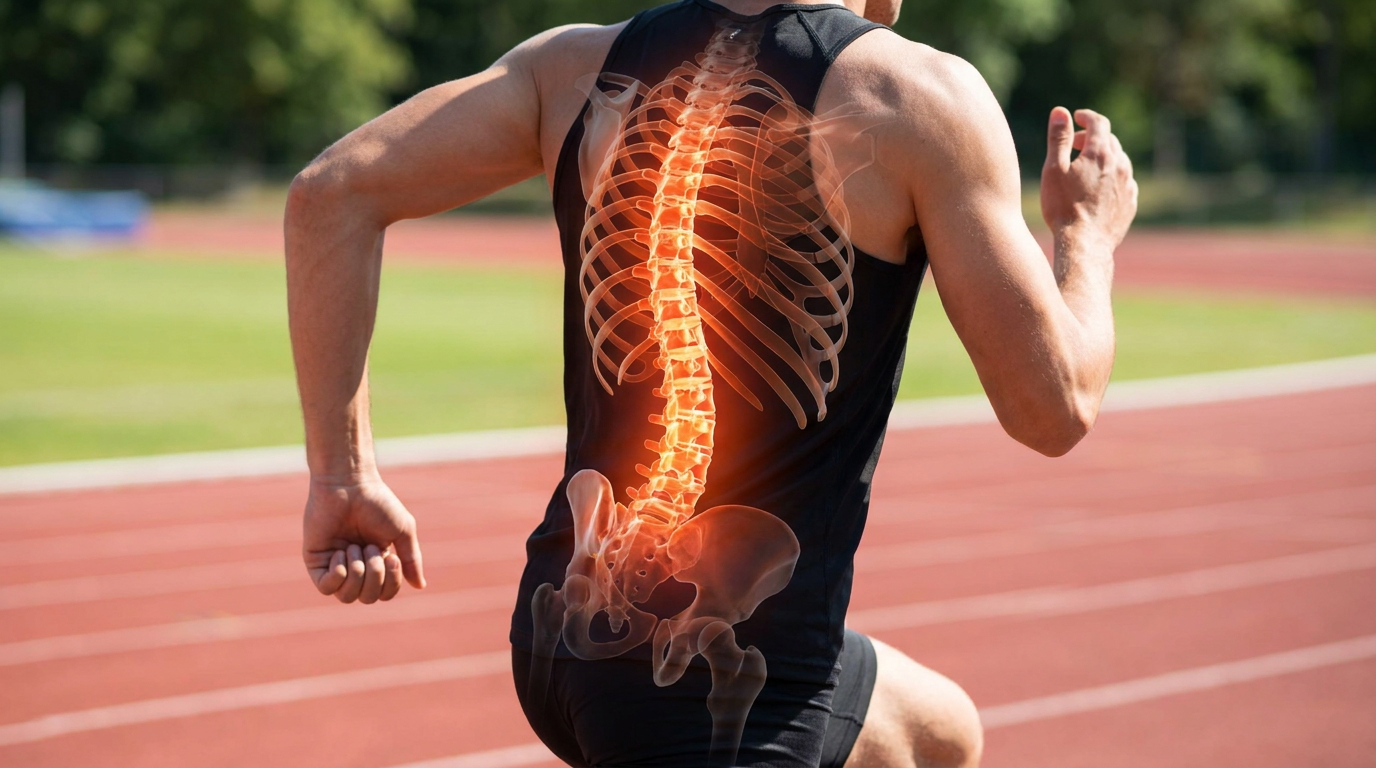
Levoscoliosis is scoliosis in which the spine curves to the left. Dextroscoliosis is the same condition with the curve pointing right.
In both, the spine bends sideways and rotates, which is why one side of the back or rib cage can look more prominent than the other. It’s a separate condition from kyphosis, a forward rounding of the upper back.
Where the curve sits often tracks with age. Kids and teens more often develop thoracic (mid-back) curves, while adults tend to develop them in the lumbar (lower) spine.
Scoliosis of all types affects about two percent of people worldwide, and millions of people in the United States live with a curve.
What Causes Levoscoliosis
Doctors start by sorting scoliosis into main cause categories, because a curve that shows up in a growing teen for no clear reason is a very different problem from one that develops after decades of wear on an aging spine.
Your doctor will want to settle the cause before recommending treatment, since the category guides the plan, including how closely to monitor the curve, whether bracing or therapy makes sense and how likely the curve is to progress over time.
The four main categories below cover most cases of levoscoliosis, and each one shapes what your doctor watches, treats and explains at follow-up visits.
Idiopathic Levoscoliosis
Idiopathic means there’s no known cause, though scoliosis can run in families. Roughly 80 percent of scoliosis cases are idiopathic, and most appear during the adolescent growth years.
Congenital Levoscoliosis
Congenital means the spine developed differently before birth. One example is hemi-vertebra, where only half of a vertebra develops and tilts the spine from the start.
Neuromuscular Levoscoliosis
Neuromuscular scoliosis starts when a condition weakens the muscles and nerves that support the spine. Cerebral palsy and muscular dystrophy are examples, and spinal cord injuries can weaken the support around the spine as well.
Degenerative Levoscoliosis
Degenerative scoliosis develops when age-related wear changes the shape and balance of the spine. Arthritis, osteoporosis (bone thinning), spinal stenosis (a narrowing around the spinal cord) and spondylolisthesis (one vertebra slipping forward over another) can wear the spine unevenly until it settles into a sideways lean.
Symptoms of Levoscoliosis
Many mild levoscoliosis curves cause no symptoms, and plenty of people learn about theirs only when an X-ray for something else picks it up. Symptoms depend on the curve’s size, location and whether nerves or joints also feel pressure.
Visible Signs
When a curve is large enough to show, your doctor looks for asymmetry during the exam. The visible signs include:
- Uneven shoulders, or one shoulder blade that sticks out more than the other
- An uneven waistline
- One hip sitting higher than the other
- Ribs or muscles that look more prominent on one side of the back
A parent or partner often spots these changes before you do. That can happen because many mild curves don’t hurt or change how you move day to day.
Pain and Nerve Symptoms
A small curve can still hurt, and that pain is real even when your report says the curve is mild. The muscles on the outward side of the curve work harder to keep you balanced, and that constant extra effort can leave them fatigued and aching.
Adults with degenerative curves may also notice back, hip or leg pain, sciatica, which is pain that travels down the leg from an irritated nerve or numbness that travels down a leg. These symptoms can overlap with a herniated disc, where disc material pushes out and irritates a nearby nerve. Some adults also notice fatigue or the sense of tilting to one side.
Symptoms in Children
In children, scoliosis usually doesn’t cause pain, which is one reason screenings often catch a child’s curve before symptoms do.
Large curves may press on the lungs and cause breathing problems, but that tends to happen with severe untreated scoliosis, far beyond the mild curves most imaging reports describe.
How Doctors Diagnose Levoscoliosis
Doctors diagnose levoscoliosis by matching your physical exam with standing spine X-rays. They measure the curve, locate it and decide whether the pattern needs more testing.
Physical Exam and Cobb Angle
Diagnosis starts with a physical exam and standing X-ray. Your doctor checks your posture and symmetry, watches how your spine moves, then measures the curve on the X-ray using the Cobb angle, the angle between the most tilted vertebrae at the top and bottom of the curve.
A Cobb angle of 10 degrees or more meets the threshold for scoliosis. Anything smaller counts as normal variation.
MRI for Certain Left-Sided Curves
Doctors sometimes add one step to that process for a left-sided curve. In a child with a left thoracic curve, in particular, your doctor may order an MRI to check the spinal cord and surrounding nerves for a cause that wouldn’t show on a plain X-ray.
Your doctor bases that decision on your age and on what the exam and curve location suggest.
What a Normal MRI Means
A normal MRI helps rule out the conditions that prompted the additional imaging. From that point, your doctor can focus on the curve’s size, symptoms, cause and treatment.
Subspecialty judgment helps decide when that workup makes sense. At Premier Orthopaedics & Sports Medicine, Dr. Jay Reidler brings fellowship training from Shriners and Penn in both adult and pediatric spine surgery to these decisions.
Treatment Options for Levoscoliosis
Treatment depends on curve size and growth remaining, along with the likely cause. Most people with levoscoliosis start with conservative care before anyone discusses surgery.
Observation and Monitoring
Doctors usually observe curves under about 20 degrees and recheck the spine at follow-up visits. At those checkups, your doctor compares X-rays over time to see whether the curve is stable or progressing, then uses that finding to make later treatment decisions. A curve that holds steady across several checkups may never need anything else.
Bracing for Growing Kids and Teens
Bracing fits kids and teens who are still growing and whose curves have a meaningful risk of progression. The goal is to stop progression, and the curve that’s already there usually remains.
For many children, that control is enough to carry them through the growth years without surgery. After growth stops, doctors usually don’t use a brace to lower progression risk, so timing matters.
Physical Therapy and Pain Management
Physical therapy strengthens the muscles that support your spine and can ease the fatigue-type ache that comes with a curve.
For adults, pain management treatments such as anti-inflammatory medication, facet injections that deliver medicine to small joints in the spine or epidural injections that place medicine around irritated spinal nerves can calm a nerve or joint that’s flaring.
Our pain management specialists coordinate those options with your spine doctor so the whole plan pulls in one direction.
When Doctors Discuss Surgery
Doctors discuss surgery only after you and your doctor have fully explored conservative options. For adolescents and adults, that discussion typically starts when a curve goes over 40 degrees. Adults may discuss surgery when pain or nerve symptoms haven’t responded to nonsurgical care.
The goal is to relieve symptoms and stop progression. If you reach that point, our spine surgery team will talk through what your specific procedure would involve.
What Recovery and Monitoring Look Like
For most people with levoscoliosis, recovery means living well with a monitored curve. Your follow-up plan depends on your age, symptoms, curve size and whether the curve changes over time.
Monitoring Between Visits
Between checkups, watch for changes in your posture or symmetry. You should contact your doctor about new or worsening pain, numbness or weakness in your legs. Staying as active as your doctor allows may help.
Strong core and back muscles can support a curved spine instead of straining against it. If your curve stays stable, ask whether you can space checkups further apart.
Surgical Recovery
Surgical recovery varies by procedure and the number of spinal levels involved. Your surgeon will explain how the specific operation changes restrictions, follow-up visits and physical therapy. Premier’s recovery guidance covers what to expect before and after spine surgery, and our patient education resources can help you build a list of questions for your next visit.
When to See a Spine Specialist
You don’t need to wait for a curve to become severe before having it evaluated. It’s worth seeing neck and back specialists if you notice any of the following:
- A visible change in your posture, shoulders, waist or hips
- Back pain that interferes with sleep, work or daily activity
- Numbness, tingling or weakness in your legs
- A pediatric or school screening that flags a child’s curve
- A known curve that appears to be changing
Leg numbness or weakness in particular deserves prompt attention. A first visit at Premier usually includes an exam, a standing X-ray, a Cobb measurement and a plan. Premier’s spine care FAQ answers more questions people bring to that appointment.
Get Your Levoscoliosis Questions Answered
If you’ve spotted levoscoliosis on an imaging report and want to know what it means for you or your child, our spine team can walk you through it at offices across Northern New Jersey. You can call 201-833-9500 or schedule an appointment online.
Frequently Asked Questions About Levoscoliosis
Is levoscoliosis more serious than dextroscoliosis?
No. The direction of the curve doesn’t make it more or less dangerous by itself. A left curve can prompt extra evaluation to rule out an underlying cause, but once that’s settled, doctors judge severity the same way they judge any scoliosis. They look at curve size, cause and whether the curve is progressing.
Can mild levoscoliosis get worse as an adult?
Some curves stay stable for life, while degenerative changes like arthritis or bone loss can slowly nudge others along. Regular checkups help your doctor find that movement early, when more treatment options may still be available.
What does it mean if my MRI comes back normal?
A normal MRI after a left-curve workup means no spinal cord or nerve problem is driving the curve. In most cases, the plan then shifts to routine monitoring rather than further testing, and treatment decisions primarily consider curve size along with factors such as age, skeletal maturity, curve type, symptoms and risk of progression.
Does levoscoliosis limit exercise or sports?
Many people with mild curves stay active, and exercise often helps by keeping the supporting muscles strong. If your curve is larger or causing symptoms, your doctor may suggest adjustments, but a blanket ban on sports is rarely part of the plan.
This article is for general information only and isn’t a substitute for professional medical advice. Talk to your doctor about your specific situation before making treatment decisions.