A few weeks after neck fusion surgery, the collar may be coming off, swallowing may still feel odd, and a follow-up imaging appointment may be on your calendar without a clear sense of what your surgeon is looking for.
Cervical fusion recovery continues through the first year, long after the initial discharge instructions end. The sections below walk through the phase-by-phase timeline, expected symptoms, warning signs and long-term imaging from the first days after surgery through the end of year one.
How Long Cervical Fusion Recovery Takes
Full recovery from anterior cervical discectomy and fusion (ACDF) can take six months to a year, even though most people feel largely back to normal within a few weeks.
The soft-tissue side- the sore throat, swallowing changes, voice hoarseness and incision tenderness- tends to settle over the first several weeks. The bone graft takes far longer, with about 90 percent of patients reaching solid bone fusion by one year after surgery.
ACDF relieves pain caused by pinched nerves in your neck. Your surgeon removes the disc between the affected vertebrae, places a bone graft in that space, and fuses the two bones, so they eventually grow into one solid unit.
Cervical Fusion Recovery Phase by Phase
The phases below map to a typical ACDF recovery, but treat them as a general guide rather than a fixed schedule. Your surgeon’s protocol always takes precedence.
Premier Orthopaedics & Sports Medicine provides patient education resources that cover general post-op care and can help you prepare for each phase.
Days One to 14
You may go home after ACDF or spend time in the hospital, depending on the procedure and your surgeon’s plan. Your discharge sheet spells out how to keep the incision clean, when you can shower and how long steri-strips stay in place. If your surgeon prescribes a cervical collar, wear it as directed.
You may notice a sore throat, tightness when you swallow and a rough or quiet voice early in recovery. Most people come off opioid pain medication within about a week, with a reported median of seven days. If pain outlasts that window, Premier’s pain management treatments offer non-opioid options.
Weeks Two to Six
Driving and desk work often come back first. 98 percent of ACDF patients returned to driving within 16 days, close to two weeks. Many people also stop wearing the collar during this window, based on your surgeon’s instructions.
Return-to-work timing depends on your job’s physical demands. Most people return to a desk job within a few days to a few weeks after ACDF, while full activity for more physically demanding jobs can take three to four months.
Weeks Six to 12
Physical therapy usually begins somewhere within this period, though start dates vary widely. Your first visit typically includes an evaluation of neck range of motion and posture before your therapist builds a program around your specific needs. Later sessions may add neck strengthening and postural retraining.
Progress may feel uneven, so discuss any sustained setback or new symptom with your care team. Our physical therapy after fusion guide walks through the broader rehab timeline.
Your surgeon will typically order a follow-up X-ray at some point during this stretch of recovery to check the hardware and early graft healing
Months Three to Six
Bone healing continues long after most discharge paperwork ends, and you may feel comfortable months before the graft finishes maturing.
Many people return to regular activity while the fusion keeps consolidating underneath. High-impact activity such as contact sports, running or heavy overhead lifting typically waits until imaging confirms the graft is on track.
Months Six to Nine
By this stage, daily life often looks close to normal. Most lifting, bending, and twisting restrictions have eased, and workouts have expanded beyond light cardio. Driving, desk work, and travel are usually well established.
The highest-impact activities, such as contact sports, heavy overhead lifting, running on hard surfaces or anything with a fall risk, may still be on hold until imaging shows the graft is consolidating on schedule.
This window is also when lingering symptoms deserve a closer look. Persistent neck stiffness, new arm pain or numbness, or hardware-related discomfort that wasn’t there a month ago are worth raising with your surgeon rather than waiting for the one-year visit.
Your progress during these months, both how the graft looks on film and how you feel functionally, shapes the conversation at the twelve-month mark.
Months Nine to 12
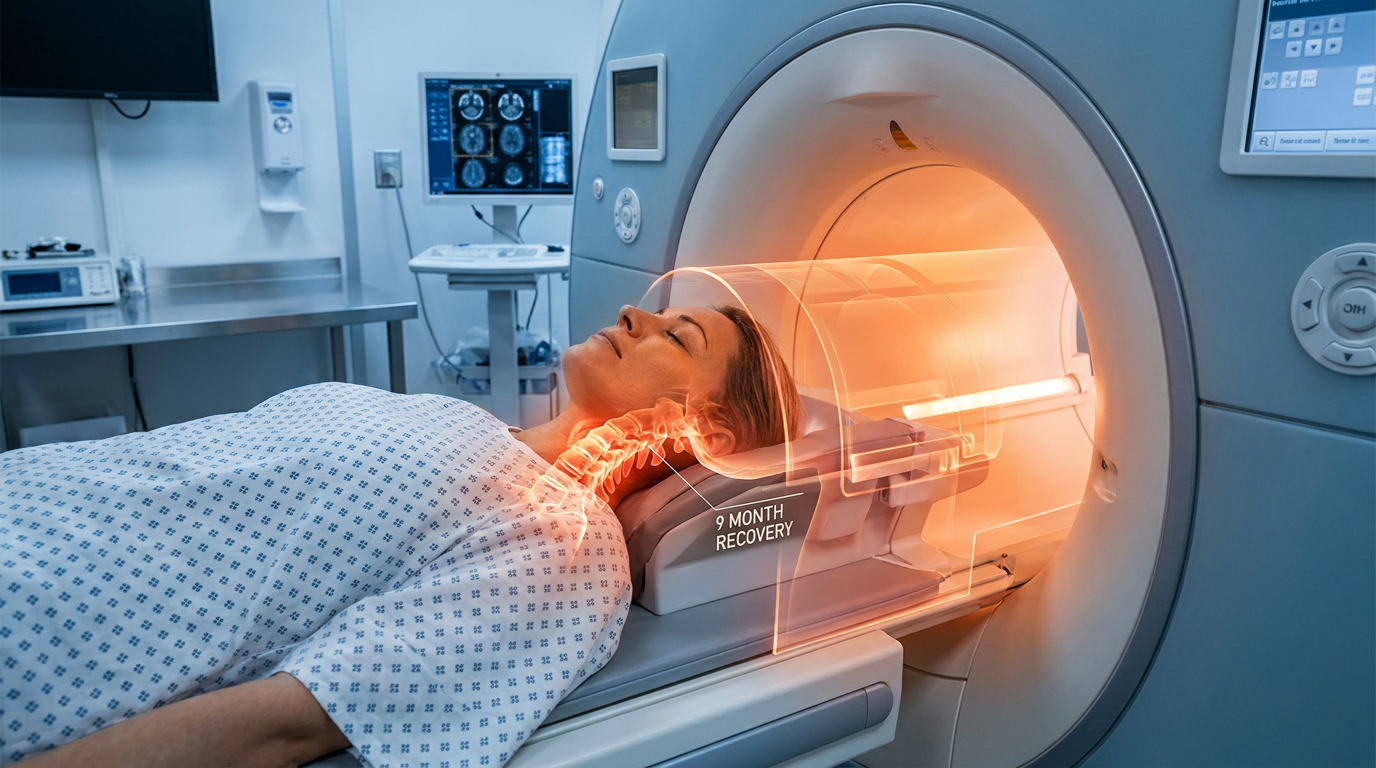
Follow-up checks during this window typically include a set of X-rays, and your surgeon may order additional imaging, such as a CT scan, if the plain films leave any doubt.
Your surgeon compares these images with earlier studies to see whether bridging bone has formed across the graft and whether the hardware remains in position. This is also when problems at the discs above and below the fusion, known as adjacent-segment disease, tend to surface, developing in a small percentage of patients each year.
Clearance for the most demanding activities usually happens here, once imaging confirms a solid fusion. This is also a good time to talk through long-term habits that protect your neck, such as posture at work, sleep positioning, avoiding nicotine and staying consistent with the strengthening routine your physical therapist built.
Symptoms to Expect and Watch Out For
Recovery after ACDF comes with a mix of normal symptoms that fade on their own and warning signs that need a call to your surgeon or emergency care. The table below sorts what you can generally expect from what should prompt outreach:
| Symptom area | Usually expected | When to call your doctor |
|---|---|---|
| Swallowing | Tightness, a lump-in-the-throat feeling and slower meals early on | Swallowing that gets worse instead of better, or food and liquid becoming hard to get down, same day |
| Voice | A hoarse, quiet or tired-sounding voice that improves over time | Voice change that persists past the timeframe your surgeon described, same day |
| Incision | An incision that looks the way your discharge sheet describes | Drainage, especially green or yellow, or redness, warmth or increasing pain, same day |
| Neck stiffness and soreness | Some stiffness or muscle soreness during early recovery | Stiffness that worsens or does not settle with rest and prescribed medication, same day |
| Fever | Low-grade warmth in the first day or two | Fever of 101 degrees Fahrenheit or higher, with or without chills, same day |
| Arm symptoms | Pre-surgery arm pain or numbness improving over weeks | New or worsening arm numbness, weakness or loss of feeling, same day, or emergency if severe or rapidly progressing |
| Breathing and chest | Mild throat discomfort with deep breaths early on | Chest pain or shortness of breath, emergency |
| Leg | Normal soreness from reduced activity | Calf pain or swelling, urgent, same-day evaluation |
| Bladder and bowel | No change from your baseline | New trouble urinating or controlling bowel movements, emergency |
Premier’s spine surgery team can address post-operative concerns and also sees patients who want a fresh evaluation after surgery elsewhere.
Long-Term Outlook After Cervical Fusion
Follow-up care centers on two things: confirming the graft has fused and monitoring the discs above and below. Surgeons judge fusion by imaging findings and healing factors, and support it with habits that help bone knit properly. Adjacent segments need longer-term tracking, since they can wear down over the years even when you feel fine.
Confirming the Fusion
Fusion succeeds for most people, with about 90.2 percent at one year, climbing to roughly 94.7 percent by two years, though surgeons use different X-ray and CT criteria to judge whether the graft has united. An uncertain imaging report often reflects a fusion that is still healing, and your surgeon may repeat the films later to compare them with earlier images before deciding.
When the graft doesn’t knit, the result is pseudarthrosis, a non-union in which the two vertebrae stay separate instead of becoming one bone.
Protecting the Levels Above and Below
Symptomatic adjacent-segment disease, a neighboring level wearing out enough to cause symptoms, develops at about 2.9 percent per year after single-level ACDF, with roughly 25.6 percent affected within 10 years.
Your surgeon may review those levels on the same follow-up films, and our spine care FAQ answers broader questions about long-term spine care. Keeping your scheduled imaging appointment allows your surgeon to track those levels even if you feel fine.
Talk with Premier About Your Recovery
If you’re partway through cervical fusion recovery and unsure whether a symptom is on schedule, Premier’s neck and back specialists treat patients at our offices across Northern New Jersey. If your imaging is unclear or you’d like a fresh set of eyes on your recovery, you can request an appointment or call 201-833-9500.
Frequently Asked Questions About Cervical Fusion Recovery
How should I sleep after cervical fusion surgery?
Your surgeon’s positioning instructions govern here. They can tell you whether to sleep on your back or side, how to keep your neck in a neutral position and what type of pillow to use.
When can I return to lifting weights or the gym?
Weightlifting and gym work come back in stages, with light cardio typically before resistance training. Overhead pressing and heavy lifting usually wait until the graft is healing on schedule, often around the six-month mark for many patients. Your physical therapist can build a specific plan based on your imaging and job or sport demands.
Can I fly or take a long car trip during recovery?
Timing depends on fusion progress, pain control and how long you’ll be sitting. Before a long trip, ask how often you should stand and walk and whether you need other travel precautions.
What can I eat in the first few weeks after ACDF?
Your discharge instructions cover what to eat. Soft foods, smaller bites and an upright eating position may help while your throat feels tight. As swallowing improves, you can return to a normal diet on the timeline your care team recommends.
This article is for general information only and isn’t a substitute for professional medical advice. Talk to your doctor about your specific situation before making treatment decisions.