You had an X-ray, maybe for something unrelated, and the report came back with the phrase “thoracic levoscoliosis.” A quick search told you a left-curving mid-back spine is less common, which raised more questions than answers.
In this guide, you’ll learn about the causes, symptoms, diagnosis, treatment and monitoring that may follow this finding, as well as when Premier Orthopaedics & Sports Medicine can evaluate it.
Table of Contents
ToggleWhat Thoracic Levoscoliosis Means on Your X-Ray Report
Scoliosis is a side-to-side spinal curve in a spine that should look straight when viewed from behind.
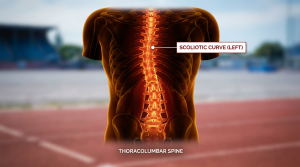
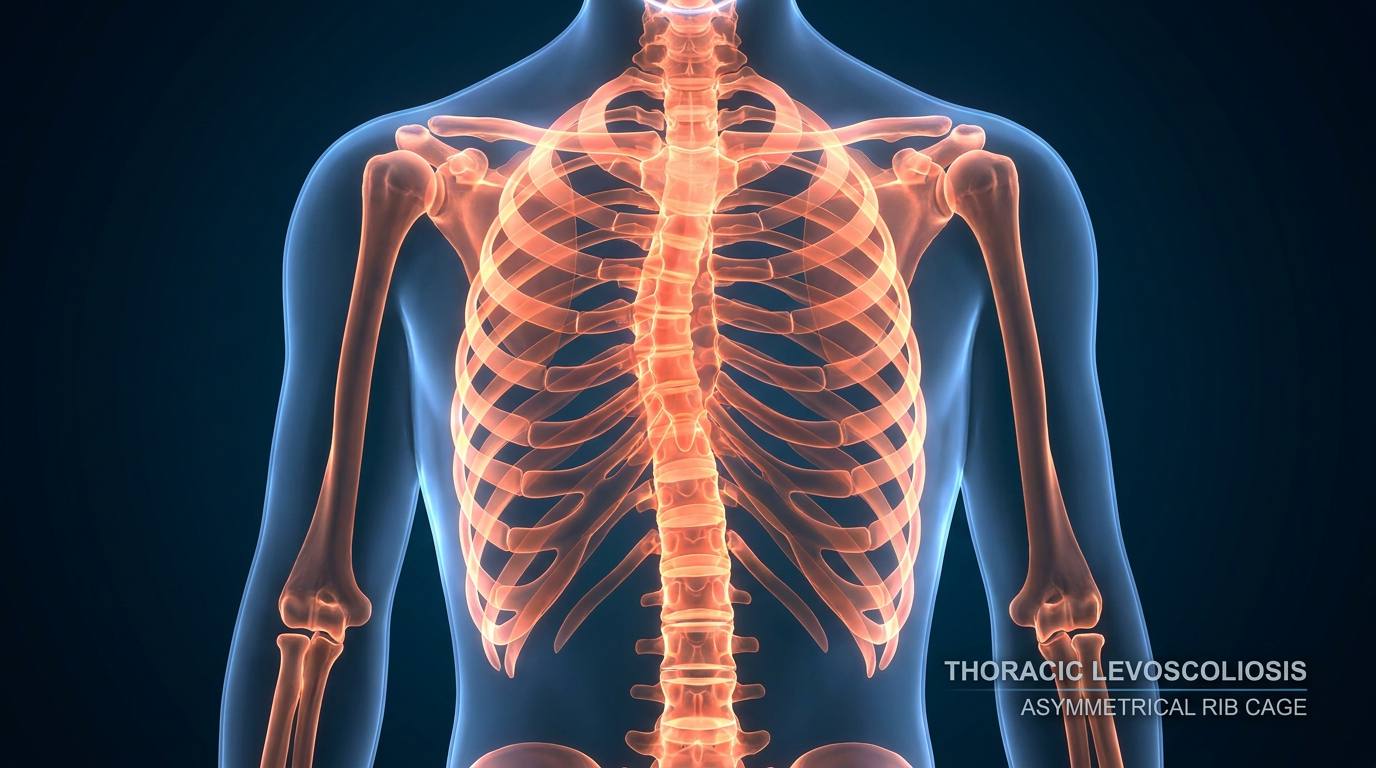
When the curve bends toward the left side of your body, doctors call it levoscoliosis. “Thoracic” pins down the location, which is your mid-back, the stretch of spine your ribs attach to.
Your report describes a left-bending curve in the mid-back, a condition that affects about 10 percent, making it less common. Thoracic curves usually bend right, a pattern doctors call dextroscoliosis, which is the more common of the two overall.
A left thoracic curve runs counter to both patterns, which is why the combination of direction and location warrants a closer look.
What Causes a Left Thoracic Curve
A left-bending thoracic curve can arise from any of the general scoliosis categories, but its direction is what prompts extra scrutiny. Doctors commonly classify scoliosis in four different types:
- Idiopathic scoliosis: no identified cause, and by far the most common category with 80% of cases
- Congenital scoliosis: the spine forms differently before birth
- Neuromuscular scoliosis: a condition affecting nerves or muscles that support the spine
- Degenerative scoliosis: wear in discs and joints, which causes a curve to develop in adults over time
A left thoracic curve is less typical of idiopathic scoliosis than a right-bending one. That mismatch is why doctors often look harder at the underlying cause when the thoracic spine bends left.
Age can shape where curves appear, since scoliosis in children and teens often involves the thoracic spine, while adults more often develop lumbar curves as discs and joints wear down.
For a left thoracic curve specifically, your age and the type of scoliosis provide context, but the atypical direction often prompts your doctor to investigate the cause more closely.
Symptoms of Thoracic Levoscoliosis
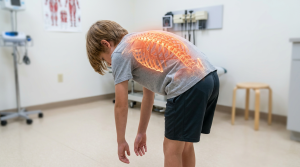
You may first learn about a mild thoracic curve when a doctor takes an X-ray for another reason. In children and teens, visible signs often appear before pain, while adults are more likely to notice back pain or stiffness before any visible change.
A doctor can assess any of these signs even without discomfort:
- One shoulder sitting higher than the other
- Uneven hips or waistline
- Posture changes that affect how clothes hang
- A visible bulge along the back
- Back pain, more often reported by adults
- Fatigue or pain extending into a leg, which can occur less often when spinal stenosis, a narrowing of the space around the nerves, is present
- Breathing changes or problems
Whether these signs prompted your X-ray or the curve turned up unexpectedly, the next step is understanding how doctors measure it and decide what further imaging, if any, you need.
How Doctors Diagnose a Left Thoracic Curve
Your report comes from an X-ray that captured the curve. A doctor measures how large the curve is on that X-ray and may consider an MRI of the spinal cord based on the curve’s direction, your age, your symptoms and your exam.
The X-ray provides the curve measurement, while MRI can give your doctor a closer look at the spinal cord when the full clinical picture supports that step.
X-Rays and the Cobb Angle
On a standing X-ray, your doctor measures the Cobb angle, which is the number of degrees between the most tilted vertebrae at the top and bottom of the curve.
As a general reference, curves less than 10 degrees are considered a minor spinal asymmetry rather than scoliosis, curves between 10 and 24 degrees are typically classified as mild, and a curve of at least 25 degrees is generally considered moderate, with curves greater than 40°–45° in adolescents (and 50°–55° in adults) often placing surgery on the table.
The direction of the Cobb angle helps your doctor describe the curve’s severity and choose between observation, bracing or a surgical discussion.
Why Your Doctor May Order an MRI
Right thoracic curves are the expected pattern in idiopathic scoliosis, so a thoracic curve that bends left may lead your doctor to consider an MRI of the spinal cord.
The scan screens for a fluid-filled cord cavity called a syrinx. Doctors call this condition syringomyelia.
Radiologists may also check for a tethered cord and differences in how the cord developed. With a tethered cord, tissue anchors the cord lower in the spinal canal than expected.
Whether an MRI is recommended depends on your age, symptoms and exam. The scan looks for findings your care team hasn’t already identified, and your doctor will explain what the results mean for you.
If the scan is normal, your doctor may decide whether periodic X-rays or other follow-up fits your situation.
Treatment, Follow-Up and Monitoring
Curve size, remaining growth and your age help determine what treatment looks like, since a curve behaves differently in a spine that’s still growing than in one that isn’t.
| Curve size | Who it is for | What it involves |
|---|---|---|
| Mild curves | Children, teens and adults with smaller curves | Observation with follow-up X-rays on a schedule your doctor sets to confirm whether the curve is holding steady |
| Moderate curves | Children and teens who are still growing | A brace to keep the curve from progressing |
| Moderate curves | Adults with symptoms from a curve that isn’t progressing rapidly | Non-surgical care built around activity modification, physical therapy, heat, cold and medication when pain flares |
| Large curves | Children, teens or adults whose curves continue to progress after conservative care | Your doctor may discuss surgery after monitoring, bracing or other non-surgical care hasn’t controlled the curve |
When surgery does enter the conversation, the spine surgery team at Premier will walk you through the operation and recovery plan, generally after physical therapy, medication and activity changes haven’t controlled your symptoms or the curve continues to progress.
When to See a Doctor About a Thoracic Curve
Some findings shouldn’t wait for a routine recheck. You should contact your doctor promptly if any of these apply to you or your child:
- A new imaging finding of a thoracic curve with no follow-up visit on the calendar
- Visible asymmetry in a child or teen, such as uneven shoulders or a shifted waistline
- New numbness, tingling or weakness in the arms or legs
- Breathing changes or curve-related pain that limits daily activity
Numbness and weakness warrant a call to your doctor rather than a wait-and-see approach. Premier’s neck and back specialists evaluate new curve findings and can tell you whether yours needs imaging, monitoring or nothing beyond a baseline.
If another surgeon recommends scoliosis surgery, getting a second opinion before you decide is a normal part of making a decision this big.
Schedule a Spine Evaluation with Premier
Premier sees patients with thoracic curves in Northern New Jersey, and an evaluation can start with the imaging you already have. You can reach Premier at 201-833-9500 or request an appointment online, and you can bring your X-ray report and any prior films to the visit.
Frequently Asked Questions About Thoracic Levoscoliosis
Does thoracic levoscoliosis mean something is wrong with my spinal cord?
No. The X-ray identifies the curve but doesn’t diagnose a spinal cord problem. Bring prior imaging, the written X-ray report and a timeline of any pain, numbness, weakness or balance changes so your doctor can decide whether an MRI would add useful information.
Can a mild thoracic levoscoliosis affect my breathing?
A mild curve is an unlikely cause of shortness of breath, so new breathing changes deserve their own evaluation. Note when the breathlessness starts, what activity triggers it and whether pain occurs at the same time so your doctor can assess whether the curve or another issue needs attention.
Will my thoracic levoscoliosis get worse as I get older?
There’s no single answer because your age, curve size and remaining growth all shape the chance of change. Keeping copies of your X-rays and reports helps your doctor compare the same measurements over time.
You can also ask how often you need a recheck and which new symptoms should prompt an earlier visit.
Is a left thoracic curve treated differently than a right one?
The initial workup can differ because a left thoracic curve may prompt your doctor to consider MRI, but the same Cobb-angle measurement method applies to both directions, which keeps follow-up comparisons consistent.
Your curve size, remaining growth, symptoms and change on follow-up X-rays guide decisions about observation, bracing or surgery.
This article is for general information only and isn’t a substitute for professional medical advice. Talk to your doctor about your specific situation before making treatment decisions.