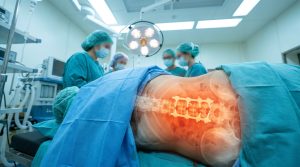

Spinal fusion is surgery that joins selected vertebrae, so they heal into one solid section, and the six-to 12-month recovery estimate leaves many patients and families uncertain about what the coming weeks will actually look like.
Some patients are parents preparing for a teenager’s procedure. Others are adults a few days out from surgery that straightens and stabilizes a curved spine, wondering when walking will feel normal again.
Teens and adults usually move through scoliosis surgery recovery in predictable phases, though younger patients often reach milestones sooner.
Your Scoliosis Surgery Recovery Timeline at a Glance
A fused spine heals much the way a broken bone heals, over six to 12 months. The phases are predictable even though pacing varies, and many daily restrictions ease before full fusion maturation, when the joined bones have hardened into one solid section, and later sports clearance.
Your surgeon typically recommends fusion only after you’ve explored conservative care options such as bracing and monitoring, so once surgery is on the calendar, the work ahead is recovery.
They will adjust the pace based on the number of levels fused and how your first weeks go. This table works as a planning guide, not a clearance schedule. Your surgeon’s instructions set the actual pace at each visit.
| Phase | Typical Milestones | Teen vs. Adult Note |
| Hospital stay | Early standing and walking, home in a few days | Complex adult fusions may need a longer stay |
| Weeks one and two | Short walks, pain medication, no bending, lifting or twisting | Caregivers do the most this phase for both ages |
| Weeks three and four | Acute pain fading, restrictions still matter | Adults ask about driving clearance, but teens should plan for return to school |
| Weeks five and six | Surgeon-specific follow-up, restrictions may ease gradually, and physical therapy ramps up | Many teens discuss return to school on a modified schedule |
| Months two to six | Bone healing continues, strengthening builds | Non-strenuous jobs may resume earlier than physically demanding jobs |
| Months six to 12 | Non-contact sports around six months, then contact sports near 12 months | Some teens wear a brace while the fusion matures |
At Premier Orthopedics & Sports Medicine, our spine surgery team sets these expectations before the operation, and Premier’s recovery guidance covers the preparation that makes the first weeks home easier.
Scoliosis Surgery Recovery Week by Week
Teens, adults and caregivers use the same general timeline, but the details vary by age and procedure. The dates are typical rather than promised.
Multi-level fusions, which join several spine segments, revision cases, which redo or correct a previous spine operation, and other more extensive operations may follow a slower plan, and your surgeon’s instructions always come first.
The Hospital Stay: Your First Few Days
You’ll wake up, and the team will control pain through intravenous (IV) medication. The care team will have you standing and taking first steps early in the hospital stay.
Most people go home within a few days once the care team clears them and you’ve put the home plan in place. Your surgeon sets your restrictions and follow-up plan, including any brace decision, before you leave the hospital.
Caregivers have two jobs this phase: arranging the ride home and setting up a recovery spot with a bed and bathroom access on one floor, plus daily items nearby.
Weeks One and Two: Settling in at Home
Walking is your main activity now. Take several short walks a day and build distance gradually. You’ll need pain medication for a few days to weeks; your surgeon will manage a taper alongside any pain management treatments that go beyond medication.
The incision needs to stay clean and dry per your discharge instructions, and the big three restrictions apply around the clock: no bending, lifting or twisting.
Your caregiver does most of the work during recovery during these two weeks, and these tasks usually fall on them. A simple written plan helps everyone see what needs to happen each day:
- Helping with showering and dressing while bending is off-limits
- Tracking the medication schedule, including the taper
- Handling meals, laundry and anything stored below waist height
- Driving to the first follow-up visit
Teens and adults both need this much help now, but independence returns quickly in the weeks ahead. Your surgeon can tell you which tasks you can restart first and which ones still need help.
Weeks Three and Four: Feeling Better Isn’t Healed
Acute surgical pain often decreases during the first several weeks, and for most people this is the stretch where it fades noticeably. That improvement makes weeks three and four an easy time to overdo it, because the fusion is still months from solid, even when pain has eased.
Adults often ask about driving in this stretch, and teens start planning the return to school. An emotional dip is common around now, when pain has faded, but the restrictions haven’t, and caregivers help most by pacing good days so they don’t turn into setbacks.
Weeks Five and Six: First Milestones
At follow-up visits, your surgeon decides whether restrictions can ease gradually. If your surgeon prescribes structured physical therapy at this point, the plan may progress gradually from the walking base you’ve established.
Teens often need a return-to-school plan, which may include limits on carrying, stairs and physical education. Adults with desk jobs should ask about work timing at follow-up visits, because time off work depends on age, job demands and surgery extent.
Months Two Through Six: Rebuilding
Bone keeps healing long after you feel recovered. Healing continues for months, which is why lifting limits stay in place long after you feel fine.
People need different amounts of time off work for the same reason. A younger patient with a non-strenuous job may return earlier, while an older adult after more extensive surgery may need longer.
If your plan includes physical therapy, it may shift from walking toward strengthening the muscles that support your spine, and your caregiver moves into a backup role, mostly rides and the occasional heavy task.
Months Six Through Twelve: Return to Full Activity
Your surgeon often clears non-contact sports before contact sports, which is why the one-year mark matters so much to teen athletes. By then, your surgeon may consider the fusion mature enough for broader activity, and some children wear a brace during this time.
Adults finishing recovery in this stretch usually rebuild stamina gradually. Adults often move more slowly than teens, especially after a complex adult fusion.
What’s Normal and What’s a Concern During Recovery
Most recoveries after scoliosis surgery proceed without complications, and complication rates in large registries run roughly six percent. Surgical risks include infection and nerve damage (though it is rare), so it helps to know which experiences are routine and which need attention. Fatigue can fit the long healing arc, especially while activity and sleep are disrupted.
Normal Symptoms
Many people report the following experiences during recovery, especially when they are mild and improving. Mild symptoms that trend better usually fit normal healing:
- Soreness, tightness or numbness around the incision
- Fatigue that lingers for weeks
- Stiffness through the back and shoulders
- An emotional low somewhere in weeks three to eight
- Frustration when the restrictions outlast the pain
Symptoms That Need Attention
Patterns matter more than a single rough day. Pain that trends worse, anything new in your legs (like weakness or numbness), fever or changes at the incision are symptoms that need attention. For pain that isn’t following the expected curve, our pain management specialists can evaluate what’s driving it.
When to Call Your Doctor
Nearly everything you feel during recovery belongs in the normal column, but a short list of symptoms needs a same-day call rather than a note saved for the next visit. Your surgeon would rather hear from you early than have you wait on a symptom that may need prompt evaluation.
- Fever
- Redness spreading from the incision, or new drainage
- Numbness or weakness that’s new or getting worse
- Pain climbing after a stretch of improvement
- Swelling or tenderness in your calf
Call about calf symptoms because they can point to a blood clot, which needs evaluation that day. Our neck and back specialists would far rather field an unnecessary call than a delayed one, so pick up the phone even when you’re not sure it’s warranted.
Long-Term Outlook After Scoliosis Surgery
Over the long term, most people have a solid fusion and a straighter, more stable spine. Their full activity list often expands again too, with whatever sports your surgeon clears at the one-year mark.
For questions that reach beyond recovery itself, our spine care FAQ and patient education resources cover the broader ground.
Your surgeon may continue follow-up imaging beyond the early visits for a specific reason. The spine can keep curving above or below the fused section in some cases, and follow-up X-rays help your surgeon monitor the correction over time.
The care team decides when those visits become less frequent over time, from frequent checks early on to occasional ones later. Keeping them protects the correction.
Schedule a Visit with Premier’s Spine Team
If scoliosis surgery is ahead of you, or you have questions this timeline can’t settle, our spine team sees patients at offices across Northern New Jersey. You can call 201-833-9500 or schedule an appointment online, and we’ll help you understand what the next phase of recovery should look like.
Frequently Asked Questions About Scoliosis Surgery Recovery
Do you need a brace after scoliosis surgery?
Some children wear one during the healing window, and some surgeons provide a brace to support the fusion in adults as well.
Your surgeon’s protocol comes first, and the stability of the correction with the hardware used also matters, so it’s worth asking before surgery rather than assuming either way.
How long does pain last after scoliosis surgery?
Sharp surgical pain typically eases during the first several weeks, and medication usually tapers off within the first few weeks at home. Mild aches can linger and still fit normal healing. Call your surgeon if pain worsens after improving.
Is recovery different for teenagers and adults?
The phases are the same, but the speed varies. Younger patients often reach milestones sooner, so teens tend to return to school and sports sooner. Adults recover through the same stages at a slower pace, a longer version of the same process rather than a worse one.
This article is for general information only and isn’t a substitute for professional medical advice. Talk to your doctor about your specific situation before making treatment decisions.