You’ve been in physical therapy for months, the pain still runs down your leg, and someone has now said the word “surgery.” Irritation of a lower-back nerve causes sciatica symptoms such as leg pain, tingling, numbness or weakness.
You need a straight answer about how long it’s safe to wait, which symptoms require faster action, and when to discuss surgery for sciatica.
Most Sciatica Improves Without Surgery
Most people need to decide how long to keep trying nonsurgical treatment before considering surgery.
Roughly 90 to 95 percent of disc-related sciatica cases resolve with conservative treatment, and sciatica often improves within 6 to 12 weeks of conservative care.
Healing without surgery happens because the herniated disc material shrinks over time as your body’s immune system breaks down and clears away the tissue pressing on the nerve.
Once that pressure eases, the pain, numbness or tingling running down your leg usually eases with it.
What Conservative Care Involves
Your doctor typically stages conservative care through physical therapy, medication and injections, and activity changes, adjusting each treatment based on your response. Complete the conservative-care period your doctor recommends, and measure progress in weeks.
The staged approach usually includes four pieces:
- Physical therapy that may improve the strength and movement supporting your spine
- Medication adjustments for anti-inflammatory or nerve-pain drugs as your symptoms change
- Epidural injections and nerve blocks that place medication near the irritated nerve
- Activity modification, which keeps you moving while limiting positions that flare your pain
Your doctor may change the sequence or combination based on your response. The goal is to find enough relief while tracking whether pain, walking tolerance and weakness improve.
Who Should Keep Waiting
If you’re still inside the conservative-care window your doctor recommended, your pain is trending better, and you have no weakness or emergency signs, you can ask your doctor whether continued waiting makes sense.
Many lumbar disc herniation cases resolve without major medical intervention, so your week-to-week progress matters.
Improvement may include less frequent pain, better walking tolerance or less reliance on medication. If this week hurts less than last week, the odds of your sciatica going away without an operation may be working in your favor.
When a Surgical Consultation Makes Sense
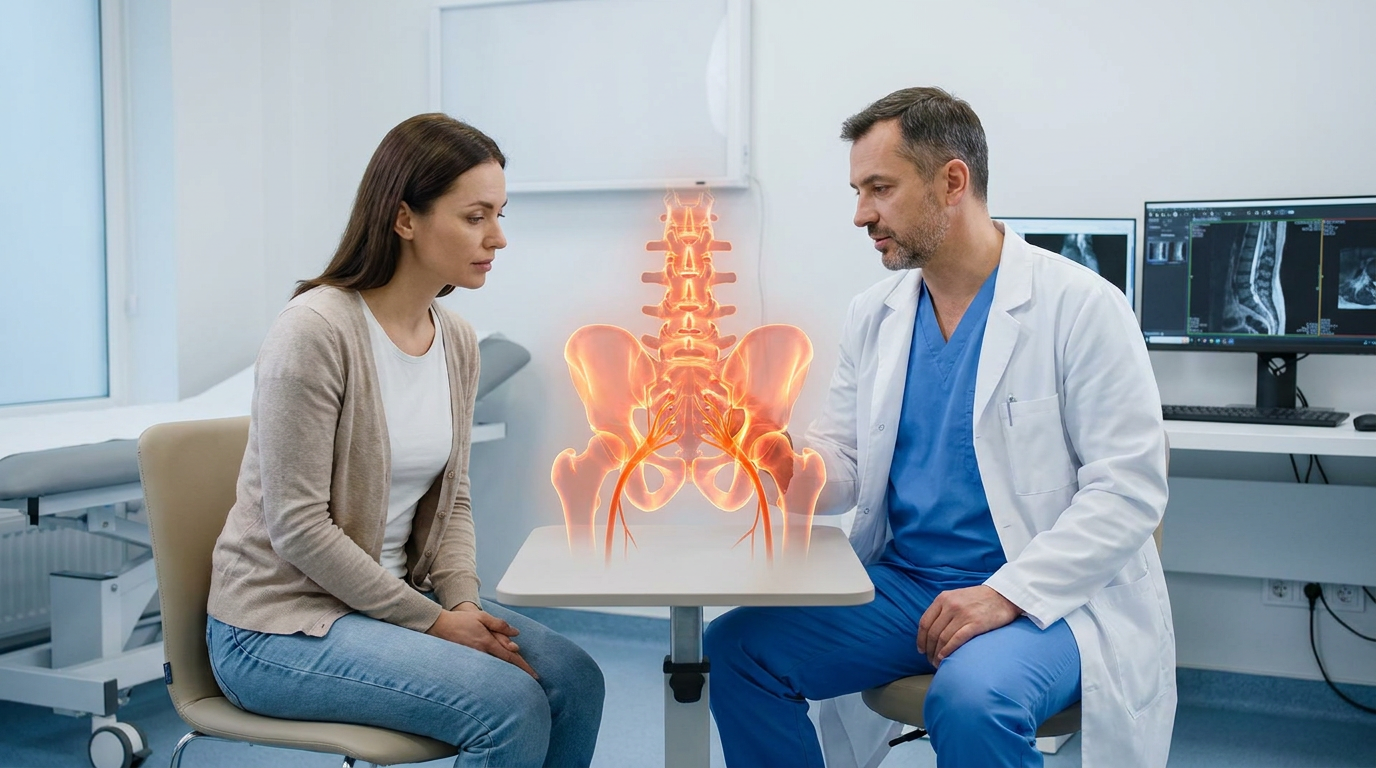
A surgical consultation for sciatica evaluates your symptoms and treatment options without committing you to an operation. The consultation can clarify how your symptoms, physical exam and MRI fit together, and the options may still include waiting.
Your surgeon considers whether the imaging finding explains your specific leg pain. If the scan and your symptoms don’t line up, that mismatch is worth raising directly in the room before anyone talks about an operation.
Signs an Evaluation Is Warranted
A few patterns suggest it’s time to move from conservative care to a surgeon’s exam:
- Pain that persists after a genuine trial of conservative care, especially when it stops improving or interferes with daily life
- Progressive or severe leg weakness, which carries more weight than pain and changes the timeline
- Weakness that worsens over time or affects both legs, which requires faster action
- Severe weakness like a foot you can no longer lift, and other severe motor deficits, encourage surgeons to operate within three days when possible
- Cauda equina symptoms, which include a loss of bladder or bowel control, numbness in the groin or inner thighs (called saddle anesthesia) or sudden weakness in both legs. These signs are a medical emergency and need immediate care rather than a scheduled consultation
- An MRI finding that clearly explains your exact symptoms, which makes any recommendation more reliable
If any of these apply to you, book a consultation with a spine surgeon rather than waiting for the next conservative-care milestone. The sooner your symptoms and imaging are reviewed together, the clearer your options become.
What Happens at the Consultation
The visit typically starts with a conversation about your history, then moves to an exam and imaging review before discussing options. Expect your surgeon to ask when the pain started, where it travels, which treatments you’ve tried and how your symptoms have changed week to week.
Bring your MRI image files and written reports, a list of medications, physical therapy records and any injection dates so the surgeon can compare the timeline with what the scan shows.
From there, the surgeon examines your strength, reflexes and sensation and reviews the imaging alongside your symptoms. Most sciatica surgery aims to address the source of nerve irritation, and the specific procedure depends on the cause and location of the compression.
How to Decide Whether You Need Surgery for Sciatica
Deciding when to consider surgery for sciatica means weighing the likely timing of relief against surgical risk in your case. Your surgeon can explain how surgery and continued conservative care compare for your symptoms, while waiting leaves more time to see whether you’re still improving.
| Keep waiting | Get evaluated for surgery |
|---|---|
| Speed of relief: gradual, measured in weeks to months | Speed of relief: often faster, though timelines vary |
| Risk accepted: the possibility that waiting longer affects your result | Risk accepted: the risks that come with any operation |
| Who it fits: improving pain, inside the conservative-care window your doctor recommended, no weakness | Who it fits: pain past that window, worsening weakness, imaging that matches your symptoms |
| What changes the answer: new weakness, foot drop or symptoms in both legs | What changes the answer: an MRI that doesn’t explain your pain |
New or worsening weakness can move you out of the waiting column and into a faster evaluation.
Over eight years, patients who met careful selection criteria and chose surgery for a lumbar disc herniation showed greater and durable improvement than patients who received nonsurgical treatment, and the consultation determines whether you’re one of them.
However, there’s a legitimate case to avoid back surgery while your symptoms are improving.
Risks of Surgery
Every operation carries risk, and your surgeon should walk through the ones that apply to your procedure. Common risks worth discussing include:
- Infection at the surgical site
- Dural tear or spinal fluid leak
- Nerve injury that causes new numbness, weakness or pain
- Reherniation of the same disc, which can bring symptoms back
- Incomplete relief of leg pain or back pain, or symptoms that recur after a period of improvement
- Blood clots, bleeding or standard anesthesia risks
Ask which risks are most relevant to your specific procedure and health history, and how often your surgeon sees each one in their practice.
What to Discuss with Your Surgeon
You can use these questions this week, whether your next visit is a first consultation or a follow-up on a recommendation you already have. Asking them isn’t adversarial, and the answers tell you as much about the surgeon as about the surgery.
- What exactly is compressing the nerve?
- Does my MRI explain the pain I actually feel?
- What happens if I wait another three months?
- Which procedure are you recommending and why that one?
- What can surgery realistically fix, and what may not change?
The last question matters most, because no doctor can guarantee outcomes. You can ask which symptoms may persist or recur after surgery so that you can judge the trade-off for yourself. A surgeon who clearly names what may not improve is helping you set realistic expectations.
Get a Second Opinion and Talk with Premier
A second opinion makes sense if the diagnosis is uncertain or the surgeon rushed the recommendation. It also makes sense if the surgeon couldn’t clearly connect your MRI to your symptoms. Verifying a decision this size is reasonable, and a second surgeon who reaches the same conclusion makes the decision easier to live with.
If you’re weighing surgery for sciatica or wondering whether you’ve given conservative care enough time, Premier’s neck and back specialists can examine you, review your imaging and give you a straight answer at our Northern New Jersey offices.
Call 201-833-9500 or request an appointment online.
Frequently Asked Questions About Surgery for Sciatica
Can sciatica come back after surgery?
It can, and symptoms may recur after a period of improvement or persist from the start. If symptoms return, note when they began, where they travel and whether your strength or walking has changed before contacting your surgeon.
How long does recovery from sciatica surgery take?
Recovery timelines depend on the procedure and your baseline health, so ask your surgeon for a timeline tailored to your case. Your surgeon will tell you which movements to avoid, when it’s safe to resume driving and when to restart physical therapy.
What if my scan shows a problem, but my pain is improving?
Your doctor won’t base the decision on imaging alone and will compare the MRI with your current symptoms, physical exam and progress. Before the visit, write down where the pain travels, which activities trigger it and what has improved since the scan. That timeline can help your doctor judge whether the MRI findings still match the problem you have now.
How fast does surgery relieve sciatica pain?
Your surgeon can explain the likely timing for your procedure and symptoms rather than giving you a single timeline that applies to everyone. Ask which symptom should improve first, what may take longer and when a lack of improvement should prompt a follow-up call. Those expectations give you a clearer way to track recovery after surgery.
This article is for general information only and isn’t a substitute for professional medical advice. Talk to your doctor about your specific situation before making treatment decisions.