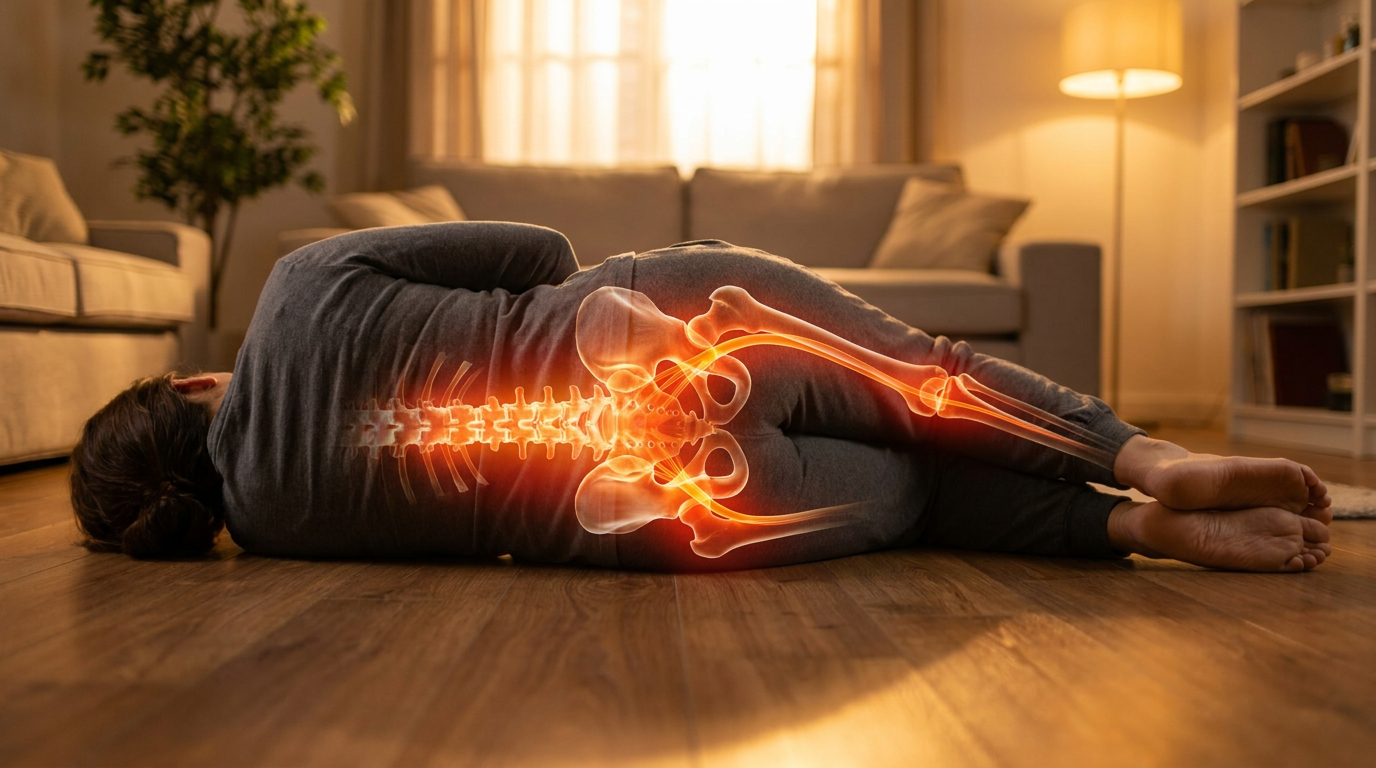
It’s two a.m., and you’re standing at the kitchen counter because lying down made the pain in your leg worse. Sciatica pain from a pinched nerve in your lower back can radiate through your buttock and down your leg, and a flare can catch you off guard at the worst possible hour.
What helps on day one of a sciatica flare isn’t what helps in week three, so the spine team at Premier Orthopaedics & Sports Medicine put together this guide covering home care for the first 72 hours, warning signs to watch for and when to call your doctor.
Immediate Sciatica Relief Step by Step: The First 72 Hours Through Week Six
Home care shifts as your symptoms change. For a new flare, the progression moves from comfortable positioning, wrapped ice and brief movement toward warmth, gentle stretching and more activity.
| Phase | What helps | What to avoid |
|---|---|---|
| First few days | Test comfortable positions, break up rest with brief movement and use ice early in the flare | Staying in bed all day or placing ice on bare skin |
| After the worst pain settles | Ease into warmth, a gentle knee-to-chest stretch and short walks as tolerated | Remaining in one position if it feels worse |
| As symptoms improve | Build activity as tolerated | Pushing through pain that spikes with activity |
The First 48 to 72 Hours
Ice can help during the first few days of a flare if it feels comfortable. Wrap the pack, use a towel as a barrier, follow the pack’s timing instructions, and take it off if your skin starts to hurt. Supported positions may feel better. If sitting hurts, try standing and shifting your weight from foot to foot.
Keep moving in short bouts through the day, since bed rest is less effective than staying active for acute low back pain. For a nighttime flare, small shifts often feel better than committing to a full position change.
Nonsteroidal anti-inflammatory drugs (NSAIDs), medicines that reduce pain and inflammation, carry an increased risk of heart attack and stroke. Too much acetaminophen can cause serious liver damage, so never combine two products that both contain it.
Your health conditions, other medicines and alcohol use affect whether either one is safe for you, so ask your doctor or pharmacist before taking them.
After the Worst Pain Settles
Once the worst pain settles, a heating pad or warm shower aimed at your lower back often feels soothing. Before trying a gentle knee-to-chest movement, ask your doctor whether it’s appropriate for you.
If your doctor says yes, start on your back with both legs relaxed, bend one leg and gently pull the knee toward your chest with your hands. Keep the movement gentle and stop if it increases your pain or doesn’t feel manageable.
Short walks spread through the day are easier to fit around work than one long one. Our walking for sciatica guide has specifics on distance and frequency.
On a desk day, try a lap between tasks and alternate sitting with standing if those changes feel comfortable. Some people prefer taking calls while standing or moving to a different chair or a kitchen counter after sitting a while.
As the Flare Improves
As your tolerance grows, you can extend activity beyond short walks by adding a longer walk, more time on your feet, or a gradual return to routine tasks.
If your pain stops improving, ask your doctor whether physical therapy may be the next step. In physical therapy, you learn safe home exercises and practice the movements with guidance on proper form.
A visit also helps identify which movements set the leg off and which ones you can build on, then increases difficulty as your symptoms allow.
For most people, an acute sciatica flare eases within a few weeks, and the first week or two is often the hardest before symptoms start to let up. About half of patients notice meaningful relief within the first 10 days using non-surgical treatments
What’s Normal During a Flare and What’s a Concern
A short daily record can keep one bad afternoon from defining the trend. Compare each week with the last and note both day-to-day details and patterns that may mean home care is no longer enough:
- Where you feel the pain, such as the buttock or calf
- When pain feels worse, such as in the morning or after sitting, and how it responds when you’re up and moving
- Whether tingling comes and goes and whether pain improves a little week over week
- Pain that stays stable or gets worse despite consistent home care
- Numbness, tingling or weakness that gets worse instead of fading, including new difficulty lifting your foot when you walk
If the source of your buttock and leg pain is unclear, it could be piriformis, which is the compression of the same nerve as sciatica, but in the buttock instead of the spine. Bring the log to your next visit so your doctor can see the pain pattern.
When to Call Your Doctor About Sciatica Pain
Three symptom patterns can signal cauda equina syndrome, which involves pressure on the nerves at the base of the spine. Seek emergency care if any of these cauda equina red flags appear:
- Loss of bladder or bowel control
- Numbness in the groin or inner thighs
- Pain or numbness in both legs
Outside of those emergencies, call your doctor if pain, numbness, tingling or weakness is moderate to severe, especially when the symptoms disrupt ordinary movement or sleep most nights.
If mild symptoms aren’t improving, call your doctor to ask when you should be evaluated. Our neck and back specialists can examine you and sort out what’s going on.
Long-Term Outlook After a Sciatica Flare
Most flares end over several weeks, and while 80 to 90 percent improve, there are around 10 to 2- percent of people who develop longer-lasting sciatica pain. If yours is in that group, conservative care usually comes first, which includes physical therapy and medication management with a therapist’s supervision if the home version has stalled.
Your specialist may consider surgery later for severe pain, nerve risk or a flare that hasn’t responded to other treatments.
Our article on sciatica surgery covers microdiscectomy, which removes the part of a disc pressing on a nerve and laminectomy, which removes part of a vertebra to create more room for nerves, Foraminotomy and others.
Book an Appointment with Premier Orthopaedics
If you’re ready to be seen, Premier can evaluate you at our offices across Northern New Jersey. Request an appointment or call 201-833-9500 to speak with our neck and back team about your leg pain.
Frequently Asked Questions About Immediate Relief for Sciatica
How do I get through a car commute or a long drive during a flare?
No single seat setup works for everyone during a flare. If you need to drive, use the most tolerable seat position and take breaks to stand or walk when you can safely do so.
If driving worsens your symptoms, ask your doctor whether it’s appropriate to drive and what adjustments or breaks are right for you.
Can I take ibuprofen and acetaminophen together for sciatica?
Ask your doctor or pharmacist before combining them. The First 48 to 72 Hours section covers the specific NSAID and acetaminophen risks to review with them.
Should I sleep with a pillow between my knees for sciatica?
A pillow between your knees may feel more comfortable when you sleep on your side, and a pillow under your knees may help when you sleep on your back.
Stop using either setup if it makes your leg pain worse or makes it harder to move when you get up. Tell your doctor if you’re waking often at night, since that pattern can guide a medication or exam decision.
What if my sciatica started at work?
Reporting the injury to your employer is usually the first step. Under New Jersey law, your employer or its insurance carrier can select the physician who treats a work-related injury, so the treating doctor may not be the one you would have picked.
This article is for general information only and isn’t a substitute for professional medical advice. Talk to your doctor about your specific situation before making treatment decisions.