You went in for lingering low back pain, walked out with imaging results and a term you’ve never heard before: grade one spondylolisthesis.
Spondylolisthesis means one vertebra has slipped forward over the vertebra beneath it, and the grade measures how far the bone has shifted. Most people don’t need an operation.
Below, you’ll learn about the causes, symptoms, diagnosis, treatment options and reasons to see a spine specialist.
What a Grade One Spondylolisthesis Diagnosis Means
The grade on your report tells you how far one vertebra has slipped forward over the vertebra beneath it. Doctors measure the shift as a percentage of the width of the vertebra below, and grade one means the bone has moved up to 25 percent forward.
Grade one is the most common finding, with 75% of all spondylolisthesis cases among people treated for the condition being grade one.
Other Grades of Spondylolisthesis
Doctors group the grades into two categories, and the grade measures displacement rather than a stage of disc disease:
| Grade | Slip of the Vertebra Below |
|---|---|
| Grade I | Up to 25 percent |
| Grade II | 25 to 50 percent |
| Grade III | 50 to 75 percent |
| Grade IV | 75 to 100 percent |
| Grade V | Greater than 100 percent (spondyloptosis) |
Low-grade spondylolisthesis (Grade I and Grade II) covers slips of less than half the vertebral width and accounts for the large majority of cases seen in clinic.
High-grade spondylolisthesis (Grade III and Grade IV) involves shifts of more than half the vertebral width, tends to cause more noticeable symptoms and more often leads to a surgical discussion.
What Causes a Grade One Slip
The two most common causes are degenerative and isthmic, and age can help your doctor distinguish between these common subtypes.
Doctors most often see degenerative spondylolisthesis in adults as the discs and facet joints, the small joints at the back of the spine, wear down over time and allow the vertebra to shift forward. It often occurs at the L4-L5 level in the lower back.
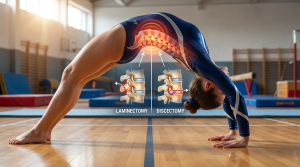
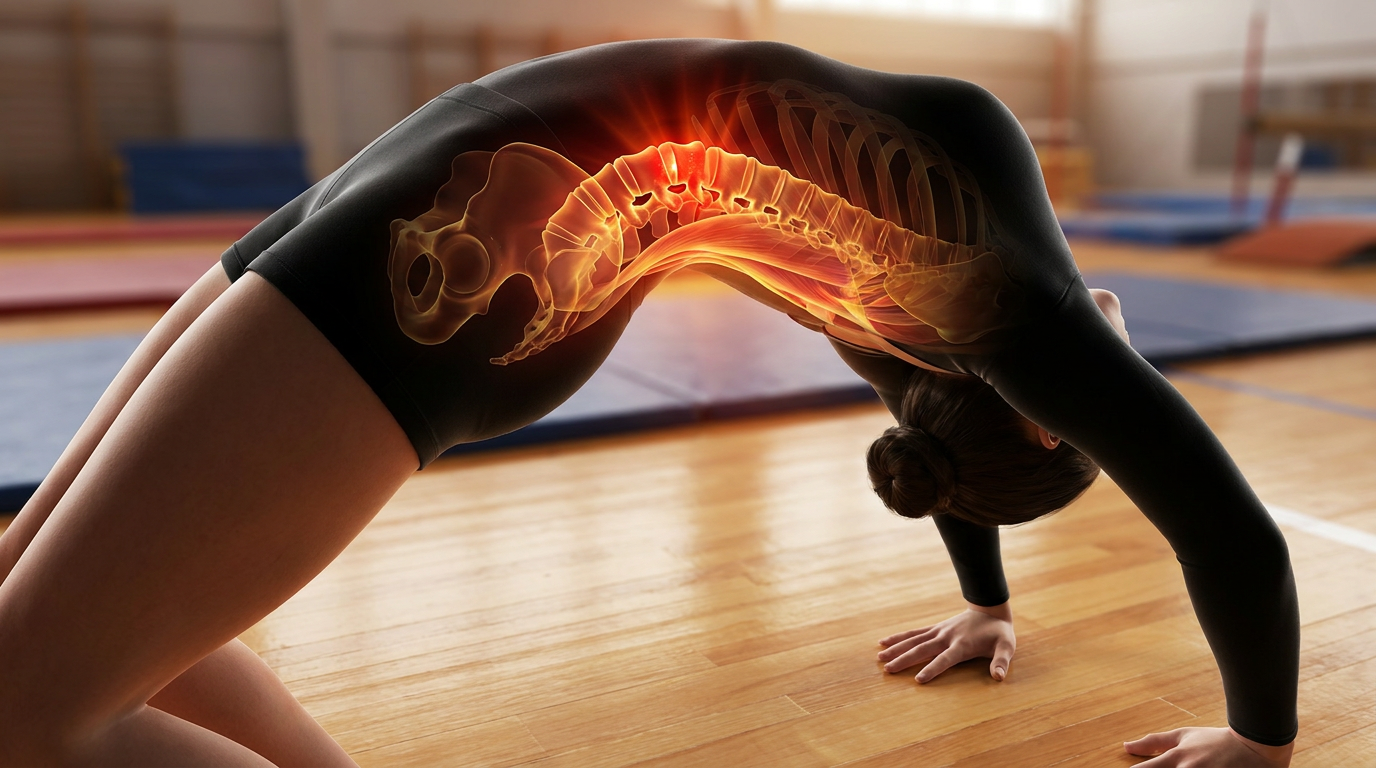
Isthmic spondylolisthesis begins in the pars interarticularis, the small bridge of bone at the back of the vertebra. It most often occurs in young people who play sports involving repeated backward bending of the lower back, such as gymnastics, diving or football. It usually sits one level lower at L5-S1.
Other subtypes include congenital slips that form before birth, traumatic slips that follow an injury and pathologic slips that occur when disease weakens the bone.
Symptoms You Might Notice with a Grade One Slip
Most people with a grade one slip have few or no symptoms. Bigger slips tend to cause more symptoms, but the match isn’t exact. Some people with a grade one slip notice nothing at all, while others have daily pain and a shrinking tolerance for standing.
When symptoms do appear, they tend to follow a recognizable pattern:
- Low back pain and stiffness
- Tight hamstrings
- Pain, numbness or tingling that travels down one or both legs
- Discomfort in the legs that worsens with walking or prolonged standing
- Leg symptoms that ease when you sit down or lean forward
Leg symptoms can come from coexisting spinal stenosis, a narrowing around the nerves that the slip can contribute to. Your doctor can compare that pattern with your exam and imaging when considering whether the pain comes from a nerve, muscle or joint.
That distinction helps guide your exam, imaging and treatment plan at Premier Orthopaedics & Sports Medicine.
How Doctors Diagnose and Measure the Slip
Your visit starts with a conversation and a physical exam before your doctor pulls up the images. The exam may include questions about where the pain sits and what makes it worse, along with a check of your hamstring flexibility because tight hamstrings can accompany a slip.
Your doctor then considers the exam alongside your symptoms and imaging when evaluating possible sources of your symptoms.
X-rays can show damage to your discs or nerves and provide the percentage that determines the grade. Standing flexion-extension X-rays, taken as you bend forward and backward, can show whether the slip moves between positions and help distinguish a stable slip from an unstable one.
Our neck and back specialists handle this evaluation, and for many people with a grade one slip, the next step is conservative care. However, your doctor will decide whether a surgical consult fits your symptoms and examination findings.
Treatment Options for Grade One Spondylolisthesis
Most people with a grade one slip start with conservative treatment and stay there. Your plan starts with the least invasive option that fits your symptoms and steps up only if the earlier step hasn’t helped.
Conservative Care Comes First
Physical therapy is the core of conservative care for a grade one slip. Your therapist directs activity changes and builds a program around exercises that strengthen the muscles supporting your spine, stretch tight hamstrings and strengthen your back and abdominal muscles.
Your therapist chooses the movements that fit your symptoms and reassesses what you can do before advancing the program.
Several other options support therapy when pain or leg symptoms hold you back. The right choice depends on factors such as your age, the type of slip and whether an irritated nerve contributes to your symptoms:
- Nonsteroidal anti-inflammatory drugs (NSAIDs) such as ibuprofen and naproxen to reduce swelling and back pain
- Bracing, in select younger patients with an active pars stress injury, to limit motion while the area settles
- Epidural injections and nerve blocks when leg pain persists despite therapy, to place anti-inflammatory medication around the irritated nerve
NSAIDs may make activity and therapy more manageable by easing pain. Injections may provide temporary relief from leg pain caused by an irritated nerve root. They may relieve symptoms, but they don’t realign the vertebra.
For young athletes, return-to-sport timing is guided by symptom resolution and pars healing on follow-up imaging, decided with your treating physician.
Your doctor can adjust the plan based on how your symptoms and function respond to each step.
When Surgery Enters the Conversation
For a symptomatic low-grade degenerative slip with stenosis, your surgeon may discuss surgery after conservative care hasn’t relieved your symptoms.
If surgery fits your condition, your surgeon may use decompression (with or without fusion) to create more room for compressed nerves and join vertebrae so they heal into one stable segment.
At Premier, the surgical conversation begins only after the conservative plan has run its course, unless urgent neurologic findings require earlier intervention.
People with degenerative spondylolisthesis and stenosis who chose surgery maintained greater pain relief and function than people who continued non-surgical care over long-term follow-up.
Recovery and Long-Term Outlook
A fixed recovery date is difficult to predict. You and your therapist can track progress through longer standing and walking tolerance and fewer leg symptoms, then adjust the program as those measures change.
Most young athletes with a pars stress injury or low-grade isthmic slip do well with rest and rehab, and follow-up imaging depends on how symptoms change over time.
34 percent of people whose doctors manage a degenerative slip without surgery show progression on follow-up imaging, and that progression doesn’t track with changes in symptoms.
Your doctor follows how you feel and function, not the imaging measurement alone, when deciding the next treatment step.
If you and your surgeon choose an operation, recovery depends on the procedure, and Premier’s recovery guidance explains what to expect.
Schedule an Evaluation with Premier’s Spine Team
If a grade one spondylolisthesis showed up on your report and you want a clear explanation of what it means for you, Premier’s spine team sees patients in Northern New Jersey. Call 201-833-9500 or request an appointment online.
Frequently Asked Questions About Grade One Spondylolisthesis
Is grade one spondylolisthesis the same as spondylolysis?
No. Spondylolysis is a stress fracture in the pars, the bony bridge at the back of the vertebra, and spondylolisthesis is the forward slip that can follow when that fracture lets the bone move. The two words often appear on the same imaging report.
Can I keep working while I do physical therapy for a grade one slip?
Many people can keep working, depending on their symptoms and the job demands on their back. Your doctor and therapist can recommend lifting and posture restrictions based on your specific duties, then adjust those restrictions as your tolerance changes.
How often will my doctor re-image the slip?
Follow-up imaging doesn’t follow one fixed schedule for everyone. Your doctor will decide whether another X-ray is useful based on your symptoms, function and clinical situation.
Does a grade one spondylolisthesis mean I’ll eventually need a fusion?
For most people, no. When discussing fusion, ask whether movement X-rays show instability, whether the slip compresses a nerve and how much it limits your daily function. You can also ask why the surgeon proposes fusion rather than decompression alone and whether a second opinion could help you compare those options.
This article is for general information only and isn’t a substitute for professional medical advice. Talk to your doctor about your specific situation before making treatment decisions.