Your neck MRI says you have severe central canal stenosis, a narrowing of the main spinal channel, and your hands have felt clumsy for months.
How serious that combination is depends on whether the narrowing sits silently, pinches a nerve root or presses on the spinal cord.
This guide covers the causes, severe warning signs, diagnosis, treatments, recovery and signs that need prompt care.
Table of Contents
ToggleWhat Spinal Stenosis in the Neck Means
Spinal stenosis in the neck means the canal running through your cervical vertebrae narrows. The narrowing leaves less room for the spinal cord and nerve roots that branch toward your arms.
Spinal stenosis can be more serious and develop anywhere along the spine, but the neck canal contains the cord itself.
Spinal stenosis includes two types: central stenosis tightens the main channel around the cord, while foraminal stenosis can irritate or compress a nerve root branching from the cord.
Why the Cervical Canal Narrows
Cervical narrowing often develops gradually as degenerative changes accumulate over time. Most people with cervical stenosis are older than 50 because these changes take years to build up.
A canal that started naturally narrower may cause symptoms earlier, so the symptom pattern matters more than age alone.
Other contributors that narrow the canal include:
- Facet arthritis: the small joints behind each vertebra thicken.
- Disc collapse: discs lose height, and the canal loses room.
- Ligament thickening: the ligament behind the cord thickens.
- A herniated disc: the disc material pushes beyond its usual boundary and reduces the available space.
- A congenitally narrow canal: this means the canal started smaller and lets ordinary wear cross the line sooner
- Past trauma: such as an old fracture or damage
What you feel day to day tells your doctor more than the MRI alone, so the symptoms themselves are the next place to look.
Premier Orthopedics & Sports Medicine’s spine team compares your imaging with your daily function, so the plan reflects how your cord is actually working.
Symptoms That Show How Serious Spinal Stenosis in the Neck Has Become
Symptoms fall into two conditions that your doctor considers alongside the radiology report, plus a separate set of red flags that need same-day care.
A Pinched Nerve (Radiculopathy)
Radiculopathy means irritation or compression affecting one nerve root’s region, often along a path from the neck down one arm.
Your doctor considers the following symptoms:
- One-arm pain that runs from the neck into the hand
- Numbness or tingling in part of that arm or hand, sometimes with weakness such as trouble lifting or gripping
A compressed root can cause one-arm pain or weakness without affecting the cord. Most cases respond to conservative treatment and don’t require surgery.
Cord Compression (Myelopathy)
Myelopathy is more serious because the cord carries signals below the neck so compression can affect both hands and legs. The changes often show up as hand clumsiness and balance problems:
- Trouble handling coins, buttons or pens
- Weakness in both hands at once
- A stiff or unsteady walk
- Balance trouble on stairs or uneven ground
- Reduced range of motion
A clinician needs to confirm cord compression through your symptoms, examination and imaging.
Cervical Stenosis Signs That Need Same-Day Care
Red flags are symptoms that suggest your spinal cord or nerves may be in immediate danger and can’t wait for a routine appointment.
When you already have a narrowed cervical canal, these warning signs mean the cord has less room to absorb any new pressure or injury, so acting quickly helps prevent permanent damage.
Go to an emergency room right away if you develop any of the following:
- New trouble controlling your bladder or bowels
- New weakness in your arms or legs after a fall or collision
- New numbness following a fall or collision
- Sudden loss of coordination or inability to walk
- A significant neck injury with new neurological symptoms
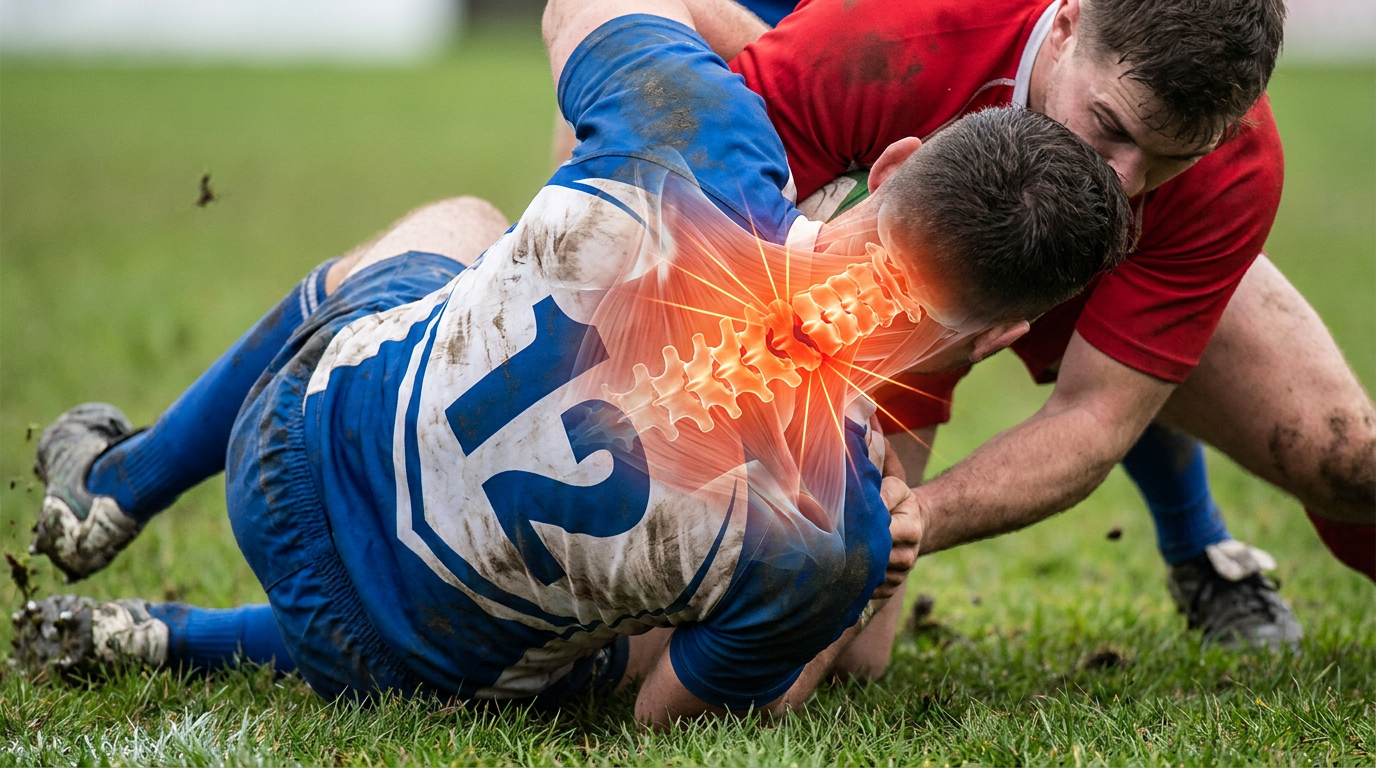
New symptoms after an injury need urgent evaluation when you already have a narrowed cervical canal, because even a minor impact can compress a cord that’s already crowded.
How Doctors Diagnose Cervical Stenosis and Judge Severity
Diagnosis pairs a neurological exam with imaging, and your specialist grades severity by how much cord function has changed, not by how tight the canal looks.
The Neurological Exam
Your specialist asks about hand dexterity, gait, arm pain and bladder or bowel changes, then examines reflexes, grip strength, finger control, balance and walking.
Our neck and back specialists use those findings to place you in a severity bucket that guides treatment.
The Imaging
MRI is the standard test because it shows the cord, the nerves and the soft tissue crowding them.
When you can’t have an MRI, a CT myelogram shows the same anatomy, and X-rays add information about alignment and instability.
The scan confirms where your canal narrows, but two people with similar images can receive different advice because the exam decides severity.
How Severity Is Graded
Doctors grade the severity of cervical spinal stenosis on MRI using a four-tier scale that measures how much the cerebrospinal fluid (CSF) space and the spinal cord itself are squeezed:
- Grade 0 (no stenosis): The spinal canal has normal space and cerebrospinal fluid surrounds the cord.
- Grade 1 (mild): The canal is narrowed by 50 percent, and the cord keeps its normal shape without any flattening.
- Grade 2 (moderate): The canal is narrow enough that the cord is visibly deformed or flattened, but the cord tissue shows no abnormal changes.
- Grade 3 (severe): The cord is compressed and shows collapse of the nerve root. This suggests swelling or ongoing damage inside the cord.
That imaging grade describes the anatomy, but it doesn’t decide treatment on its own, because two people with the same grade can function very differently.
Treatment Options Matched to Spinal Stenosis Severity
Cervical stenosis treatment matches severity: conservative care handles pinched nerves and mild cord compression, and surgery is for moderate or severe myelopathy and mild cases that worsen.
Starting With Conservative Care First
Conservative care works for pinched nerves and mild cord compression because most pain and irritation comes from inflammation and mechanical stress around the nerve.
Calming that inflammation and taking pressure off the irritated area often lets symptoms settle, even if the canal stays the same size.
Activity changes and anti-inflammatory medication can treat early symptoms for many people by reducing swelling around the compressed nerve.
Physical therapy is another conservative option that strengthens the muscles supporting your neck, improves posture and takes load off the irritated segment.
When those treatments aren’t enough, your doctor may recommend a steroid injection, which delivers anti-inflammatory medication near the irritated area for stronger relief where it’s needed.
Your specialist may also ask you to pause contact sports, ladders and other high-risk activities until it’s safe to resume them.
When Your Doctor Recommends Surgery
Progressive, moderate or severe spinal cord dysfunction can require prompt surgical evaluation. At that stage, the cord is physically squeezed, so relieving the pressure directly becomes the only reliable way to stop further damage.
Decompression procedures such as anterior cervical discectomy and fusion (ACDF), laminectomy or laminoplasty create more room by removing or reshaping the disc, bone or ligament pressing on the spinal cord, restoring blood flow and giving the cord a chance to heal.
Your surgeon may also discuss spinal fusion, which joins vertebrae to stabilize the neck so the decompressed segment doesn’t shift and re-narrow later.
Your surgeon will recommend surgery if your nerve-function findings worsen and if you don’t improve.
Our spine surgery team reviews the risks with you before you decide. Dr. Jay S. Reidler completed his orthopedic residency at Johns Hopkins and his spine fellowships at NewYork-Presbyterian Och Spine Hospital/Columbia, and performs minimally invasive spine surgery at Premier.
What Recovery Looks Like For Spinal Stenosis in the Neck
Cervical stenosis follow-up depends on whether you’re treating conservatively or recovering from surgery, and both paths use the same exam to decide next steps.
For conservative care, your specialist checks whether your pain, strength, finger control, balance and walking improve or remain stable.
If the pain settles, you continue treatment. If pain eases while your nerve-function findings worsen, your specialist changes the plan to accommodate your new functions.
You might be offered epidural injections and nerve blocks to help reduce painful symptoms.
If you elect to have surgery, the first phase post-operation focuses on preventing further damage and controlling pain. Premier’s recovery guidance explains what to expect before and after your procedure.
Talk with Our Spine Team
If you bring your MRI and report to your visit, our spine team will review your images, examine your hands and gait and explain which symptom pattern fits your condition.
Frequently Asked Questions About Spinal Stenosis in the Neck
Can spinal stenosis in the neck cause paralysis?
It can in rare, extreme cases, or when a fall or collision injures a cord that already has little room inside a narrow canal. A specialist may recommend surgery for steadily worsening symptoms to prevent permanent damage.
Is it safe to drive with cervical stenosis?
Your specialist can assess whether your symptoms affect your ability to control the vehicle. Before your next drive, discuss hand weakness, limited neck movement or slowed reactions, along with any new symptoms.
How often should I be rechecked if I’m not having surgery?
No single follow-up interval fits everyone. Your specialist bases the timing on whether you have radiculopathy or myelopathy, whether your strength or balance is changing and how closely your symptoms need monitoring.
Follow-up for radiculopathy can also reassess symptom control and where treatments such as epidural injections and nerve blocks fit in. Epidural injections place medication around irritated spinal nerves, while nerve blocks target a specific nerve to reduce pain signals.
Can physical therapy make cervical stenosis worse?
Supervised therapy may be appropriate for radiculopathy and mild myelopathy when your therapist knows your diagnosis. Your specialist should review traction or forceful manipulation before your therapist uses either technique when compression affects the spinal cord.
This article is for general information only and isn’t a substitute for professional medical advice. Talk to your doctor about your specific situation before making treatment decisions.