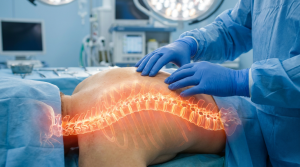

You’ve had neck pain for months, maybe since a car crash or after years of arthritis. Then a radiology report or your doctor used the word “instability.”
Instability means abnormal movement in your neck, and most people start with treatment that doesn’t require surgery. We’ll cover the symptoms and causes of cervical spinal instability, how doctors diagnose it and what your treatment options involve.
Table of Contents
ToggleWhat Cervical Spinal Instability Means for Your Neck
Cervical spinal instability means part of your neck moves more than it should. Your neck has vertebrae, ligaments, discs and joints that hold it in place. When the vertebrae, ligaments, discs and joints stretch, tear or wear down, one bone can slide or tilt on the bone below it, causing instability.
Spine surgeons call a spinal level unstable when it slides more than 3.5 millimeters forward or backward, or tilts more than 11 degrees compared with the vertebra directly below it on an X-ray.
When a segment moves that much, it can squeeze your spinal cord or the nerves that branch off it. Instability can cause arm symptoms and, in serious cases, pressure on the spinal cord.
Symptoms of an Unstable Cervical Spine
Instability usually causes a mix of neck and arm complaints, and no single symptom confirms the diagnosis. The most common are:
- Trouble holding your head up for long periods: Your neck muscles tire.
- Arm pain: A segment that shifts can pinch a nerve root, and the pain travels from the neck down one arm.
- Arm numbness or tingling: The same nerve pressure can dull sensation in the arm, hand or fingers.
- Dizziness: Some people notice lightheadedness or a swimming sensation. This symptom can overlap with cervical vertigo or dizziness.
- Myelopathy: When excess motion presses on the spinal cord itself, doctors call it myelopathy. Its warning signs need prompt attention.
Many different conditions or situations can cause these symptoms, and no single symptom points to it.
What Causes the Neck to Lose Stability
Your neck loses stability when something damages the ligaments and joints that keep each segment aligned. Most cases trace back to one of these causes:
- Neck trauma or whiplash: A car crash, fall or sports collision can stretch or tear the ligaments that hold a segment in place.
- Degenerative wear: Years of disc thinning and joint arthritis can loosen a segment in some people. This form usually shows up in middle age and later, and neck arthritis by itself may cause no symptoms at all. You can have worn joints or a damaged disc and still have a stable neck.
- Inflammatory arthritis: Rheumatoid arthritis inflames the ligaments of the upper neck, and cervical and upper-neck (atlantoaxial) instability occurs in 25 to 80 percent of people with it.
- Congenital conditions: Some people are born with upper-neck vertebrae or ligaments that didn’t form fully.
- Prior neck surgery: Removing bone or disc to free a pinched nerve can reduce a segment’s support.
- Herniated disc (a different problem): A herniated disc alone presses on a nerve, but the segment usually stays in line.
Some of these causes can look alike, so you can’t tell for sure whether you have instability. A specialist at Premier Orthopaedics & Sports Medicine can diagnose it with an exam and imaging.
How Doctors Diagnose Cervical Instability
Diagnosing instability starts with a conversation and a hands-on exam before anyone orders a scan. Your doctor will ask when the pain began, whether a crash or fall preceded it, which positions make it worse and whether you’ve noticed weakness, numbness or clumsiness in your hands.
The exam checks strength in each arm, your reflexes and how your neck moves, looking for signs of nerve or cord involvement.
Standing X-rays show alignment, while flexion-extension X-rays show how much a segment shifts as you bend your head forward and then back. MRI shows the ligaments, the discs and whether anything compresses the cord, while CT shows bone detail that X-rays blur.
Your neck and back specialists often order more than one study because no single test confirms instability. Once imaging shows what’s moving and what it’s pressing on, the first conversation usually turns to conservative care.
Treatment Options for Cervical Spinal Instability
Treatment for cervical spinal instability starts with conservative care. If that care doesn’t bring enough relief, or if your cord or nerves are at risk, surgery may be an option.
Conservative Care Comes First
The first phase aims to reduce pain and build the muscle support your ligaments no longer provide. The options below are common starting points, and your doctor adapts them to what your films show:
- Physical therapy: A typical program for neck arthritis runs six to eight weeks at two to three sessions a week.
- Anti-inflammatory medication: Your doctor may recommend over-the-counter or prescription anti-inflammatories for pain and swelling.
- Muscle relaxants: A short course can ease neck muscle spasm.
- Activity changes: Avoid positions and activities that reproduce your symptoms to let irritated tissue settle.
- A short-term soft collar: A collar can rest the neck briefly, but prolonged wear weakens the muscles you’re trying to strengthen, so it isn’t a long-term tool.
If pain remains strong despite these steps, your doctor may recommend pain-management treatments. Options include a cervical epidural steroid injection, which delivers anti-inflammatory medicine into the space around the spinal cord in your neck. They might also offer radiofrequency ablation, which uses radio waves to heat and interrupt pain signals from nerves.
When Surgery Enters the Conversation
Your doctor may recommend surgery if physical therapy, medication and activity changes haven’t brought enough relief, or if weakness, numbness or signs of spinal cord pressure keep progressing despite care.
Every surgery for cervical instability aims to stop motion at the unstable segment, and the approach depends on which segments are involved and what’s pressing on the cord or nerves.
| Surgery | How It Works | When It’s Used |
|---|---|---|
| Anterior cervical discectomy and fusion (ACDF) | Your surgeon removes the damaged disc through the front of the neck, then joins the vertebrae above and below with bone graft and a plate and screws. | Instability or nerve pressure that comes mainly from the disc or the front of the spine. |
| Posterior cervical fusion | Your surgeon works through the back of the neck and joins the vertebrae with screws, rods and bone graft. | Instability that involves several levels or the back of the spine. |
| Laminectomy with fusion | Your surgeon removes part of the bone at the back of the spinal canal to relieve pressure on the cord, then fuses the segment with screws, rods and bone graft. | Spinal cord compression along with instability. |
| Upper neck (atlantoaxial or occipitocervical) fusion | Your surgeon joins the top two vertebrae or the skull and upper neck with screws, rods and bone graft. | Instability at the top of the neck, such as from rheumatoid arthritis or an injury. |
Your surgeon chooses among these based on your imaging, your symptoms and your anatomy. Dr. Jay S. Reidler, a Harvard-, Hopkins- and Columbia-trained spine surgeon, walks you through which approach fits your situation.
Has Your Surgeon Recommended Neck Fusion?
If your surgeon has recommended fusion, a second opinion is a normal step. Our team at Premier reviews your prior imaging and records before the visit, so the conversation starts from your own films.
Post-Surgery Recovery for Cervical Instability
Recovery depends on your surgery. Your doctor at Premier reviews your progress at follow-up visits and adjusts or extends your recovery program as needed.
After an ACDF, the fused bone typically needs six months to a year to solidify. You’ll avoid strenuous exercise and certain neck movements for the first weeks, and your return-to-work date depends on how physically demanding your job is.
After posterior cervical fusion, you can usually return to work within a few months, but full healing can take longer. After a laminectomy with fusion, bone healing can take about six months to heal.
Emergency Neck Instability Symptoms
Certain neck symptoms point to pressure on the spinal cord or a nerve and need prompt attention. Contact your doctor promptly if you notice any of these:
- Loss of bladder or bowel control, which needs emergency care
- New trouble walking or keeping your balance
- Weakness or heaviness in an arm or leg
- Neck pain that persists beyond a week of self-care
- Numbness or tingling in an arm or hand
- Pain that wakes you at night or worsens when you lie down
Go to the nearest emergency room if you lose bladder or bowel control, rather than waiting for an appointment. If any of these symptoms follow a car crash, see a doctor promptly. A doctor needs to rule out a fracture before treating the injury as a sprain.
Schedule a Neck Evaluation
If a report or your doctor has used the word instability about your neck, our neck and back team at Premier can review your films and talk through what comes next. Call 201-833-9500 to book an appointment at any of our Northern New Jersey offices.
Frequently Asked Questions About Cervical Spinal Instability
Can I exercise or play sports with cervical spinal instability?
Many doctors suggest limiting high-impact sports, heavy lifting and movements that push your neck to its end range, as part of the activity changes described above. Gentle activity such as walking is often still possible. Ask your doctor which activities fit your neck and when you can add others back.
Is cervical spinal instability the same as a pinched nerve?
No. A pinched nerve is pressure on a nerve, while instability is extra movement between two neck bones. Instability can lead to a pinched nerve if the moving segment squeezes a nerve root, but a herniated disc or arthritis can pinch a nerve without any instability. Your doctor uses an exam and imaging to tell which one you have.
Could a car crash cause cervical instability?
Yes. A crash can tear the ligaments that hold a segment together without breaking bone, and a standard X-ray shows bone, so a ligament injury can look normal on the first film. Muscle spasm can also mask the extra motion early on, which is why lingering symptoms warrant a follow-up visit.
Will a fusion limit how much I can turn my head?
A fused segment no longer moves, so you may lose some neck flexibility. Your surgeon can explain what that means for turning your head, and our spine care FAQ explains when doctors recommend surgery.
This article is for general information only and isn’t a substitute for professional medical advice. Talk to your doctor about your specific situation before making treatment decisions.