
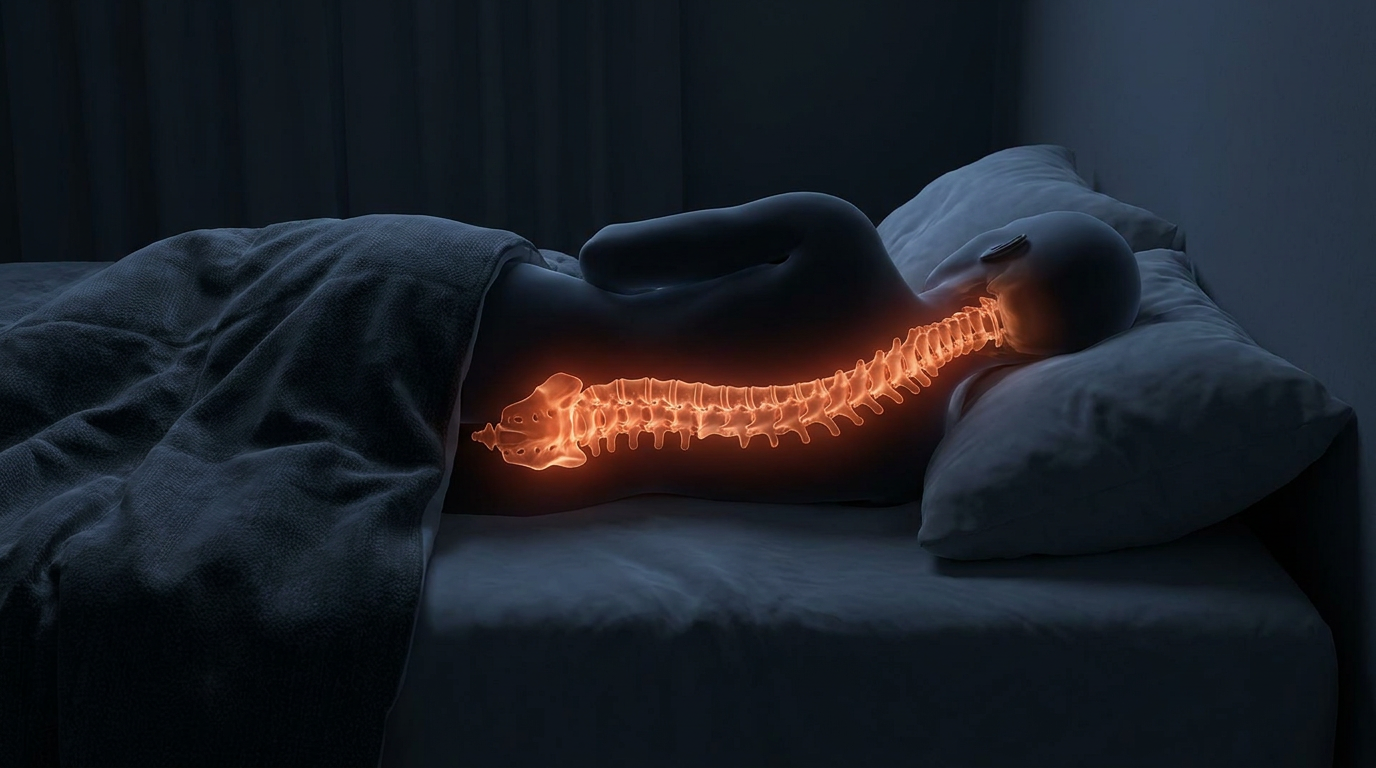
You’re six weeks out from spine surgery, and your sleep still isn’t what it was before. The mattress you’ve slept on for a decade feels like part of the problem. The best mattress after back surgery is medium-firm, supports your hips without letting them sink, and someone else delivers it so you stay within your lifting limits.
We’ll cover when a new mattress is worth buying, what to consider in new mattresses, how to make your current bed work and what to do when sleep itself is the hard part of recovery.
Table of Contents
ToggleWhen Do You Need a New Mattress?
Buy a new mattress when your current one makes recovery harder.
Surgery alone isn’t a reason to replace a bed that still works, and most people searching for the best mattress after back surgery own one that works for them.
There are a few signs that it’s time to replace your mattress:
- Visible sagging or a dip in the middle, especially under your hips.
- When you lie flat on your back, your hips sink lower than your shoulders.
- The mattress is about 10 years old or older.
- You wake up with new back pain that eases once you’re out of bed.
- Rolling onto your side twists your spine instead of letting your whole body move together.
Sagging matters most for someone recovering from back surgery, because a dip under your hips pulls your spine out of line all night and makes rolling in and out of bed harder.
If none of these apply, your current mattress is probably in good condition, and pillow adjustments can handle the rest until your surgeon clears you.
Premier Orthopaedics & Sports Medicine’s spine team will discuss how your mattress aids your recovery.
How to Choose the Best Mattress After Back Surgery
When you’re choosing a mattress after back surgery, consider firmness, rollability, hip sinkage, adjustable beds and wedge pillows.
Firmness: How It Affects Your Back
Firmness changes how your spine sits while you sleep and how easily you can move in and out of bed. The three broad firmness categories affect your back differently.
| Firmness | How Your Spine Sits | Effect on Recovery |
|---|---|---|
| Soft | Your hips and shoulders sink deep into the mattress, pulling your lower back into a curve. On your side, your spine bends toward the mattress instead of staying level. | Rolling in and out of bed is harder because your torso lags behind your legs. Deep sinkage can also strain a healing incision or fusion by holding the spine out of alignment all night. |
| Medium | Your shoulders and hips settle slightly while your waist stays supported, keeping your spine close to level on your side and neutral on your back. | Supports a controlled roll without letting your hips drop. Keeps the pelvis from tilting into the mattress on your back. Best balance of support and pressure relief for most recovering patients. |
| Firm or extra-firm | Your hips and shoulders don’t sink at all, which can leave gaps under the waist and lower back. Pressure concentrates at the shoulder and hip on the side you’re on. | Easier to roll on, but the lack of give can create pressure points that disrupt sleep and leave the lower back unsupported. |
In short, medium-firm mattresses have the strongest research support for people with back pain. People with back pain who slept on medium-firm mattresses reported less pain over 90 days than those on firmer ones. They also reported better sleep quality than those on firmer mattresses.
Roll-ability and Hip Sinkage
Your ability to roll on the mattress matters because every transfer in and out of bed during recovery uses a slow, controlled roll (the “log-rolling technique”).
A surface that supports your hips lets your torso and legs move together as one unit, while deep sinkage makes your torso lag and your spine twist.
The material on the tag matters less than how the bed behaves when you lie on it. Memory foam, latex, hybrids and innerspring beds can all pass the roll test, and any of them can fail it.
If you’re shopping in a store, lie on your side and roll onto your back without pushing with your arms. If your hips drop into the mattress and your shoulders follow a second later, keep looking.
Adjustable Beds and Wedge Pillows
If sitting up in bed is hard after surgery, you have two options: a wedge pillow or an adjustable bed. Both create an incline that does part of the sit-up for you.
Choosing between a wedge pillow and an adjustable base depends on your needs. A wedge works well if you only need an incline for the first few weeks and want to spend less.
A few tips for using a wedge pillow well:
- Place the thick end at the head of the bed and the thin end toward your waist so the slope lifts your upper body.
- Aim for a 30 to 45-degree incline, enough to help you sit up without folding at the waist.
- Keep a second pillow handy for under your knees so your lower back stays supported.
- Use the wedge for sitting up and reading in bed, not just sleeping, since it helps most with the sit-to-stand transfer.
- Swap to a flat pillow once you’re cleared to move normally and only if the incline isn’t helping you sleep.
An adjustable base makes sense if you want to change the angle on your own, use it long after recovery or share the bed with someone who also benefits from an incline.
Already scheduled for fusion or discectomy surgery?
A second opinion before a scheduled fusion, laminectomy or discectomy is a normal step, not a delay in your care. Premier’s spine team reviews your prior imaging and records before the visit, so the conversation can focus on whether the recommended procedure still fits your situation.
What to Do if You Don’t Want a New Mattress
If your current mattress isn’t ready to be replaced, or you’d rather wait until you’re further along in recovery, you can get through the healing period by adjusting what’s on and around the bed.
The mattress itself doesn’t have to change to support a healing spine, as long as the bed isn’t sagging under your hips.
Start with pillow placement, since position matters more than mattress type during recovery. A firm pillow under your knees when you sleep on your back takes pressure off the lower spine by flattening the lumbar curve.
On your side, a pillow between your knees keeps your top leg from pulling your pelvis forward and twisting the spine.
Avoid stomach sleeping while you’re healing, since it pushes your lower back into extension, which is often uncomfortable after a spine procedure.
A few other adjustments can make your current bed work after your back surgery:
- Lay a thin topper over a minor sagging spot to even out the surface until your surgeon advises whether to replace the mattress.
- Raise or lower the bed height so you don’t have to fold at the waist to sit or stand, since a bed that’s too low breaks the no-bend rule.
- Ask a caregiver to install a partial bed rail if your surgeon approves it, so you have something to steady yourself during the log-roll.
- Keep the phone, water and anything else you reach for at night within arm’s length so you don’t twist or stretch to grab them.
These adjustments can carry you through the recovery window without a new mattress, but they don’t fix a genuinely worn-out mattress.
Sleep Trouble After Back Surgery
61.4 percent of people have sleep trouble after back surgery, and several factors impact sleep post-surgery.
These include incision pain and an unfamiliar sleep position, pain medications, less daytime activity and anxiety about rolling onto the wrong spot, which keeps your nervous system alert when it should be winding down.
A few other adjustments help you sleep better during the recovery window:
- Walk during the day, since inactivity makes it harder to fall asleep at night.
- Keep your room cool and dark, and avoid screens for the hour before bed.
- Have water and your phone within reach so you don’t twist or stretch for them overnight.
- Use the pillow setup covered above to keep your spine aligned.
- Call your surgeon if pain wakes you consistently or gets worse night over night, since that pattern can mean your medication plan needs a change.
If you’re still struggling with sleep after surgery, it’s a good idea to talk to your spine surgeon about it.
Still Not Sleeping Well After Back Surgery?
If pain, position or something you can’t quite name is keeping you from sleeping through the night weeks after surgery, our spine team can help you figure out what’s going on. We see patients recovering from spinal fusion, laminectomy and discectomy at offices across Northern New Jersey. Call 201-833-9500 or request an appointment online.
Frequently Asked Questions About Best Mattress After Back Surgery
Should I buy a new mattress before my back surgery?
Only if your current one sags or is near the end of its usable life. In that case, buying before surgery beats buying after, because the delivery and setup happen before anyone in your house has to work around your lifting and bending rules. Your pre-op visit is the right time to confirm the plan with your surgeon.
Is a memory foam mattress bad after spinal fusion?
If you had spinal fusion, a foam surface that supports your hips makes rolling easier, while a soft one that lets you sink in makes it harder. If you already sleep on memory foam, describe how it feels when you roll so your surgeon can tell whether it’s a problem.
How firm should my mattress be after back surgery?
Medium-firm is the best-supported choice for most people. If you’re deciding between two options, pick the one that lets you roll onto your side without your hips dropping.
Do I need an adjustable bed after spine surgery?
Most people can recover without one. An incline helps some people get up with less effort because it does part of the sit-up for them, and a wedge pillow can create a similar incline without new furniture. Your surgeon can tell you whether an adjustable bed makes sense for you after back surgery.
This article is for general information only and isn’t a substitute for professional medical advice. Talk to your doctor about your specific situation before making treatment decisions.