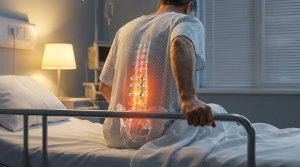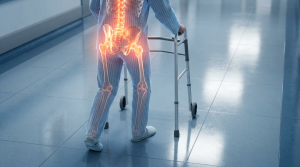
Yesterday you managed the stairs. This morning you can’t cross the bedroom without holding the wall, and the six-week wait your doctor recommended feels wrong.
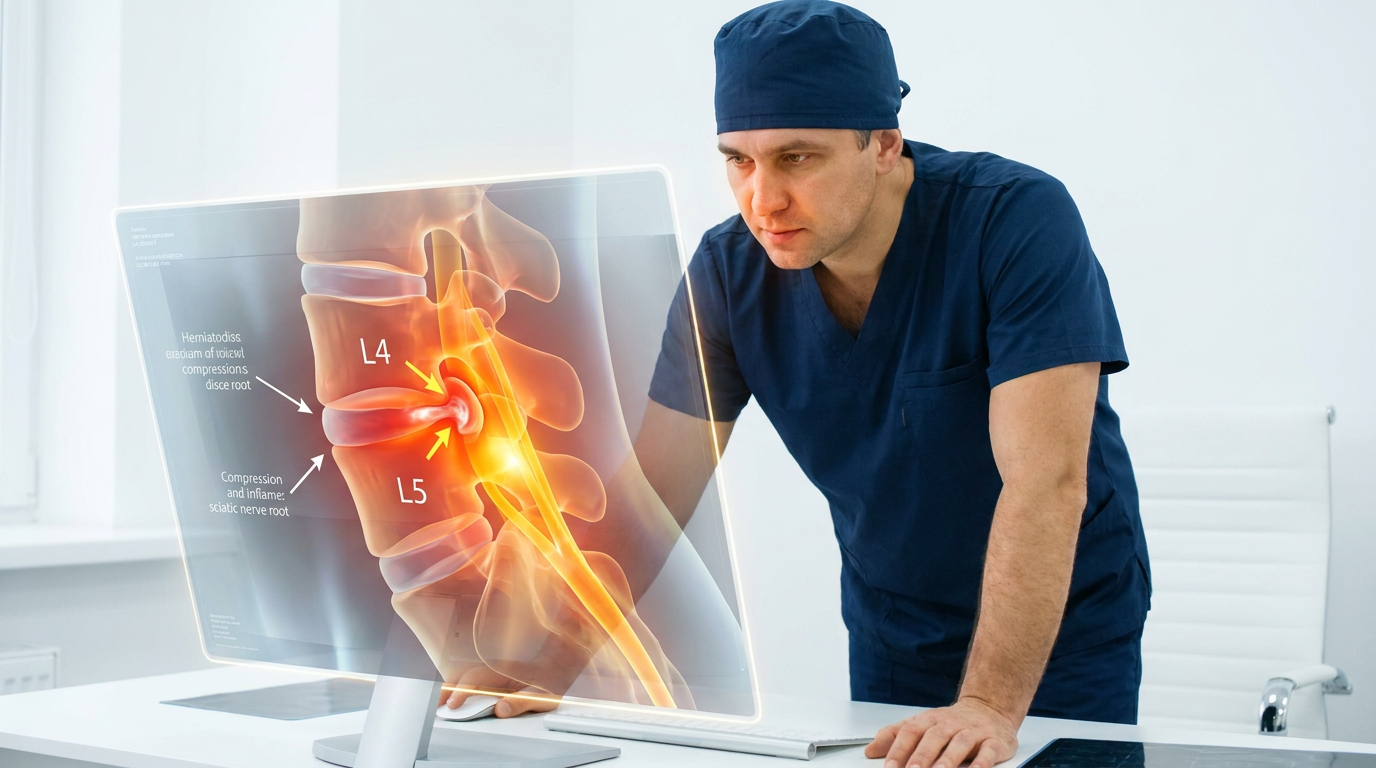
Irritation or compression of a nerve in your lower back is a sign of sciatica. The symptoms include leg pain, numbness, tingling or weakness.
But when sciatica is so bad you cannot walk, severe symptoms raise the question of whether you need emergency care. This guide covers warning signs, what happens during a second-opinion visit and how to compare two surgeon recommendations.
Table of Contents
ToggleA Timeline for Sciatica Symptoms So Bad You Cannot Walk
Severe sciatica needs faster evaluation than typical sciatica, and true leg weakness (not pain alone) is usually what shortens the timeline. If your leg is losing strength week over week, you likely need a spine evaluation within days rather than the standard four-to-six-week wait.
About 80 to 90 percent of people with disc-related sciatica get better without surgery, and many cases improve within several weeks without medical treatment.
Most people start with activity modification, medication, physical therapy and injections when appropriate. Your plan may combine supervised physical therapy, medication and an injection based on your symptoms and response to care. It usually also includes guidance on walking for sciatica.
A leg that won’t hold your weight, or one that’s weaker this week than last, is different from pain alone. Pain that limits walking often improves over time, but weakness that prevents walking can signal that the compressed nerve is losing function.
These differences in symptoms affect how quickly you need an evaluation.
Emergency Warning Signs That Changes the Timeline
Not every case of severe sciatica is a true emergency, but some symptoms mean you should skip the waiting room and head straight to the emergency department.
Knowing the difference helps you decide whether to call your doctor’s office, request an urgent spine appointment or seek immediate care.
Symptoms That Mean Emergency Department Visit
The following are warning signs of compression that require immediate medical evaluation:
- Loss of bowel or bladder control (called Cauda equina syndrome, which is compression of nerve roots that affects bladder and bowel)
- Severe or increasing numbness between your legs, inner thighs or backs of the legs
- Leg weakness needs faster evaluation than pain alone. Foot drop is a form of weakness that makes it hard to lift the front of your foot, so your foot may drag while you walk
Symptoms don’t always appear as a complete checklist, so seek emergency evaluation today even if only some match. Ask someone else to drive you and tell the triage nurse plainly which functions have changed.
Clinicians can then examine you and use imaging to evaluate the nerve roots before deciding what care you need next.
In these situations, a second opinion from a spine surgeon is a reasonable next step.
Already been told you need sciatica surgery?
Most sciatica improves with conservative care first, but if surgery has been raised, a second opinion is a normal part of weighing that decision. Premier’s spine team reviews your prior imaging, records and treatment history before your visit, not during it, so the consult can focus on how your exam matches the recommendation.
What Happens During a Second Opinion Visit
A worthwhile second opinion starts with your current symptoms, examination and imaging rather than the first surgeon’s conclusion. The surgeon independently compares your examination with the MRI and treatment history.
Records and Imaging Review
The surgeon should personally review your MRI along with the prior records and radiology report. During the examination, the surgeon will test movements such as lifting your foot against resistance to help identify which nerve may have lost strength.
You should be ready to discuss which anti-inflammatory drug you took, the dose and how long you took it. The surgeon may also ask whether an epidural steroid injection, which places anti-inflammatory medicine around an irritated spinal nerve, changed your pain, walking or strength. Those details can affect the recommendation.
A good second opinion may also conclude that you don’t need surgery. Our spine care FAQ covers the questions that usually come next.
Questions to Ask the Spine Surgeon
If surgery is considered, the surgeon should align any proposed sciatica surgery with your imaging and exam. Here are some questions you should ask them:
- Does the weakness in my leg change how quickly I need to decide?
- What could another month of waiting cost me?
- Which conservative steps have I not tried, and would any work now?
- Why this procedure rather than another, and what on my MRI supports it?
- How much of my walking may come back, and over what timeline?
- What might not return fully, such as numbness or strength?
Two benchmarks help with the last questions. Doctors encourage a simple walking program soon after surgery rather than extended bed rest, and you may begin microdiscectomy recovery by walking the day after surgery.
In addition, up to 90 percent report their pain improves, though neither benchmark is a guarantee. You should compare the answers with what your first doctor said.
How to Compare Two Different Recommendations for Severe Sciatica
You should compare each recommendation with your current examination and treatment history. You also need to assess whether symptoms are improving or worsening.
When you line up both plans against that information, the stronger reasoning usually becomes visible.
Match the Advice to Your Exam Findings
The surgeon should document your measured strength and determine whether the weak movement corresponds to the affected level on your MRI.
Sequence matters because your doctor should account for the conservative treatment you’ve completed and how your symptoms responded.
If you have no progressive weakness or emergency signs, you can ask why a surgical recommendation skipped appropriate nonsurgical steps.
| What to Weigh | Waiting Is Reasonable | The Decision Is Urgent |
|---|---|---|
| Symptom type | Pain limits your walking | The leg is measurably weaker |
| Trajectory | Stable or improving | Strength is worsening week over week |
| Conservative care | Physical therapy and medication underway | Progressive weakness can shorten the standard wait |
| Red flags | None | Bladder or bowel change, saddle numbness or rapidly progressing weakness |
If your situation lands in the urgent column on any row, treat it as urgent and seek medical attention or emergency care.
When Two Surgeons Disagree
When two independent readings of the same MRI land on the same plan, that agreement can strengthen confidence in the recommendation.
If surgeons disagree, you can compare how much of each surgeon’s practice focuses on spine and whether a spine surgery team with nonsurgical options reviewed your case.
At Premier, Dr. Jay S. Reidler, MD, MPH, a Hopkins- and Columbia-trained spine surgeon, reviews imaging and exam findings when two recommendations conflict.
Get a Spine Surgeon’s Read on Your Sciatica
Premier Orthopaedics & Sports Medicine evaluates cases of severe sciatica and second-opinion requests at offices across Northern New Jersey.
Frequently Asked Questions About Severe Sciatica
Should I go to the emergency department if I can’t walk but have no numbness in my groin?
Pain may stop you because each step hurts, while true weakness can make your leg buckle or make it hard to lift the front of your foot. If you can’t tell which problem is stopping you, call your doctor or a spine office for same-day triage so a clinician can decide how quickly to examine you.
If weakness progresses rapidly or bladder, bowel or saddle symptoms appear, you should seek emergency evaluation.
How do I get to a doctor’s appointment when I can’t sit or stand?
You can ask whether the office has wheelchair access and how you should position yourself for the car ride. The staff can also arrange an examination that doesn’t require prolonged sitting. Describing your limits when you book also lets the staff note them in your chart.
Will I be able to walk normally again after sciatica surgery?
Many patients regain normal walking after surgery, though outcomes vary. Some people have residual pain, numbness or weakness depending on how long the nerve was compressed and how much strength was lost before surgery. Your surgeon can explain what your current exam findings and imaging suggest about your recovery.
Is it insulting to my first doctor if I get a second opinion?
Second opinions are a normal part of surgical decision-making, and a confident surgeon welcomes an independent look at the same imaging. You don’t need to tell the first surgeon in advance, though bringing your imaging and notes saves time.
This article is for general information only and isn’t a substitute for professional medical advice. Talk to your doctor about your specific situation before making treatment decisions.