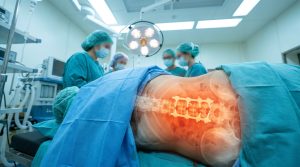
You’re just out of spinal fusion surgery, and you’re wondering what the next steps look like and how to support your recovery.
Your bone doesn’t heal on a fixed schedule, but it moves through recognizable phases month to month. Each stage tells you what’s normal and what’s worth calling your surgeon about.
This guide walks through the month-by-month fusion timeline and which symptoms need medical attention.
How Long Does It Take For Bones to Fuse After Spinal Fusion?
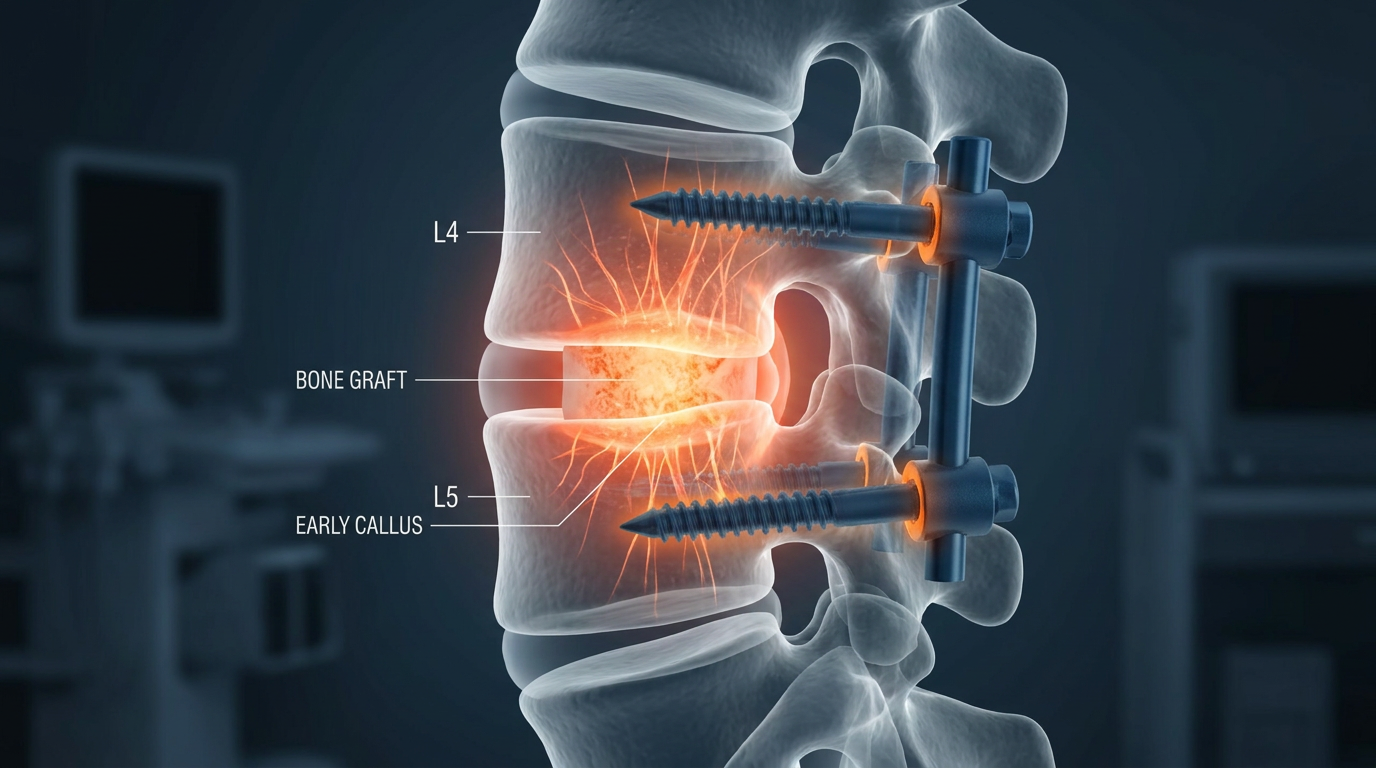
Feeling better and being fused are two different milestones. Your surgeon placed a bone graft during spinal fusion surgery. The graft helps the vertebrae heal together into a solid bone between the vertebrae, and it can take several months for the bone to become solid.
The full fusion process moves through overlapping biological phases (inflammation, repair and remodeling) that shape a different stretch of your recovery.
Your surgeon will interpret your progress based on the fusion location, graft type and follow-up imaging. These phases are broad estimates because bone healing doesn’t follow an exact monthly biological schedule.
Here’s what typically happens at each stage of healing:
Month One After Spinal Fusion: What to Expect in the First Weeks
In the first weeks, healing at the fusion site is in the inflammatory phase, when a small pocket of blood forms around the graft and healing cells move in to clear damaged tissue and start building new blood vessels.
Many people go home within a few days of surgery, but activity limits are usually strictest during this stretch. Your surgeon will typically ask you to avoid bending, twisting, heavy lifting and driving.
Premier Orthopaedics & Sports Medicine’s guides on back surgery recovery and exercises to avoid after back surgery cover those early restrictions in more detail.
Months Two and Three After Spinal Fusion: When the Repair Phase Begins
By months two and three, healing enters the reparative phase, when your body clears away damaged tissue and bone-building cells start forming the early fusion mass between the vertebrae. The bone isn’t strong enough yet to handle unrestricted load, which is why restrictions usually stay in place even when you feel better.
Physical therapy typically begins in this window after your surgeon approves it, and our physical therapy after fusion timeline explains how those sessions build.
Nonsteroidal anti-inflammatory drugs (NSAIDs) may inhibit fusion healing, especially early, so you might be required to avoid NSAIDs and follow the medication plan your surgeon gave you.
Months Four to Six After Spinal Fusion: When Bone Bridges the Vertebrae
In this window, the bone graft may begin joining the vertebrae into one solid bone. It takes at least 3 to 4 months for bones to heal well after fusion, and healing may continue for at least a year. Fusion imaging is often useful during this period, which is why your surgeon may start looking for signs of progress on X-ray.
Return-to-work timing depends on your job demands and what your surgeon clears at each follow-up. Desk-based workers often return within a few weeks to a couple of months, while jobs involving lifting, prolonged standing, climbing or driving typically require three to six months or more.
Months Six to 12 After Spinal Fusion: When Restrictions May Lift
By six to 12 months, the fusion enters the remodeling phase, when the early, softer bone is gradually replaced by stronger, mature bone, a process usually completed within a year.
Many activity restrictions may come off, even though internal remodeling continues. Lifting, bending and higher-impact activities are typically cleared in stages once your surgeon confirms the fusion is progressing.
At follow-up visits, Premier’s neck and back specialists review your imaging and examination to decide whether restrictions can safely change. A slower timeline, or specific symptoms, doesn’t automatically mean the fusion is failing.
What’s Normal and What’s a Concern During Fusion Healing
Fusion recovery brings a mix of normal healing sensations and symptoms that need your surgeon’s attention. Knowing the difference helps you decide when to wait it out and when to call your surgeon.
What’s Usually Normal After Spinal Fusion Surgery
Some discomfort during fusion healing is expected. Stiffness, fatigue, muscle soreness around the incision as you add walking distance, morning stiffness and gradual flares are common in the first several months. Track when these symptoms happen and whether they settle within a day or two.
Ask your surgeon whether the pattern fits your recovery rather than assuming an odd sensation reflects normal bone healing. Bringing notes to your follow-up visits helps your surgeon interpret what you’re feeling in context.
Warning Signs After Spinal Fusion and When to Call Your Doctor
Call your surgeon if pain stops improving over several weeks or if symptoms return after a period of steady progress. Don’t wait out either pattern on your own.
Call your surgeon promptly if you also notice any of the following:
- Fever, chills or incision changes, including redness, swelling, drainage, oozing or a bad odor
- New or worsening numbness after surgery or arm or leg weakness
Call 911 immediately if you develop chest pain or breathlessness, which could signal a blood clot.
Pseudarthrosis (Nonunion): When a Fusion Doesn’t Fully Heal
Pseudarthrosis (soo-doh-arth-ROH-sis) means “false joint.” It’s the medical term for when the bone doesn’t fully fuse, and the vertebrae keep moving where they were supposed to lock together. It’s also called nonunion.
Pseudarthrosis follows single-level lumbar fusion in five to 15 percent of cases and age, smoking and the number of levels fused all increase the risk. If you’re a smoker, your surgeon may ask you to avoid nicotine in any form during healing.
If your surgeon suspects nonunion, ask what imaging you need. A second opinion can give you another read on those images before you decide what comes next.
Questions About Your Fusion Recovery? We Can Help
If you’re recovering from a spinal fusion or you’re worried your healing isn’t on track, Premier’s spine team cares for patients across Northern New Jersey. Call 201-833-9500 or request an appointment online.
Frequently Asked Questions About Healing After Spinal Fusion
How do doctors know when a spinal fusion is solid?
Your surgeon will compare your imaging with your examination, symptoms and earlier follow-up findings before deciding whether fusion is solid. The exact imaging plan varies, so ask which study your surgeon recommends and what has changed since your previous images.
You can also ask which restrictions depend on those findings and what your surgeon still needs to see before changing them.
Can a spinal fusion fail after it seemed to be healing?
It can, which is why follow-up continues even when you feel good. Symptoms and imaging don’t always change at the same time, so your surgeon will need to evaluate a new pattern before concluding fusion failure.
You can bring notes about when the change began, which activities trigger it and whether you recently changed your activity or medications.
Does the hardware hold my spine together while the bone fuses?
Yes. Screws and rods generally hold the vertebrae steady while bone grows across the graft. The bone becomes the permanent fusion, and once it’s solid, the hardware has less work to do.
What can I do at home to help my bones fuse faster?
Follow your surgeon’s individualized plan for walking, diet, nicotine avoidance and approved medications. These steps can support recovery, but they can’t override the restrictions or timeline your surgeon sets.
This article is for general information only and isn’t a substitute for professional medical advice. Talk to your doctor about your specific situation before making treatment decisions.