
You left the surgical consult with a spinal fusion recommendation and more questions than you had time to ask. Most patients get stuck between hearing a recommendation and understanding it, and it’s a reasonable place to pause before scheduling an operation.
Spinal fusion is a significant decision because it changes your spine permanently, and whether it’s necessary depends on your specific diagnosis, what your imaging shows, how long you’ve tried nonsurgical treatment and whether less invasive options were considered first.
Below, you’ll learn when surgeons recommend fusion, when to seek a second opinion and how to compare two recommendations.
What Is Spinal Fusion?
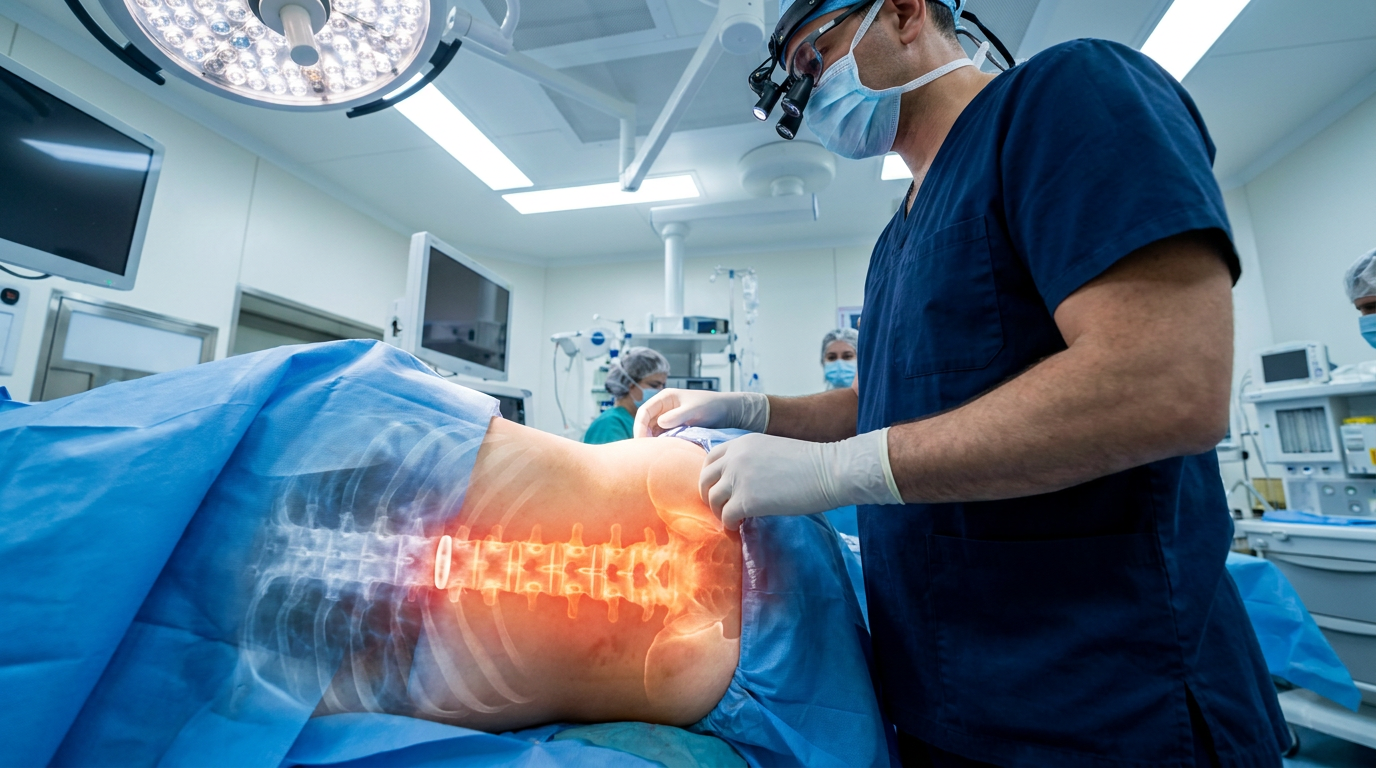
Spinal fusion is a surgical procedure that permanently joins two or more vertebrae in your spine so they heal into a single, solid bone. The goal is to eliminate motion between those vertebrae, which can reduce pain caused by movement at a damaged or unstable segment. Because the fused level no longer bends or twists, the operation is considered permanent and irreversible.
How the Procedure Works
During the procedure, a surgeon places bone graft material, either taken from your own body, from a donor or made synthetically, between the affected vertebrae. Over the following months, your body grows new bone that bridges the graft and locks the vertebrae together.
Metal hardware such as screws, rods, plates or cages is typically added to hold the vertebrae in place while the fusion heals.
Depending on the diagnosis, the surgeon may approach the spine from the back, front, side, or a combination of these routes, and the operation can involve a single level or multiple levels of the spine.
When Spinal Fusion Is Necessary
A surgeon may recommend spinal fusion when your imaging documents a specific diagnosis and conservative care hasn’t relieved your symptoms. Both conditions often inform the decision, which is why the nonsurgical record usually comes first.
Diagnoses That May Require Spinal Fusion
Fusion addresses a range of conditions where imaging shows a structural problem behind the pain. The clearest situations include:
- Imaging that documents spinal instability, where a level moves more than it should
- Spondylolisthesis with nerve compression, often with spinal stenosis, a narrowing around the spinal nerves, that hasn’t responded to conservative care
- Progressive spinal deformity, such as scoliosis, that’s costing you day-to-day function
- A vertebral fracture that compromises the stability of your spine
- Degenerative diagnoses and disc issues
Fusion is often paired with a decompression procedure, in which the surgeon removes bone or disc material pressing on the spinal nerves.
Because fusion permanently stops motion at the treated level, it can place additional stress on the vertebrae above and below, which is one reason surgeons reserve it for cases where the benefits clearly outweigh the long-term trade-offs.
What Conservative Care Should Come First
How long you should try nonsurgical treatment depends on the diagnosis. A complete course of conservative care includes:
- A structured physical therapy course
- Medication your doctor prescribes
- Epidural injections and nerve blocks, which deliver medication around irritated spinal nerves or target pain signals from specific nerves
- Activity modification
Your treatment record helps the reviewing surgeon understand what you have already tried. Premier Orthopaedics & Sports Medicine helps patients work through a complete course of nonsurgical care.
Why Second Opinions Matter for Spinal Fusion Surgery
Seeking a second opinion is normal practice before major surgery because it helps verify the diagnosis and the need for a permanent operation. Because spinal fusion changes the mechanics of your spine for life, an independent review is one of the most valuable steps you can take before committing to the procedure.
A second surgeon may confirm the original plan and give you added confidence, or they may spot a detail on your imaging, an incomplete conservative-care record or a less invasive option that changes the recommendation entirely.
Even when both opinions align, hearing the reasoning twice before surgery tends to make the decision, recovery expectations and trade-offs clearer than relying on a single consult.
Knowing when to seek a second opinion, and what to expect once you do, helps protect you before a permanent procedure.
When You Need a Second Opinion
A second opinion is worth pursuing whenever something about the recommendation doesn’t sit right, and there are a few specific situations where the value is highest:
- The recommendation felt rushed: If fusion was suggested during a short visit without a full review of your history, imaging and prior treatments, an independent surgeon can slow the process down and reexamine whether the diagnosis truly supports surgery.
- You haven’t completed a real course of conservative care: Fusion is generally reserved for patients who have already tried physical therapy, medication, injections and activity changes without lasting relief.
- The pain source isn’t clearly identified: Fusion works best when a specific structural problem explains your symptoms. If your surgeon can’t point to the exact anatomy driving your pain, another set of eyes can help avoid operating on the wrong target.
- No one mentioned alternatives: Motion-preserving procedures and decompression-only options can produce good outcomes for the right patient. If those were never discussed, an independent surgeon can tell you whether you’re actually a candidate.
- A multi-level or complex fusion is on the table: The more vertebrae are involved, the greater the long-term impact on spinal mechanics and recovery. Larger operations deserve more scrutiny before you commit.
- You simply want confidence in the procedure: Even when everything looks reasonable, a second opinion can turn hesitation into certainty, which matters when the procedure is permanent.
Seeking that review is routine due diligence before major surgery, not a challenge to your first surgeon’s judgment.
What Happens During the Visit
A second-opinion visit is usually more of a focused conversation than a full workup. The appointment starts with a review of your existing MRI, CT scans and X-rays, which typically avoids a fresh round of imaging and saves you time and out-of-pocket cost.
From there, your surgeon walks through your symptom history, compares your pain pattern with what they see on your images and reviews your conservative-care record to confirm whether nonsurgical options have been fully explored.
By the end of the visit, you should have a clear explanation of whether fusion is the right call, whether a less invasive option deserves consideration or whether more nonsurgical treatment is warranted first.
Dr. Jay Reidler, MD, MPH, completed his orthopedic residency at Johns Hopkins and a spine fellowship at Columbia. He recommends fusion only when he can pinpoint the source of your pain and explain how the operation addresses it.
The visit remains respectful toward the first surgeon while providing an independent assessment. The opinion may confirm the first plan, call for modifications or provide a replacement plan.
Questions to Ask Before Agreeing to Spinal Fusion
You can test whether you need spinal fusion by asking the right questions. The same questions work at your first consultation or a second-opinion visit.
- What exact diagnosis makes fusion necessary for me, and where does it appear on my imaging?
- Is there visible slippage on my X-ray or measurable instability on my imaging?
- Why isn’t decompression alone enough to relieve pressure on my nerves?
- What’s likely to happen if I wait six more months while continuing nonsurgical care?
- Where do I land on disc replacement or fusion, and is a motion-preserving option open to me?
- What’s a realistic expectation for how much of my pain this operation relieves?
- What does recovery look like for my job specifically?
No surgeon can promise complete pain relief after fusion, and relief varies. You’ll want to press for what the expected change means for sleeping through the night and driving to work.
Our guide to physical therapy after fusion covers the stages of recovery and can help you ask which job duties clear early and which must wait longer.
How to Compare Two Different Recommendations
When two surgeons disagree about your spine, compare the reasoning instead of the personalities. Two experienced surgeons can read the same images and land in different places, so the useful question is which one showed you the chain of reasoning.
Sound reasoning runs from your symptoms to your imaging to your failed treatments to the proposed fix. These factors may support fusion or show that a recommendation warrants more questions.
| Factor | What to look for | What to question |
|---|---|---|
| Diagnosis | Documented instability, spondylolisthesis with stenosis or fracture | Back pain with no clear structural cause |
| Conservative care | Documented months of failed nonsurgical treatment | Conservative care skipped or brief |
| Imaging | Visible slippage or measurable instability | Degenerative changes only |
| Alternatives | Decompression alone and motion-preserving options discussed | Fusion presented as the only option |
Get an Honest Answer About Your Spinal Fusion Recommendation
If you’re considering fusion and want it verified, Premier’s spine team will review your imaging and conservative-care record, then discuss your full options at our Northern New Jersey offices. Call 201-833-9500 or request an appointment online.
Frequently Asked Questions About When Spinal Fusion Is Necessary
Can spinal fusion be avoided with physical therapy?
Whether physical therapy can help you avoid fusion depends on the diagnosis and how your function changes during treatment. You and your therapist can track pain during walking, sleep and work tasks rather than judging progress from a single good or bad day.
Instability, a progressing deformity and slippage that still compresses a nerve after documented treatment may require surgical evaluation, and our spine care FAQ covers more questions patients ask at this stage.
How do I get a second opinion without offending my surgeon?
Good surgeons expect second opinions before major surgery, so a direct request rarely offends. You can ask the imaging facility for copies of your MRI, CT scans and X-rays along with the written reports before the visit.
You’ll also need your physical therapy notes and injection records so the reviewing surgeon can evaluate your full history instead of starting from scratch.
How long should I try nonsurgical treatment before considering fusion?
Your diagnosis, symptoms and progress determine the appropriate window. During that time, keep a dated list of therapy sessions, medications, injections and changes in daily function so your surgeon can see what helped and what didn’t.
What happens if I delay a recommended spinal fusion?
Your surgeon may monitor a stable degenerative condition with follow-up examinations and a review of changes in pain, numbness, strength and daily function. Keeping notes about walking, sleep and work tasks can make those follow-up conversations more specific.
This article is for general information only and isn’t a substitute for professional medical advice. Talk to your doctor about your specific situation before making treatment decisions.